

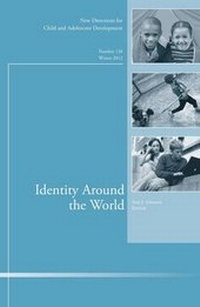
Identity Around the World
New Directions for Child and Adolescent Development, Number 138
Published on 27. December 2012
Book
Paperback/Softback
160 pages
978-1-118-54411-2 (ISBN)
Description
Examine the structure and context of identity development in a number of different countries: Belgium, the Netherlands, Germany, Sweden, Italy, China, and Japan. While some identity development proceeds in much the same way across national contexts, this issue suggests that there are important nuances in the ways in which identity unfolds in each country. Macrocultural forces, such as permissiveness in Sweden, collective guilt in Germany, and filial piety in China, direct the identity development process in important ways.
Expectations regarding obligations and ties to family also direct the identity development process differently in many of the countries included in this volume-such as extended co-residence with parents in Italy, lifelong obligations to follow parents' wishes in China, and democratic independence in Sweden. The various countries are compared and contrasted against the United States, where much of the early identity research was conducted.
The volume also reviews specific identity challenges facing immigrant and ethnic-minority individuals in countries that receive large numbers of immigrants-Germany, Sweden, Belgium, the Netherlands, and Italy-and suggests many future directions for identity research in various parts of the world.
This is the 138th volume in this series. Its mission is to provide scientific and scholarly presentations on cutting edge issues and concepts in child and adolescent development. Each volume focuses on a specific new direction or research topic and is edited by experts on that topic.
Expectations regarding obligations and ties to family also direct the identity development process differently in many of the countries included in this volume-such as extended co-residence with parents in Italy, lifelong obligations to follow parents' wishes in China, and democratic independence in Sweden. The various countries are compared and contrasted against the United States, where much of the early identity research was conducted.
The volume also reviews specific identity challenges facing immigrant and ethnic-minority individuals in countries that receive large numbers of immigrants-Germany, Sweden, Belgium, the Netherlands, and Italy-and suggests many future directions for identity research in various parts of the world.
This is the 138th volume in this series. Its mission is to provide scientific and scholarly presentations on cutting edge issues and concepts in child and adolescent development. Each volume focuses on a specific new direction or research topic and is edited by experts on that topic.
More details
Series
Language
English
Place of publication
New York
United States
Publishing group
John Wiley & Sons Inc
Target group
Professional and scholarly
Dimensions
Height: 230 mm
Width: 151 mm
Thickness: 9 mm
Weight
218 gr
ISBN-13
978-1-118-54411-2 (9781118544112)
Copyright in bibliographic data and cover images is held by Nielsen Book Services Limited or by the publishers or by their respective licensors: all rights reserved.
Schweitzer Classification
Other editions
Additional editions
Seth J. Schwartz
Identity Around the World
New Directions for Child and Adolescent Development, Number 138
E-Book
12/2012
Jossey-Bass
€22.99
Available for download
Seth J. Schwartz
Identity Around the World
New Directions for Child and Adolescent Development, Number 138
E-Book
12/2012
Jossey-Bass
€22.99
Available for download
Person
Seth J. Schwartz is the author of Identity Around the World: New Directions for Child and Adolescent Development, Number 138, published by Wiley.
Content
1. Identity Around the World: An Overview 1
Seth J. Schwartz, Byron L. Zamboanga, Alan Meca, Rachel A. Ritchie
This chapter provides an overview of personal and ethnic/cultural identity, important processes that are only beginning to be studied systematically in various national contexts.
2. Personal Identity in Belgium and The Netherlands 19
Theo A. Klimstra, Koen Luyckx, Wim H. J. Meeus
Belgium and The Netherlands have been hotbeds of personal identity research, and this research is situated within the cultural and historical contexts of these countries.
3. Identity Development in German Emerging Adults: Not an Easy Task 35
Inge Seiffge-Krenke, Marja-Lena Haid
German adolescents and emerging adults face a diffi cult challenge in developing a sense of identity amid the backdrop of East-West reunification and collective guilt for the Holocaust.
4. Personal and Ethnic Identity in Swedish Adolescents and Emerging Adults 61
Laura Ferrer-Wreder, Kari Trost, Carolyn Cass Lorente, Shahram Mansoory
Sweden is characterized by democratic and somewhat permissive parent-child relationships, and these family styles exert unique effects on identity development among Swedish adolescents and emerging adults.
5. Personal Identity in Italy 87
Elisabetta Crocetti, Emanuela Rabaglietti, Luigia Simona Sica
In Italy, the transition to adulthood is often protracted, with young people remaining at home with their parents into their late 20s and early 30s. This extended transition to adulthood shapes the ways in which young Italians develop their identities.
6. Globalization and Identity Development: A Chinese Perspective 103
Min Cheng, Steven L. Berman
Although China has traditionally been a heavily collectivist country, the effects of globalization are beginning to affect the ways in which young Chinese people develop a sense of self.
7. Personal Identity in Japan 123
Kazumi Sugimura, Shinichi Mizokami
Japanese culture has changed considerably over the last generation, and Japanese adolescents and emerging adults have been embracing identities characterized by individualistic collectivism.
INDEX 145
Seth J. Schwartz, Byron L. Zamboanga, Alan Meca, Rachel A. Ritchie
This chapter provides an overview of personal and ethnic/cultural identity, important processes that are only beginning to be studied systematically in various national contexts.
2. Personal Identity in Belgium and The Netherlands 19
Theo A. Klimstra, Koen Luyckx, Wim H. J. Meeus
Belgium and The Netherlands have been hotbeds of personal identity research, and this research is situated within the cultural and historical contexts of these countries.
3. Identity Development in German Emerging Adults: Not an Easy Task 35
Inge Seiffge-Krenke, Marja-Lena Haid
German adolescents and emerging adults face a diffi cult challenge in developing a sense of identity amid the backdrop of East-West reunification and collective guilt for the Holocaust.
4. Personal and Ethnic Identity in Swedish Adolescents and Emerging Adults 61
Laura Ferrer-Wreder, Kari Trost, Carolyn Cass Lorente, Shahram Mansoory
Sweden is characterized by democratic and somewhat permissive parent-child relationships, and these family styles exert unique effects on identity development among Swedish adolescents and emerging adults.
5. Personal Identity in Italy 87
Elisabetta Crocetti, Emanuela Rabaglietti, Luigia Simona Sica
In Italy, the transition to adulthood is often protracted, with young people remaining at home with their parents into their late 20s and early 30s. This extended transition to adulthood shapes the ways in which young Italians develop their identities.
6. Globalization and Identity Development: A Chinese Perspective 103
Min Cheng, Steven L. Berman
Although China has traditionally been a heavily collectivist country, the effects of globalization are beginning to affect the ways in which young Chinese people develop a sense of self.
7. Personal Identity in Japan 123
Kazumi Sugimura, Shinichi Mizokami
Japanese culture has changed considerably over the last generation, and Japanese adolescents and emerging adults have been embracing identities characterized by individualistic collectivism.
INDEX 145