

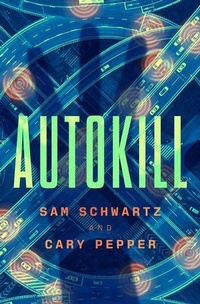
Autokill
Description
Evil drives autonomous vehicles to kill in this science fiction mystery exploring themes of technology, capitalism, and politics.
It's 2036. CAVs (Connected Autonomous Vehicles) comprise twenty-five percent of the cars on the nation's streets and roads, fleets of robo-cabs crisscross cities, and robos are revolutionizing the country's trucking industry. With new federal regulations in the works, CAVs are about to become an even more integral part of society, which greatly concerns two people, though for vastly different reasons.
Richard Corby, a climate change scientist specializing in artificial intelligence, despairs over Congress and a pro-business president repeating the misguided decisions that put cars over people at the turn of the twentieth century. Jason Bartel--a long-haul trucker who lost both his livelihood and his wife when his best routes were taken over by robo-trucks--believes CAVs will deprive Americans of their fundamental right to drive. Both men set out to change the script. For Bartel, it's an opportunity for revenge. For Corby--who's haunted by a past tragedy and fall from grace--it's a chance at redemption.
Meanwhile, federal cybermarshal Dana Grant starts investigating the case of a CAV that blew past a stop sign and killed a woman. Blocked at every turn by her bureaucratic boss, Dana takes matters into her own hands and stumbles on a plot to use CAV technology to kill not one, but thousands of people.
More details
Persons
Sam Schwartz is the founder of Sam Schwartz Engineering and Chair of the Sam Schwartz Transportation Research Program at Hunter College in New York City. He also wrote a column on traffic for the New York Daily News for over 30 years Previously, Schwartz was New York City's Traffic Commissioner and Chief Engineer of the NYC Department of Transportation. He was a cabbie in the late 1960s and joined the Traffic Department as a junior engineer in 1971.Mr. Schwartz's most recent books, No One at the Wheel: Driverless Cars and the Road of the Future (2018) and Street Smart: The Rise of Cities and The Fall of Cars (2015) lay out a recipe for cities faced with rapid changes in modes, automation, demographic shifts and travelers' preferences. He obtained his Bachelor of Science degree in Physics at Brooklyn College and received a Master of Science degree in Civil Engineering at the University of Pennsylvania. He is a licensed Professional Engineer.
Schwartz, often referred to by his nom de plume "Gridlock Sam," released the word "gridlock" into the lexicon during the 1980 NYC Transit strike.
Cary Pepper is a playwright, novelist, and screenwriter. His plays have been produced throughout the United States and internationally. Among his one-act plays, Small Things won the Robert R. Lehan Playwriting Award and the Tennessee Williams & New Orleans Literary Festival one-act play contest in 2006. It has also been airing on NPR as part of their Playing on Air series. Stealing Melissa won the Doc Jim Martin Playwright Competition, The Walrus Said won the Religious Arts Guild Playwriting Competition, and Party Favors won the Goshen College Peace Play Contest in 2016. Among his full-length plays, How It Works was performed as a staged reading at the Abingdon Theatre in New York City, was a finalist at Dayton Playhouse's FutureFest in 2010, and won the Ashland New Plays Festival in 2012. Cufflinked was a semifinalist in the 2014 Ashland New Plays Festival, And Jonah Rose Up was a semifinalist in the Dorothy Silver Playwriting Competition, and The Maltese Frenchman was a finalist for the National Play Award.