

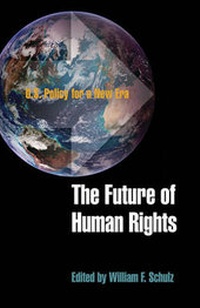
The Future of Human Rights
U.S. Policy for a New Era
Published on 22. May 2009
Book
Paperback/Softback
328 pages
978-0-8122-2075-9 (ISBN)
Description
In the introduction to The Future of Human Rights, William F. Schulz laments that U.S. foreign policy, "so buoyant at the end of the Cold War, has returned to earth with a thud over the past few years. Among its crash victims has been American leadership in the struggle for human rights."
Although countless books have decried the impact of neoconservatism on America's standing in the world, far fewer have examined how the adherents to that movement, including those in the Bush administration, have damaged human rights themselves. The administration cited human rights abuses as justification for invading Iraq only after no weapons of mass destruction were discovered. But, according to Schulz, it seems likely that the WMDs and terror links were rationalizations of the wish to topple a regime for other reasons.
The extent to which the damage sustained over the past few years is the result of misappropriated principles may be debated, but the tragic result is that the United States has been handicapped in providing crucial human rights leadership-especially where such leadership is desperately needed.
The thirteen essays in this volume, by such notable scholars and activists as Philip Alston, Rachel Kleinfeld, George Lopez, John Shattuck, and Debora Spar, provide thematic assessments of the current state of global human rights programs as well as prescriptions for once again making the United States a respected and forceful proponent of human rights. Topics include democracy promotion, women's rights, refugee policy, religious freedom, labor standards, and economic, social, and cultural rights, among many others. Taken together, the essays converge on one overarching point: to attract the widest support, the U.S. commitment to universal human rights should be presented as reflecting the best of the American tradition.
Although countless books have decried the impact of neoconservatism on America's standing in the world, far fewer have examined how the adherents to that movement, including those in the Bush administration, have damaged human rights themselves. The administration cited human rights abuses as justification for invading Iraq only after no weapons of mass destruction were discovered. But, according to Schulz, it seems likely that the WMDs and terror links were rationalizations of the wish to topple a regime for other reasons.
The extent to which the damage sustained over the past few years is the result of misappropriated principles may be debated, but the tragic result is that the United States has been handicapped in providing crucial human rights leadership-especially where such leadership is desperately needed.
The thirteen essays in this volume, by such notable scholars and activists as Philip Alston, Rachel Kleinfeld, George Lopez, John Shattuck, and Debora Spar, provide thematic assessments of the current state of global human rights programs as well as prescriptions for once again making the United States a respected and forceful proponent of human rights. Topics include democracy promotion, women's rights, refugee policy, religious freedom, labor standards, and economic, social, and cultural rights, among many others. Taken together, the essays converge on one overarching point: to attract the widest support, the U.S. commitment to universal human rights should be presented as reflecting the best of the American tradition.
Reviews / Votes
"The book lays out recommendations that can be identified as moderately leftist or progressive. Each of the 14 chapters presents the relevant international standards for a given issue (e.g., refugees), discusses the shortcomings of the George W. Bush administration, and lays out what should be done in the future. . . . The authors are experts in their fields, and each chapter is filled with facts and figures. . . . A good reference work for policy wonks."-Choice "The nuanced, sophisticated, and incisive essays that make up this important volume demonstrate how central human rights are to a successful foreign policy and chart a course forward after the damage inflicted during the Bush years. The next administration, and all who seek to influence it, will need to consult it."-Leonard S. Rubenstein, President, Physicians for Human Rights "The Future of Human Rights provides a banquet of thought-provoking ideas about how to restore America's international standing as a defender of human dignity and political rights. A brilliant and timely book."-Madeleine K. Albright, former Secretary of State "The new administration that takes office in 2009 will face an enormous challenge: restoring faith in America and its place in the global community. That new leadership will find in The Future of Human Rights all it needs to undertake the job of reinstating the first principles of good human rights practice and unabashedly mainstreaming human rights into the heart of American foreign and domestic policy. We can afford to do no less."-Raymond C. Offenheiser, President, Oxfam AmericaMore details
Series
Language
English
Place of publication
Pennsylvania
United States
Target group
College/higher education
Dimensions
Height: 229 mm
Width: 152 mm
ISBN-13
978-0-8122-2075-9 (9780812220759)
Copyright in bibliographic data and cover images is held by Nielsen Book Services Limited or by the publishers or by their respective licensors: all rights reserved.
Schweitzer Classification
Person
William F. Schulz served as Executive Director of Amnesty International USA from 1994 to 2006. He is a Senior Fellow at the Center for American Progress; a Presidential Fellow at Simmons College in Boston; and an Adjunct Assistant Professor at the Wagner School of New York University. Schulz is author of two books on human rights: In Our Own Best Interest: How Defending Human Rights Benefits Us All and Tainted Legacy: 9/11 and the Ruin of Human Rights. He is the editor of The Phenomenon of Torture: Readings and Commentary, also published by the University of Pennsylvania Press.
Content
Introduction
-William Schulz
1. Fighting from Strength: Human Rights and the Challenge of Terrorism
-Elisa Massimino
2. National Security and the Rule of Law: Self-Inflicted Wounds
-John Shattuck
3. The United States and the Future of Humanitarian Intervention
-Rachel Kleinfeld
4. Matching Means with Intentions: Sanctions and Human Rights
-George A. Lopez
5. Setting the Record Straight: Why Now Is Not the Time to Abandon Democracy Promotion
-Jennifer L. Windsor
6. A Tale of Two Traditions: International Cooperation and American Exceptionalism in U.S. Human Rights Policy
-Catherine Powell
7. Putting Economic, Social, and Cultural Rights Back on the Agenda of the United States
-Philip Alston
8. Strange Bedfellows: U.S. Corporations and the Pursuit of Human Rights
-Debora L. Spar
9. Prioritizing Workers' Rights in a Global Economy
-Carol Pier and Elizabeth Drake
10. Back to the Basics: Making a Commitment to Women's Human Rights
-Regan E. Ralph
11. Echoes Of The Future? Religious Repression as a Challenge to U.S. Human Rights Policy
-Felice D. Gaer
12. U.S. Asylum and Refugee Policy: The "Culture of No"
-Bill Frelick
13. Building Human Rights into the Government Infrastructure
-Eric Schwartz
14. International Human Rights: A Legislative Agenda
-Alexandra Arriaga
Notes
-William Schulz
1. Fighting from Strength: Human Rights and the Challenge of Terrorism
-Elisa Massimino
2. National Security and the Rule of Law: Self-Inflicted Wounds
-John Shattuck
3. The United States and the Future of Humanitarian Intervention
-Rachel Kleinfeld
4. Matching Means with Intentions: Sanctions and Human Rights
-George A. Lopez
5. Setting the Record Straight: Why Now Is Not the Time to Abandon Democracy Promotion
-Jennifer L. Windsor
6. A Tale of Two Traditions: International Cooperation and American Exceptionalism in U.S. Human Rights Policy
-Catherine Powell
7. Putting Economic, Social, and Cultural Rights Back on the Agenda of the United States
-Philip Alston
8. Strange Bedfellows: U.S. Corporations and the Pursuit of Human Rights
-Debora L. Spar
9. Prioritizing Workers' Rights in a Global Economy
-Carol Pier and Elizabeth Drake
10. Back to the Basics: Making a Commitment to Women's Human Rights
-Regan E. Ralph
11. Echoes Of The Future? Religious Repression as a Challenge to U.S. Human Rights Policy
-Felice D. Gaer
12. U.S. Asylum and Refugee Policy: The "Culture of No"
-Bill Frelick
13. Building Human Rights into the Government Infrastructure
-Eric Schwartz
14. International Human Rights: A Legislative Agenda
-Alexandra Arriaga
Notes