

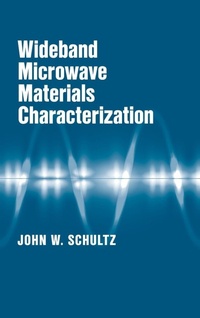
Wideband Microwave Materials Characterization
Published on 28. February 2023
Book
Hardback
330 pages
978-1-63081-946-0 (ISBN)
Unfortunately, price unknown
Available (delivery time upon request)
Not available
Description
This book is a practical engineering guide to microwave material measurements for both laboratory and manufacturing/field environments, including nondestructive inspection (NDI) and nondestructive evaluation (NDE). The book covers proven methods for characterizing materials at microwave frequencies, including both resonant and wide-bandwidth techniques, and gives you the necessary theory and equations for implementing these methods. You'll understand how to invert dielectric and/or magnetic material properties from free space transmission and reflection, and how to measure traveling wave attenuation. You'll also know how to measure dielectric and/or magnetic material properties from transmission line fixtures, and learn how to use computational electromagnetic modeling with a measurement fixture. The book shows you how to build and use microwave NDE equipment for radomes and/or structural dielectric materials. This is an excellent resource for Engineers/scientists conducting or analyzing RF/Microwave/MMW material measurements for applications in electromagnetic materials, as well as those who are developing or applying microwave non-destructive evaluation (NDE) methods to their manufacturing problems.
More details
Edition
Unabridged edition
Language
English
Place of publication
Norwood
United States
Target group
Professional and scholarly
Edition type
Unabridged edition
Dimensions
Height: 229 mm
Width: 152 mm
ISBN-13
978-1-63081-946-0 (9781630819460)
Copyright in bibliographic data and cover images is held by Nielsen Book Services Limited or by the publishers or by their respective licensors: all rights reserved.
Schweitzer Classification
Other editions
Additional editions
John W. Schultz
Wideband Microwave Materials Characterization
E-Book
02/2023
Artech House
€205.99
Available for download
Content
1 Introduction to Electromagnetic Materials Properties
1.1 Dielectric Properties
1.2 Magnetic Properties
1.3 Dispersion
1.4 Anisotropy
1.5 Engineered Materials
1.6 Chapter 1 References
2 Free Space Methods
2.1 Historical Perspective
2.2 Calibration
2.2.1 One-Parameter Calibration
2.2.2 Four-Parameter Calibration
2.3 Time Domain Processing
2.4 Inverting Intrinsic Properties
2.4.1 Microwave Network Analysis
2.4.2 Nicolson-Ross-Weir (NRW) Algorithm
2.4.3 Iterative Algorithm - S11 or S21
2.4.4 Iterative Algorithm - S11 and S21
2.4.5 Iterative Algorithm - Shorted S11
2.4.6 Iterative Algorithm - Shorted S11 and S21
2.4.7 Iterative Algorithm - 4-Parameter
2.4.8 Inverting Sheet Impedance
2.5 Advanced Material Inversions
2.5.1 N-Layer Inversion
2.5.2 Two-Thickness Inversion
2.5.3 Model-Based Inversion
2.6 Absorber Characterization
2.7 Chapter 2 References
3 Microwave Non-Destructive Evaluation
3.1 Sensors / Antennas
3.2 Dealing with RF Cables
3.3 Thickness Inversions
3.4 Thickness and Property Inversion
3.5 Defect Detection
3.6 Chapter 3 References
4 Focused Beam Methods
4.1 Focused Beam System Design
4.1.1 Gaussian Beam Basics
4.1.2 Lens Design
4.1.3 ABCD Matrix Design
4.1.4 Lens System Construction
4.2 Focused Beam Measurement Examples
4.2.1 Dielectric Measurements
4.2.2 Magneto-Dielectric Measurements
4.3 Measurement Uncertainties
4.3.1 Transmission Line Errors
4.3.2 Focusing Error
4.3.3 Beam Shift Error
4.3.4 Specimen Position
4.3.5 Other Errors: Network Analyzer & Specimen
4.4 Apertures
4.5 Chapter 4 References
5 Transmission Line Methods
5.1 Waveguides
5.1.1 Waveguide Calibration
5.1.2 Waveguide Property Inversion
5.1.3 Waveguide Air Gap Correction
5.2 Coaxial Air Lines
5.2.1 Coaxial Calibration and Material Inversion
5.2.2 Air Gap Corrections in Coaxial Airlines
5.2.3 Wrapped Coaxial Airline Method
5.2.4 Square Coaxial Airline
5.3 Stripline Methods
5.4 Other Transmission Line Methods
5.5 Chapter 5 References
6 Scatter and Surface Waves
6.1 Diffuse Scatter
6.1.1 Radar Cross Section
6.1.2 Scattering Coefficient Measurement
6.1.3 Examples of Scattering Coefficient Measurement
6.1.4 Echo Width Measurement
6.1.5 Examples of Echo Width Measurement
6.1.6 Cross Polarized Scatter
6.2 Near-Field Probe Measurements
6.3 Surface Traveling Wave
6.3.1 Surface Wave Attenuation
6.3.2 Surface Wave Attenuation Measurement
6.3.3 Surface Wave Backscatter
6.3.4 Chapter 6 References
7 CEM-Based Methods
7.1 Computational Electromagnetic Modeling
7.2 CEM Inversion of Broadband Materials
7.3 CEM Inversion Example: RF Capacitor
7.3.1 RF Capacitor Design
7.3.2 RF Capacitor Uncertainty
7.3.3 Example Measurements
7.4 CEM Inversion Example: Non-Destructive Measurement Probes
7.4.1 Epsilon Measurement Probe
7.4.2 Mu Measurement Probe
7.5 CEM Inversion Example: Slotted Rectangular Coaxial Line
7.6 Chapter 7 References
8 Impedance Analysis and Related Methods
8.1 Impedance Analysis
8.2 Dielectric Spectroscopy
8.2.1 Dielectric Parameters
8.2.2 Electrode Fixtures
8.2.3 Error Sources
8.3 Dielectric Spectroscopy Applications
8.3.1 Polymer Physics
8.3.2 Cure and Process Monitoring
8.3.3 Film Formation and Environmental Effects
8.3.4 High Frequency Dielectric Analyses
8.4 Permeameter Methods
8.5 Chapter 8 References
1.1 Dielectric Properties
1.2 Magnetic Properties
1.3 Dispersion
1.4 Anisotropy
1.5 Engineered Materials
1.6 Chapter 1 References
2 Free Space Methods
2.1 Historical Perspective
2.2 Calibration
2.2.1 One-Parameter Calibration
2.2.2 Four-Parameter Calibration
2.3 Time Domain Processing
2.4 Inverting Intrinsic Properties
2.4.1 Microwave Network Analysis
2.4.2 Nicolson-Ross-Weir (NRW) Algorithm
2.4.3 Iterative Algorithm - S11 or S21
2.4.4 Iterative Algorithm - S11 and S21
2.4.5 Iterative Algorithm - Shorted S11
2.4.6 Iterative Algorithm - Shorted S11 and S21
2.4.7 Iterative Algorithm - 4-Parameter
2.4.8 Inverting Sheet Impedance
2.5 Advanced Material Inversions
2.5.1 N-Layer Inversion
2.5.2 Two-Thickness Inversion
2.5.3 Model-Based Inversion
2.6 Absorber Characterization
2.7 Chapter 2 References
3 Microwave Non-Destructive Evaluation
3.1 Sensors / Antennas
3.2 Dealing with RF Cables
3.3 Thickness Inversions
3.4 Thickness and Property Inversion
3.5 Defect Detection
3.6 Chapter 3 References
4 Focused Beam Methods
4.1 Focused Beam System Design
4.1.1 Gaussian Beam Basics
4.1.2 Lens Design
4.1.3 ABCD Matrix Design
4.1.4 Lens System Construction
4.2 Focused Beam Measurement Examples
4.2.1 Dielectric Measurements
4.2.2 Magneto-Dielectric Measurements
4.3 Measurement Uncertainties
4.3.1 Transmission Line Errors
4.3.2 Focusing Error
4.3.3 Beam Shift Error
4.3.4 Specimen Position
4.3.5 Other Errors: Network Analyzer & Specimen
4.4 Apertures
4.5 Chapter 4 References
5 Transmission Line Methods
5.1 Waveguides
5.1.1 Waveguide Calibration
5.1.2 Waveguide Property Inversion
5.1.3 Waveguide Air Gap Correction
5.2 Coaxial Air Lines
5.2.1 Coaxial Calibration and Material Inversion
5.2.2 Air Gap Corrections in Coaxial Airlines
5.2.3 Wrapped Coaxial Airline Method
5.2.4 Square Coaxial Airline
5.3 Stripline Methods
5.4 Other Transmission Line Methods
5.5 Chapter 5 References
6 Scatter and Surface Waves
6.1 Diffuse Scatter
6.1.1 Radar Cross Section
6.1.2 Scattering Coefficient Measurement
6.1.3 Examples of Scattering Coefficient Measurement
6.1.4 Echo Width Measurement
6.1.5 Examples of Echo Width Measurement
6.1.6 Cross Polarized Scatter
6.2 Near-Field Probe Measurements
6.3 Surface Traveling Wave
6.3.1 Surface Wave Attenuation
6.3.2 Surface Wave Attenuation Measurement
6.3.3 Surface Wave Backscatter
6.3.4 Chapter 6 References
7 CEM-Based Methods
7.1 Computational Electromagnetic Modeling
7.2 CEM Inversion of Broadband Materials
7.3 CEM Inversion Example: RF Capacitor
7.3.1 RF Capacitor Design
7.3.2 RF Capacitor Uncertainty
7.3.3 Example Measurements
7.4 CEM Inversion Example: Non-Destructive Measurement Probes
7.4.1 Epsilon Measurement Probe
7.4.2 Mu Measurement Probe
7.5 CEM Inversion Example: Slotted Rectangular Coaxial Line
7.6 Chapter 7 References
8 Impedance Analysis and Related Methods
8.1 Impedance Analysis
8.2 Dielectric Spectroscopy
8.2.1 Dielectric Parameters
8.2.2 Electrode Fixtures
8.2.3 Error Sources
8.3 Dielectric Spectroscopy Applications
8.3.1 Polymer Physics
8.3.2 Cure and Process Monitoring
8.3.3 Film Formation and Environmental Effects
8.3.4 High Frequency Dielectric Analyses
8.4 Permeameter Methods
8.5 Chapter 8 References