

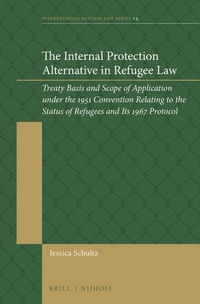
The Internal Protection Alternative in Refugee Law
Treaty Basis and Scope of Application under the 1951 Convention Relating to the Status of Refugees and Its 1967 Protocol
Published on 6. December 2018
Book
Hardback
444 pages
978-90-04-36195-9 (ISBN)
Description
Under what circumstances can a state refuse refugee status to a person whose risk of persecution exists in only part of her country of origin? This book is the first monograph to examine the treaty basis and criteria for the 'internal protection alternative' (IPA), an exception to refugee status increasingly invoked by state parties to the 1951 Refugee Convention and its 1967 Protocol. Through a critical analysis of the relationship between refugee law and related fields, Schultz finds that the legal scope for IPA practice is narrower than is commonly claimed. Since persons subject to an IPA analysis have a well-founded fear of persecution within their countries of origin, any limit on their right to refugee status must involve a careful balancing of the impact of continued displacement against the state's interest in preserving its restricted protection resources. She argues that the doctrine of implied limits in human rights law can provide analytic structure to the IPA concept and reduce the risk of overly broad application.
More details
Series
Language
English
Place of publication
Netherlands
Publishing group
Brill
Target group
Professional and scholarly
College/higher education
Product notice
sewn/stitched
Cloth over boards
Dimensions
Height: 241 mm
Width: 160 mm
Thickness: 33 mm
Weight
757 gr
ISBN-13
978-90-04-36195-9 (9789004361959)
Copyright in bibliographic data and cover images is held by Nielsen Book Services Limited or by the publishers or by their respective licensors: all rights reserved.
Schweitzer Classification
Person
Jessica Schultz, Ph.D. (1973), is a researcher at the Chr. Michelsen Institute in Bergen, Norway. She has published and taught on a range of topics related to human rights and refugee law.
Content
Acknowledgments
List of Acronyms
List of Tables
1Introduction
?1.1?Background to the Study
?1.2?Explanations for the Emergence of IPA Practice
?1.3?The Evolution of IPA Practice
?1.4?Terminology: Internal Protection/Flight/Relocation Alternative
?1.5?Treatment of the Topic by Others
?1.6?Subject Matter Limitations
?1.7?Overview of the Book
2Methodology
?2.1?Introduction: Parameters for Valid Argumentation
?2.2?The Process of Treaty Interpretation: Applying the VCLT
?2.3?Interpretation in Light of a Treaty's Normative Context
?2.4?The Relevance of State Practice
?2.5?UNHCR Legal Guidance on IPA Application
?2.6?Academic Commentary
?2.7?Empirical Legal Methods
?2.8?Conclusion
3The Treaty Basis and Criteria for IPA Application in Theory and Practice
?3.1?Introduction
?3.2?Treaty Basis for IPA Practice: Current Approaches
?3.3?Models for Establishing the Substantive Criteria for IPA Practice
?3.4?Conclusion
4The Treaty Basis for Application of the IPATest
?4.1?Introduction
?4.2?The Surrogate Role of Refugee Law: 'thick' vs. 'thin' Perspectives
?4.3?The IPA and Regional Refugee Instruments
?4.4?Conclusion
5The Baseline Requirements for IPA Application
?5.1?Introduction
?5.2?Non-refoulement protection under the Refugee Convention
?5.3?Other Serious Harms: non-refoulement Guarantees in Human Rights Law
?5.4?Other Requirements of 'Effective Protection'
?5.5?Actors of Protection
?5.6?Conclusion
6Beyond Non-refoulement: Other Factors Relevant to IPA Application
?6.1?Introduction
?6.2?Impact of Displacement
?6.3?Special Needs and Other Personal Factors
?6.4?Factors Related to the Impact of IPA Practice on Countries of Origin
?6.5?Are there any Easy Cases?
?6.6?The IPA in EU Law: Compatible with the Refugee Convention?
?6.7?Conclusion: The Substantive Criteria for IPA Practice
7Procedural and Evidentiary issues in the IPA Analysis
?7.1?Introduction
?7.2?The Burden of proof in the IPA Context
?7.3?Notice and the Right to be Heard
?7.4?Country of Origin Information (COI)
?7.5?The IPA as a Procedural Shortcut for Dismissing Refugee Claims
?7.6?Conclusion
8TheIPA in Complementary Protection Regimes
?8.1?Introduction
?8.2?The IPA and Article 3 ECHR: Essentially a Question of Risk
?8.3?Principles Versus Practice in ECtHR Jurisprudence
?8.4?ECtHR Jurisprudence Versus IPA Requirements in Refugee Law
?8.5?Is there a Normative Basis for Harmonizing IPA Practice in all Protection Claims?
?8.6?Conclusion
9IPA Application: Insights from Norway
?9.1?Introduction
?9.2?The Development of Refugee Law in Norway
?9.3?The Asylum Infrastructure in Norway
?9.4?Sources of Interpretation
?9.5?Implementation of the IPA Concept: Points of Departure
?9.6?The Requirement of 'Effective Protection' in Norwegian IPA Practice
?9.7?Other Human Rights and Humanitarian Factors
?9.8?Procedural Issues in Norwegian IPA Practice
?9.9?Conclusion
10Conclusion
?10.1?Introduction
?10.2?Point of Departure: The Surrogate Role of Refugee Law
?10.3?An Implied Limit on the Substance or Application of Article 1A(2)?
?10.4?Substantive and Procedural Requirements for IPA Application
?10.5?Concluding Remarks
?Bibliography
?Case register
List of Acronyms
List of Tables
1Introduction
?1.1?Background to the Study
?1.2?Explanations for the Emergence of IPA Practice
?1.3?The Evolution of IPA Practice
?1.4?Terminology: Internal Protection/Flight/Relocation Alternative
?1.5?Treatment of the Topic by Others
?1.6?Subject Matter Limitations
?1.7?Overview of the Book
2Methodology
?2.1?Introduction: Parameters for Valid Argumentation
?2.2?The Process of Treaty Interpretation: Applying the VCLT
?2.3?Interpretation in Light of a Treaty's Normative Context
?2.4?The Relevance of State Practice
?2.5?UNHCR Legal Guidance on IPA Application
?2.6?Academic Commentary
?2.7?Empirical Legal Methods
?2.8?Conclusion
3The Treaty Basis and Criteria for IPA Application in Theory and Practice
?3.1?Introduction
?3.2?Treaty Basis for IPA Practice: Current Approaches
?3.3?Models for Establishing the Substantive Criteria for IPA Practice
?3.4?Conclusion
4The Treaty Basis for Application of the IPATest
?4.1?Introduction
?4.2?The Surrogate Role of Refugee Law: 'thick' vs. 'thin' Perspectives
?4.3?The IPA and Regional Refugee Instruments
?4.4?Conclusion
5The Baseline Requirements for IPA Application
?5.1?Introduction
?5.2?Non-refoulement protection under the Refugee Convention
?5.3?Other Serious Harms: non-refoulement Guarantees in Human Rights Law
?5.4?Other Requirements of 'Effective Protection'
?5.5?Actors of Protection
?5.6?Conclusion
6Beyond Non-refoulement: Other Factors Relevant to IPA Application
?6.1?Introduction
?6.2?Impact of Displacement
?6.3?Special Needs and Other Personal Factors
?6.4?Factors Related to the Impact of IPA Practice on Countries of Origin
?6.5?Are there any Easy Cases?
?6.6?The IPA in EU Law: Compatible with the Refugee Convention?
?6.7?Conclusion: The Substantive Criteria for IPA Practice
7Procedural and Evidentiary issues in the IPA Analysis
?7.1?Introduction
?7.2?The Burden of proof in the IPA Context
?7.3?Notice and the Right to be Heard
?7.4?Country of Origin Information (COI)
?7.5?The IPA as a Procedural Shortcut for Dismissing Refugee Claims
?7.6?Conclusion
8TheIPA in Complementary Protection Regimes
?8.1?Introduction
?8.2?The IPA and Article 3 ECHR: Essentially a Question of Risk
?8.3?Principles Versus Practice in ECtHR Jurisprudence
?8.4?ECtHR Jurisprudence Versus IPA Requirements in Refugee Law
?8.5?Is there a Normative Basis for Harmonizing IPA Practice in all Protection Claims?
?8.6?Conclusion
9IPA Application: Insights from Norway
?9.1?Introduction
?9.2?The Development of Refugee Law in Norway
?9.3?The Asylum Infrastructure in Norway
?9.4?Sources of Interpretation
?9.5?Implementation of the IPA Concept: Points of Departure
?9.6?The Requirement of 'Effective Protection' in Norwegian IPA Practice
?9.7?Other Human Rights and Humanitarian Factors
?9.8?Procedural Issues in Norwegian IPA Practice
?9.9?Conclusion
10Conclusion
?10.1?Introduction
?10.2?Point of Departure: The Surrogate Role of Refugee Law
?10.3?An Implied Limit on the Substance or Application of Article 1A(2)?
?10.4?Substantive and Procedural Requirements for IPA Application
?10.5?Concluding Remarks
?Bibliography
?Case register