

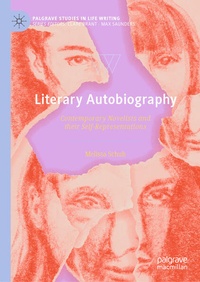
Literary Autobiography
Description
Why do novelists write about themselves? What modes do novelists use to manipulate representations of their personality? Why is it often late in their career that novelists write about their own lives? This book develops the concept of literary autobiography as a genre responding to a profound uncertainty about the knowability of the self, often negotiated through a particular concern with the writing life. Comprising a particular sub-genre and style of contemporary life writing, the autobiographies examined in this book foreground their formal 'literariness' through the explicit use of fictionality, disrupting established (auto)biographical tropes by employing narrative innovations associated with postmodern fiction and prefigured by modernist experimentation. Taken together, they exemplify an aesthetics of performative contradiction, in which novelistic strategies cast doubt on the veracity of the life represented. Exploring works by canonical and popular novelists - J.M. Coetzee, Philip Roth, Günter Grass, Elena Ferrante, and Karl Ove Knausgård - this book addresses the increasing novelisation of contemporary life writing, analysing the related ethical and aesthetic implications of fictionality. More widely, it discusses the current popularity, prevalence of and public appetite for life writing, mapping out the reception and ambiguous position of literary autobiography within the literary marketplace and its adjoining bodies of criticism.
Reviews / Votes
"
Literary Autobiography
is an impressive book that breaks new ground in our understanding of authorial self-representation. Through a discussion of such writers as J.M. Coetzee, Philip Roth, Günter Grass, Elena Ferrante and Karl Ove Knausgård, Schuh argues that literary autobiography has developed as a distinctive form of writing. She shows that this form draws on an aesthetics of performative contradiction in which fictional techniques exist in creative tension with the writers' commitment to telling the truth. What emerges is a cogent and lucid understanding of how contemporary literary autobiographies differ from the experimental autobiographies of earlier periods in ways that respond to the prevailing social and cultural conditions of our time." (Hywel Dix, Bournemouth University, UK)
"Melissa Schuh's
Literary Autobiography
offers a theoretically elegant and literarily sensitive rethinking of the fraught relationship between the novel and autobiography. Central to the book is the concept of performative contradiction, which Schuh develops as the defining aesthetic strategy of literary autobiography-a strategy that embraces fictionality not to undermine life writing, but to open it toward deeper questions of truth, identity, and narrative ethics. Schuh's analyses of Roth, Coetzee, and Grass persuasively show how these works form an aesthetic lineage that contemporary autofiction continues to draw from. This book will be indispensable for scholars across life writing studies, narratology, and literary ethics." (Stefan Kjerkegaard, Aarhus University, Denmark)
"Melissa Schuh's timely study approaches the complex interplay between 'truth' and 'fiction' in literary autobiography. Attending to what she calls 'the critical production of literary value as an ethical and aesthetic resonance', Schuh offers work by J. M. Coetzee, Philip Roth, Günther Grass, Karl Ove Knausgård, and Elena Ferrante as case-study examples of strategically paradoxical performances whose own reception also casts a light on our age's fascination with sincerity - as well as its complex imbrication with discourses and the politics of authenticity." (Andrew van der Vlies, Adelaide University, Australia)
More details
Other editions
Additional editions
Person
Melissa Schuh is Lecturer in English Literature at Kiel University (Germany) and deputy editor for C21 Literature: Journal of 21 st -Century Writings.
Content
Chapter 1: Introduction.- Chapter 2: Aesthetics and Ethics in Autobiography.- Chapter 3: Memory, Sincerity, and the Writing Life.- Chapter 4: The Novelist and Late Style.- Chapter 5: This Age of Autobiography.