

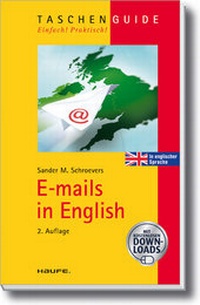
E-mails in English
Description
Inhalte
- Alle Bausteine einer E-Mail von der Anrede bis zur Grußformel
- Muster-E-Mails und -sätze für alle Anlässe von der Einladung bis zur Bestellung
- Mit Infos zu internationaler Etikette und interkulturelle Tipps
- Alle wichtigen Begriffe und Redewendungen
More details
Other editions
New editions
Person
Content
Contents
An E-mail's Anatomy
- Subject Lines That Work
- Common Salutations and Openings
- Ending an E-mail
- Signatures and Disclaimers
- E-mail Techniques: about CC and BCC
A Reader-friendly Approach
- When to Use E-mail and When Not?
- Structuring the Information
- Formal or Informal?
- Netiquette Guidelines
- How to Deal with Attachments
Common Business Situations
- Requesting Information or Favours
- Hotel or Conference Enquiries
- Giving Enquiries
- Change of Address
- Appointments
- Invitations
- Sending Agendas and Minutes
- Refusing a Request
- Complaints
- Apologies
- Congratulations and Season's Greetings
- Thanks
- Payments and Reminders
- Making Offers
- Delivery and Incoterms
- Numbers and Currency Symbols
Practical Reference
- Linguistic Characteristics
- Linguistic Differences: UK-USA
- Useful Vocabulary and Key Terms
- Abbreviations and Acronyms
- False Friends
- E-mail Features
- Tables and Overviews
- Electronic Guidelines on Internet
Index
Leseprobe aus dem Kapitel "Common Business Situations" (S. 42-43)
Requesting Information or Favours
E-mails in which information is requested or given are
among the most common topics in inboxes. When requesting
information, it is well-advised to explain things clearly. Start
for instance by explaining how you obtained the addressee's
contact data and then write what particular information you
would like to have or are interested in.
Bear in mind that writing in a foreign language doesn't mean
simply translating a text from German. Different cultures can
use other ways of asking for things. As mentioned, British
English formulates requests in a slightly more indirect way.
For instance, by using modal auxiliaries, or using the word
please more often. This is shown in the examples below:
Examples
Formal: to an unknown addressee
Dear Sir or Madam
During my last visit to the GDS trade fair at Messe Düsseldorf, I
saw a sample of your products. Our company specialises in the
manufacture of shoemaker's machines and we are looking for a
reliable supplier.
May I ask you to send us full information and details of your
latest models? If possible quote prices in euros please.
Yours faithfully
Silke Mertens
Formal: to a known addressee
Dear Mr Roll
I'm writing with regard to booking one of your workshops.
As we are organising an in-company conference at our firm
'Innovate Consulting' this March, we'd be interested in finding
out whether you are able to give a presentation of about 45
minutes? Our focus is on creating value through a companywide
branding approach. We would be grateful for some information
about your prices and availability. Should you have any
further questions, do not hesitate to contact me.
Yours sincerely
Mr Pirouz Malekzadeh
Managing Director
Informal: to a colleague
Dear Pirouz
Could you send me the latest material on Mahram ketchup
please? I will need it to prepare the pitch in Milan next week. I'd
appreciate your help on this. Let's talk next week and see how
things are going.
Best regards
Sander
Vocabulary:
modal auxiliaries: Modalverben
supplier: Lieferant
to quote: ein Angebot machen