

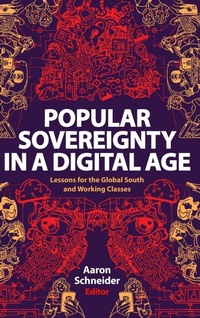
Popular Sovereignty in a Digital Age
Lessons for the Global South and Working Classes
Published on 1. August 2024
Book
Hardback
342 pages
978-1-4384-9885-0 (ISBN)
Description
Looks at how digitalization has changed the way we produce and interact, and the implications for working classes and countries of the Global South.
In the evolution of global capitalism and geopolitics, digitalization presents a new and yet unresolved chapter. In the lead up to digitalization, neoliberalism weakened the welfare states of the Global North and the developmental states of the Global South where they existed. Neoliberalism also disorganized working classes, as Left parties and labor organization declined across the globe. Into this deregulated and unchecked context, digitalization proceeded, and technology companies inserted themselves into multiple sectors, making use of first mover advantage and monopolistic practices to drive out smaller and less advanced firms. We can now characterize a landscape in which states have been weakened, working classes disorganized, and rival firms greatly handicapped, allowing big tech to operate as all-powerful quasi-monopolies. They enjoy unprecedented concentration of wealth, power, and advantage. Worryingly, deregulated technology now penetrates many areas of life with surveillance and control, setting us on a path towards anti-democratic, neo-imperial, and exclusionary futures. Aaron Schneider offers a popular and sovereign alternative, with particular focus on labor and the Global South.
In the evolution of global capitalism and geopolitics, digitalization presents a new and yet unresolved chapter. In the lead up to digitalization, neoliberalism weakened the welfare states of the Global North and the developmental states of the Global South where they existed. Neoliberalism also disorganized working classes, as Left parties and labor organization declined across the globe. Into this deregulated and unchecked context, digitalization proceeded, and technology companies inserted themselves into multiple sectors, making use of first mover advantage and monopolistic practices to drive out smaller and less advanced firms. We can now characterize a landscape in which states have been weakened, working classes disorganized, and rival firms greatly handicapped, allowing big tech to operate as all-powerful quasi-monopolies. They enjoy unprecedented concentration of wealth, power, and advantage. Worryingly, deregulated technology now penetrates many areas of life with surveillance and control, setting us on a path towards anti-democratic, neo-imperial, and exclusionary futures. Aaron Schneider offers a popular and sovereign alternative, with particular focus on labor and the Global South.
Reviews / Votes
"Popular Sovereignty in a Digital Age starts from the realization that the world is undergoing a profound change. Digital information technologies are restructuring society and the state itself, requiring new efforts to build public policies that tackle inequalities. This book covers key issues for our future in the digital age, such as work and income, the environment, democracy, and representativeness, social assistance, and public policies, among others. Especially at a time when fascism is on the rise, it is essential to look ahead, to see what challenges and opportunities the twenty-first century presents, continue to do more and better, learning from the past and always attentive to change." - Luiz Inacio "Lula" da Silva, President of Brazil"Drawing from a diverse group of scholars from marginalized groups, Popular Sovereignty in a Digital Age approaches the issue of digital sovereignty in emerging or non-western countries, especially Brazil, China, and India, from a variety of perspectives. Scholars and students at the intersection of political economy (critical, Marxist studies) and digital studies (Internet and Society, social media studies, digital sociology) will find these essays particularly valuable." - Roderick Graham, author of The Digital Practices of African Americans
"In this thought-provoking book, the authors delve into the intricate landscape of the current global transition, often dubbed the 'fourth industrial revolution.' They skillfully navigate historical shifts over the past century, emphasizing the pivotal role of these transitions in sparking national and international crises. As digital technology reshapes the essence of capitalism, the authors argue for an alternative future grounded in popular sovereignty. Urging action, they emphasize the importance of organized popular sectors, particularly in the global South, to shape the terms of the digital era. The book provocatively explores the challenges and opportunities posed by digitization, advocating for a deeply democratic, socially inclusive, and ecologically sustainable path forward." - David Nemer, author of Technology of the Oppressed
More details
Language
English
Place of publication
Albany, NY
United States
Target group
Professional and scholarly
US School Grade: College Graduate Student and over
Illustrations
4 Tables, black and white; 17 Figures
Dimensions
Height: 235 mm
Width: 157 mm
Thickness: 25 mm
Weight
703 gr
ISBN-13
978-1-4384-9885-0 (9781438498850)
Copyright in bibliographic data and cover images is held by Nielsen Book Services Limited or by the publishers or by their respective licensors: all rights reserved.
Schweitzer Classification
Other editions
Additional editions
Aaron Schneider
Popular Sovereignty in a Digital Age
Lessons for the Global South and Working Classes
E-Book
08/2024
1st Edition
State University of New York Press
from
€88.99
Available for download
Person
Aaron Schneider is Leo Block Chair, Professor of International Studies at the University of Denver. He is the author of China, Latin America, and the Global Economy: Economic, Historical, and National Issues; Renew Orleans? Globalized Development and Worker Resistance after Hurricane Katrina; and State-Building and Tax Regimes in Central America, among other books.
Content
Acknowledgments
1. Introduction
Henrique Estides Delgado and Aaron Schneider
Future Histories
2. A Usable Past for a Democratic Future: How Looking Backward Can Help Us Navigate the Digital Revolution
Lizzie O'Shea
3. Technological Innovations and Fake News: Democratic Challenges and What Is to Be Done
Rafael R. Ioris
4. Computing Machinery and the Modern Triumvirate: State, Market, and Science
Ivan da Costa Marques
Tech, Capital, and Collectivities
5. Evaluating Work in the Platform Economy: The Fairwork Project in Brazil and Latin America
Claudia Nociolini Rebechi, Marcos Aragao de Oliveira, Tatiana Lopez Ayala, Jonas C. L. Valente, Rafael Grohmann, Julice Salvagni, Roseli Aparecida Figaro Paulino, Rodrigo Carelli, Victoria Mendonca da Silva, Ana Flavia Marques da Silva, Camilla Voigt Baptistella, Jackeline Cristina Gameleira Cerqueira da Silva, Helena Rodrigues de Farias, Mark Graham, and Kelle Howson
6. The Role of Fake News in the Erosion of Brazilian Democracy
Tassio Acosta, P. Locatelli, and Silvio Gallo
7. A Conversation with Julietta Hua and Kasturi Ray: Feminism, AI, and Racial Technocapitalism in the Uber 99 and Lyft Economy
Neda Atanasoski
8. On Coding Democracy, Popular Data-Equity, and Algorithmic Action: Notes from Brazil
Andre Isai Leirner
9. Participatory Institutions, Digital Technologies, and Democratic Crises
Benjamin Goldfrank and Yanina Welp
10. Britain's Food Crisis: Capital, Class, Technology, and Alternatives
Benjamin Selwyn
Digital States, Democracy, and Development
11. Global Capitalism after the Pandemic
William I. Robinson
12. Building Digital Sovereignty in Middle Powers: The Role of Intended and Spillover Effects
Vashishtha Doshi
13. Digital Economy Policies for Developing Countries
Parminder Jeet Singh
14. The Chinese Digital Revolution: How Digital Transformation Is Shaping a New China
Alessandro Teixeira Golombiewski and Zhenyu Jiang
15. Digital Futures and Global Power: Dynamics, Inequality, and Governance
Marco Cepik and Pedro Txai Leal Brancher
16. Conclusion
Aaron Schneider
List of Contributors
References
Index
1. Introduction
Henrique Estides Delgado and Aaron Schneider
Future Histories
2. A Usable Past for a Democratic Future: How Looking Backward Can Help Us Navigate the Digital Revolution
Lizzie O'Shea
3. Technological Innovations and Fake News: Democratic Challenges and What Is to Be Done
Rafael R. Ioris
4. Computing Machinery and the Modern Triumvirate: State, Market, and Science
Ivan da Costa Marques
Tech, Capital, and Collectivities
5. Evaluating Work in the Platform Economy: The Fairwork Project in Brazil and Latin America
Claudia Nociolini Rebechi, Marcos Aragao de Oliveira, Tatiana Lopez Ayala, Jonas C. L. Valente, Rafael Grohmann, Julice Salvagni, Roseli Aparecida Figaro Paulino, Rodrigo Carelli, Victoria Mendonca da Silva, Ana Flavia Marques da Silva, Camilla Voigt Baptistella, Jackeline Cristina Gameleira Cerqueira da Silva, Helena Rodrigues de Farias, Mark Graham, and Kelle Howson
6. The Role of Fake News in the Erosion of Brazilian Democracy
Tassio Acosta, P. Locatelli, and Silvio Gallo
7. A Conversation with Julietta Hua and Kasturi Ray: Feminism, AI, and Racial Technocapitalism in the Uber 99 and Lyft Economy
Neda Atanasoski
8. On Coding Democracy, Popular Data-Equity, and Algorithmic Action: Notes from Brazil
Andre Isai Leirner
9. Participatory Institutions, Digital Technologies, and Democratic Crises
Benjamin Goldfrank and Yanina Welp
10. Britain's Food Crisis: Capital, Class, Technology, and Alternatives
Benjamin Selwyn
Digital States, Democracy, and Development
11. Global Capitalism after the Pandemic
William I. Robinson
12. Building Digital Sovereignty in Middle Powers: The Role of Intended and Spillover Effects
Vashishtha Doshi
13. Digital Economy Policies for Developing Countries
Parminder Jeet Singh
14. The Chinese Digital Revolution: How Digital Transformation Is Shaping a New China
Alessandro Teixeira Golombiewski and Zhenyu Jiang
15. Digital Futures and Global Power: Dynamics, Inequality, and Governance
Marco Cepik and Pedro Txai Leal Brancher
16. Conclusion
Aaron Schneider
List of Contributors
References
Index