

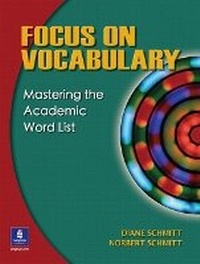
Focus on Vocabulary
Mastering the Academic Word List
Published on 12. May 2005
Book
Paperback/Softback
255 pages
978-0-13-183308-1 (ISBN)
Description
Focus on Vocabulary: Mastering the Academic Word List, by Diane Schmitt and Norbert Schmitt, is a research-based vocabulary textbook that gives high-intermediate to advanced students the advantage they need to succeed in academic environments. Through excerpts from college texts and well-crafted exercises, English learners study the Academic Word List -- the most frequently used words in academic texts. To help students reach a fuller understanding of the new vocabulary, each chapter provides a series of exercises on word meaning and word families. In addition, collocations exercises develop students' ability to form natural partnerships between the target vocabulary and other words. Features *Seven units focus on a variety of subject areas, such as social change, consumer behavior, natural resources, and music. *Each chapter carefully recycles the target vocabulary four times in reading passages and vocabulary-building exercises. *The collocation exercises -- based on the 179-million-word New Longman Corpus -- reflect how academic words are actually used in real contexts.
*Strategy Practice chapters offer tips for dictionary usage, information about word roots and affixes, and methods for expanding students' word knowledge. *An Expansion section at the end of each chapter provides additional reading, discussion, and writing activities that broaden students' understanding of vocabulary.
*Strategy Practice chapters offer tips for dictionary usage, information about word roots and affixes, and methods for expanding students' word knowledge. *An Expansion section at the end of each chapter provides additional reading, discussion, and writing activities that broaden students' understanding of vocabulary.
More details
Language
English
Place of publication
Upper Saddle River
United States
Target group
ELT/ESL
Illustrations
Illustrations, maps, ports.
Dimensions
Height: 275 mm
Width: 210 mm
Thickness: 9 mm
Weight
460 gr
ISBN-13
978-0-13-183308-1 (9780131833081)
Copyright in bibliographic data and cover images is held by Nielsen Book Services Limited or by the publishers or by their respective licensors: all rights reserved.
Schweitzer Classification
Persons
Diane Schmitt began teaching English in Japan and currently lives and teaches in the United Kingdom. She is Academic Team Leader for EFL/TESOL at Nottingham Trent University, where she coordinates all English language instruction at the university. She also contributes to the master's program in English Language Teaching. Her research interests include issues related to the acquisition of English for academic purposes and second-language testing. She is a regular contributor to English teaching conferences.
Norbert Schmitt began his EFL teaching career in Japan, where he taught all levels of students for six years. After completing his Ph.D., he began lecturing at the University of Nottingham, where he is currently Reader of Applied Linguistics and Co-Director of the Centre for Research in Applied Linguistics. He is an active researcher in all aspects of second-language vocabulary studies and has published several books and numerous research papers in this area. He frequently presents at language-teaching conferences and consults on vocabulary learning and testing issues internationally.
Norbert Schmitt began his EFL teaching career in Japan, where he taught all levels of students for six years. After completing his Ph.D., he began lecturing at the University of Nottingham, where he is currently Reader of Applied Linguistics and Co-Director of the Centre for Research in Applied Linguistics. He is an active researcher in all aspects of second-language vocabulary studies and has published several books and numerous research papers in this area. He frequently presents at language-teaching conferences and consults on vocabulary learning and testing issues internationally.
Content
Unit 1 Our Changing Society
Chapter 1: Technology and Society
Reading: Human Societies-From the Iceman to Us
Chapter 2: Social Experience and Personal Development
Reading: Social Forces That Shape Our Lives
Reading: Emotions in Global Perspective: Do Well All Feel the Same?
Chapter 3: The Changing Nature of the Family
Reading: Family Structure
Chapter 4: Strategy Practice
Unit 2 Consumer Behavior and Marketing
Chapter 5: Influencing the Consumer
Reading: Marketing's Impact on Consumers
Chapter 6: Who Buys What? The Family's Influence
Reading: Consumer Socialization of Family Members
Reading: Different Views on Purchasing Behavior
Chapter 7: How We See Ourselves
Reading: How Perspectives on the Self Influence Consumer Behavior
Chapter 8: Strategy Practice
Unit 3 Workplaces and Work Spaces
Chapter 9: How Office Space Affects Behavior
Reading: Work Space Design
Chapter 10: The Modern Office: Symbols of Status
Reading: The Meaning of the Chair
Reading: Office Designs That Work
Chapter 11: Sitting Comfortably
Reading: The Ergonomics of Sitting
Chapter 12: Strategy Practice
Unit 4 Use and Abuse of Natural Resources
Chapter 13: Water for Sale
Reading: Exploding Sales for Bottled Water
Chapter 14: The Aral Sea-An Environmental Disaster
Reading: The Dying Lake
Reading: Creating More Fresh Water Through Desalination
Chapter 15: International Conflict over Natural Resources
Reading: Water Politics in the Middle East and North Africa
Chapter 16: Strategy Practice
Unit 5 We Are What We Eat
Chapter 17: Food Roots and Foodways
Reading: Food Habits and Beliefs
Chapter 18: Getting Back to Nature
Reading: Organic Farming Versus Traditional Farming Methods
Reading: Genetically Modified Foods
Chapter 19: Microorganisms: The Spice of Life?
Reading: Food Microbiology
Chapter 20: Strategy Practice
Unit 6 Encounters with Music and Sound
Chapter 21: Music and Social Conscience
Reading: Opposing War Through Music: Classical and Modern Examples
Chapter 22: Noise Hurts
Reading: Noise Pollution
Reading: The Science of Sound
Chapter 23: Ultrasonics: Super Sound?
Reading: Ultrasonics
Chapter 24: Strategy Practice
Unit 7 Animal Nature
Chapter 25: Endangered Elephants
Reading: Saving the African Elephant: Using International Law and Trade
Chapter 26: Animals: How Human?
Reading: Chimpanzees: Our Closest Relative
Reading: Kanzi: A Case Study of Ape Language Development
Chapter 27: Living Together: Advantage or Disadvantage
Reading: The Costs and Benefits of Social Behavior
Chapter 28: Strategy Practice
Index of Academic Words
Credits
Chapter 1: Technology and Society
Reading: Human Societies-From the Iceman to Us
Chapter 2: Social Experience and Personal Development
Reading: Social Forces That Shape Our Lives
Reading: Emotions in Global Perspective: Do Well All Feel the Same?
Chapter 3: The Changing Nature of the Family
Reading: Family Structure
Chapter 4: Strategy Practice
Unit 2 Consumer Behavior and Marketing
Chapter 5: Influencing the Consumer
Reading: Marketing's Impact on Consumers
Chapter 6: Who Buys What? The Family's Influence
Reading: Consumer Socialization of Family Members
Reading: Different Views on Purchasing Behavior
Chapter 7: How We See Ourselves
Reading: How Perspectives on the Self Influence Consumer Behavior
Chapter 8: Strategy Practice
Unit 3 Workplaces and Work Spaces
Chapter 9: How Office Space Affects Behavior
Reading: Work Space Design
Chapter 10: The Modern Office: Symbols of Status
Reading: The Meaning of the Chair
Reading: Office Designs That Work
Chapter 11: Sitting Comfortably
Reading: The Ergonomics of Sitting
Chapter 12: Strategy Practice
Unit 4 Use and Abuse of Natural Resources
Chapter 13: Water for Sale
Reading: Exploding Sales for Bottled Water
Chapter 14: The Aral Sea-An Environmental Disaster
Reading: The Dying Lake
Reading: Creating More Fresh Water Through Desalination
Chapter 15: International Conflict over Natural Resources
Reading: Water Politics in the Middle East and North Africa
Chapter 16: Strategy Practice
Unit 5 We Are What We Eat
Chapter 17: Food Roots and Foodways
Reading: Food Habits and Beliefs
Chapter 18: Getting Back to Nature
Reading: Organic Farming Versus Traditional Farming Methods
Reading: Genetically Modified Foods
Chapter 19: Microorganisms: The Spice of Life?
Reading: Food Microbiology
Chapter 20: Strategy Practice
Unit 6 Encounters with Music and Sound
Chapter 21: Music and Social Conscience
Reading: Opposing War Through Music: Classical and Modern Examples
Chapter 22: Noise Hurts
Reading: Noise Pollution
Reading: The Science of Sound
Chapter 23: Ultrasonics: Super Sound?
Reading: Ultrasonics
Chapter 24: Strategy Practice
Unit 7 Animal Nature
Chapter 25: Endangered Elephants
Reading: Saving the African Elephant: Using International Law and Trade
Chapter 26: Animals: How Human?
Reading: Chimpanzees: Our Closest Relative
Reading: Kanzi: A Case Study of Ape Language Development
Chapter 27: Living Together: Advantage or Disadvantage
Reading: The Costs and Benefits of Social Behavior
Chapter 28: Strategy Practice
Index of Academic Words
Credits