

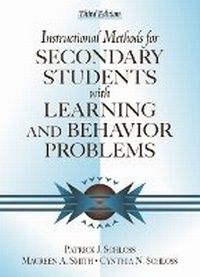
Instructional Methods for Secondary Students with Learning and Behavior Problems
3rd Edition
Published on 24. April 2001
Book
Hardback
415 pages
978-0-205-33070-6 (ISBN)
Description
This book presents teaching principles useful to general high school educators and special educators working with students demonstrating a variety of academic, behavioral, and social needs in secondary schools.
Instructional Methods for Adolescents with Learning and Behavior Problems continues to fill a void in the textbook arena by presenting a comprehensive package of teaching techniques useful in helping secondary special educators develop and implement instruction that is appropriate for all students. The diversity of the needs of secondary students with disabilities and the challenge of providing appropriate educational services in general education settings places unique demands on students and their teachers, and this text provides much-needed information and support.
Instructional Methods for Adolescents with Learning and Behavior Problems continues to fill a void in the textbook arena by presenting a comprehensive package of teaching techniques useful in helping secondary special educators develop and implement instruction that is appropriate for all students. The diversity of the needs of secondary students with disabilities and the challenge of providing appropriate educational services in general education settings places unique demands on students and their teachers, and this text provides much-needed information and support.
More details
Edition
3rd edition
Language
English
Place of publication
United States
Publishing group
Pearson Education (US)
Target group
Professional and scholarly
Dimensions
Height: 242 mm
Width: 182 mm
Thickness: 24 mm
Weight
671 gr
ISBN-13
978-0-205-33070-6 (9780205330706)
Copyright in bibliographic data and cover images is held by Nielsen Book Services Limited or by the publishers or by their respective licensors: all rights reserved.
Schweitzer Classification
Other editions
New editions
Patrick J. Schloss | Maureen A. Schloss | Cynthia N. Schloss
Instructional Methods for Secondary Students with Learning and Behavior Problems
Book
09/2006
4th Edition
Pearson
€129.42
Article is exhausted; no reprint
Content
Each chapter concludes with "Summary" and "References."
Foreword.
Preface.
I.EDUCATIONAL PERSPECTIVES IN SECONDARY SPECIAL EDUCATION.
1.Foundations of Secondary Special Education.
Legislative Foundations.
A Transition Perspective.
The Goals of Secondary Special Education.
Factors Influencing the Development of Secondary Special Education Programs.
2.Postsecondary Service Options.
Postsecondary Educational Programs.
Postsecondary Service Selection.
3.Challenges of Adolescence.
Juvenile Delinquency.
Dropouts.
Substance Abuse.
Depression.
Suicide.
Sexually Transmitted Diseases.
Teenage Pregnancy.
II.GENERAL INSTRUCTIONAL APPROACHES.
4.Instructional Methods for Secondary Learners with Disabilities.
Direct Instruction.
The Sequence of Direct-Instruction Activities.
Learning Strategies.
Constructivism.
Grading.
5.Assessment for Placement and Instruction.
Norm-Referenced Testing.
Curriculum-Based Assessment.
Developing Paper-and-Pencil Tests.
Observation Procedures.
Graphing Observational Data.
Interpreting Graphs.
Portfolio-Based Assessment.
6.Managing the Learning Environment.
Antecedent Control.
Related Personal Characteristics.
Consequence Control.
Self-Management.
School-Wide Systems.
Functional Behavior Assessment.
7.Collaboration and the Role of the Consultant Teacher.
The Consultant Teacher.
Resource Rooms.
III. INSTRUCTION IN BASIC AND FUNCTIONAL SKILLS.
8.Listening and Speaking.
Listening.
Speech.
Language.
Assessment of Listening Skills.
Assessment of Speaking Skills.
Strategies to Improve Listening Skills.
Strategies to Improve Spoken-Language Skills.
9.Written Language.
A Writing Curriculum for Students with Learning Problems.
Writing as a Successful Product.
Writing for Different Purposes.
10.Reading Instruction.
Reading Abilities of Adolescents with Disabilities.
Assessing Reading Ability.
Developmentally Based Reading Objectives.
Reading Objectives Based on Community Demands.
General Principles of Reading Instruction.
Classroom-Based Reading Instruction.
Reading Instruction in Simulation and Community Settings.
11.Mathematics Instruction.
Principles of Effective Secondary Math Instruction.
Process of Effective Transition-Oriented Math Instruction.
12.Vocational Instruction.
Self-Determination.
Assessing Interests and Skills.
Career Awareness Process.
Vocational Objectives.
General Principles of Vocational Instruction.
13.Leisure Education for Positive Leisure Lifestyles.
Concepts of Leisure and Leisure Education.
General Principles of Leisure Instruction.
Leisure Opportunities.
Mechanisms for Developing Leisure Opportunities.
Identifying Appropriate Leisure Options.
Cross-Curriculum Instructional Content Addresses through Leisure Education.
14.Social Skill Instruction.
Definition of Social Skills.
Establishing Objectives.
Social Validation of Goals and Objectives.
Assessing Social Competence.
General Principles of Social Skill Instruction.
15.Teaching in the Content Areas.
Science Education.
Social Studies Education.
Content Enhancements.
Author Index.
Subject Index.
Foreword.
Preface.
I.EDUCATIONAL PERSPECTIVES IN SECONDARY SPECIAL EDUCATION.
1.Foundations of Secondary Special Education.
Legislative Foundations.
A Transition Perspective.
The Goals of Secondary Special Education.
Factors Influencing the Development of Secondary Special Education Programs.
2.Postsecondary Service Options.
Postsecondary Educational Programs.
Postsecondary Service Selection.
3.Challenges of Adolescence.
Juvenile Delinquency.
Dropouts.
Substance Abuse.
Depression.
Suicide.
Sexually Transmitted Diseases.
Teenage Pregnancy.
II.GENERAL INSTRUCTIONAL APPROACHES.
4.Instructional Methods for Secondary Learners with Disabilities.
Direct Instruction.
The Sequence of Direct-Instruction Activities.
Learning Strategies.
Constructivism.
Grading.
5.Assessment for Placement and Instruction.
Norm-Referenced Testing.
Curriculum-Based Assessment.
Developing Paper-and-Pencil Tests.
Observation Procedures.
Graphing Observational Data.
Interpreting Graphs.
Portfolio-Based Assessment.
6.Managing the Learning Environment.
Antecedent Control.
Related Personal Characteristics.
Consequence Control.
Self-Management.
School-Wide Systems.
Functional Behavior Assessment.
7.Collaboration and the Role of the Consultant Teacher.
The Consultant Teacher.
Resource Rooms.
III. INSTRUCTION IN BASIC AND FUNCTIONAL SKILLS.
8.Listening and Speaking.
Listening.
Speech.
Language.
Assessment of Listening Skills.
Assessment of Speaking Skills.
Strategies to Improve Listening Skills.
Strategies to Improve Spoken-Language Skills.
9.Written Language.
A Writing Curriculum for Students with Learning Problems.
Writing as a Successful Product.
Writing for Different Purposes.
10.Reading Instruction.
Reading Abilities of Adolescents with Disabilities.
Assessing Reading Ability.
Developmentally Based Reading Objectives.
Reading Objectives Based on Community Demands.
General Principles of Reading Instruction.
Classroom-Based Reading Instruction.
Reading Instruction in Simulation and Community Settings.
11.Mathematics Instruction.
Principles of Effective Secondary Math Instruction.
Process of Effective Transition-Oriented Math Instruction.
12.Vocational Instruction.
Self-Determination.
Assessing Interests and Skills.
Career Awareness Process.
Vocational Objectives.
General Principles of Vocational Instruction.
13.Leisure Education for Positive Leisure Lifestyles.
Concepts of Leisure and Leisure Education.
General Principles of Leisure Instruction.
Leisure Opportunities.
Mechanisms for Developing Leisure Opportunities.
Identifying Appropriate Leisure Options.
Cross-Curriculum Instructional Content Addresses through Leisure Education.
14.Social Skill Instruction.
Definition of Social Skills.
Establishing Objectives.
Social Validation of Goals and Objectives.
Assessing Social Competence.
General Principles of Social Skill Instruction.
15.Teaching in the Content Areas.
Science Education.
Social Studies Education.
Content Enhancements.
Author Index.
Subject Index.