

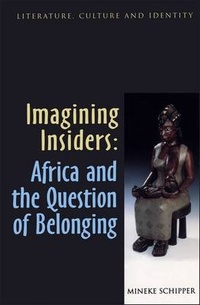
Imagining Insiders
Africa and the Question of Belonging
Published on 1. August 1999
Book
Hardback
256 pages
978-0-304-70478-1 (ISBN)
Description
This study surveys a wide range of writings and ideas out of Africa by people of African descent on the various ways in which "insiders" and "outsiders", "self" and "otherness" have been imagined and defined from African perspectives. Attention is focused on identity issues regarding Africa, Panafricanism, American Black culture, Negritude and Black Consciousness, as well as on whiteness and otherness, black versus white cultures and gender matters in a racialized context. Some theoretical issues in the academic debate on insiders and intercultural dialogue are also discussed, with examples from various disciplines. Five interviews with leading writers conclude the book.
More details
Series
Language
English
Place of publication
London
United Kingdom
Publishing group
Bloomsbury Publishing PLC
Target group
College/higher education
Professional and scholarly
Illustrations
bibliography
Dimensions
Height: 234 mm
Width: 153 mm
Weight
420 gr
ISBN-13
978-0-304-70478-1 (9780304704781)
Copyright in bibliographic data and cover images is held by Nielsen Book Services Limited or by the publishers or by their respective licensors: all rights reserved.
Schweitzer Classification
Other editions
Additional editions
Mineke Schipper
Imagining Insiders
E-Book
08/1999
1st Edition
Continuum International Publishing Group Ltd.
€144.99
Available for download
Content
Insiders and outsiders; homo caudatus - European imagination and its cultural outsiders; "the white man has no friends" - the European other in African oral and written literatures; African roots and American black culture; negritude, black consciousness and beyond; black is beautiful, or the whiteness of feminism; emerging from the shadows - changing patterns in gender matters; knowledge is like an ocean - insiders, outsiders and the academy; towards a culture of interdiscursivity. Interviews: Leopold Sedar Senghor; Wole Soyinka; Buchi Emecheta; Sembene Ousman; Maryse Conde.