

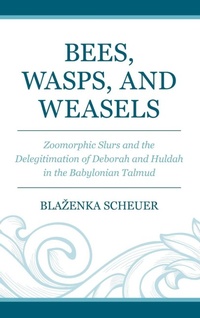
Bees, Wasps, and Weasels
Zoomorphic Slurs and the Delegitimation of Deborah and Huldah in the Babylonian Talmud
Published on 8. August 2023
Book
Hardback
232 pages
978-1-9787-1452-6 (ISBN)
Description
In this book, Blazenka Scheuer explores the zoomorphic content of Zibburta (bee/wasp) and Karkusta (weasel)-demeaning names given by R. Na?man of b. Meg 14b to Deborah and Huldah, two distinguished prophets of the Hebrew Bible. Looking closely at relevant texts, she explores ancient beliefs about bees, wasps, and weasels, recounting a variety of key literary and visual motifs that highlight the different attributes of these animals. Scheuer demonstrates the multiple ways in which zoomorphic images were used as interpretative keys both in the formation of Deborah and Huldah stories in the Hebrew Bible and in their subsequent versions. In a constant process of interaction with their cultural contexts, such zoomorphism represents an attempt to define the rabbinic beliefs about the role of women in Jewish tradition but also about the nature of God. Scheuer argues that the symbolic association of bees and weasels with asexual conception and birth also made the zoomorphic slurs about Deborah and Huldah effective as an argument against the doctrine of virgin birth in early Christianity. Emphasizing the foundational process of constant negotiation of traditions and textual interpretations, Scheuer exposes the culturally rich and religiously competitive world in which the biblical texts were transmitted.
Reviews / Votes
This study is an excellent example of where gender studies in biblical and rabbinic literature is going. The author concentrates on one rabbinic text, which is a comment on two biblical episodes. The episodes are about the two most prominent prophetesses in the Bible-Deborah and Huldah-both bearing the zoomorphic names of bee and weasel. These names are interpreted in the Babylonian Talmud negatively. This saying prompted the author to investigate the biblical prophetesses-and the animals that their names denote in the Bible-in rabbinic literature, in ancient Near Eastern contexts, in Greco-Roman contexts, and finally, in Early Christianity, in association with Mariology. The ability of one scholar to master all these separate disciplines and languages is staggering, and the breadth and depth of the study is most impressive. It is no longer possible to study biblical feminine prophecy, and the rabbinic reaction to it, without reading this book. -- Tal Ilan, Freie Universitaet BerlinMore details
Series
Language
English
Place of publication
United States
Publishing group
Bloomsbury Publishing Plc
Target group
Professional and scholarly
Illustrations
11 b/w photos;
Dimensions
Height: 235 mm
Width: 157 mm
Thickness: 18 mm
Weight
533 gr
ISBN-13
978-1-9787-1452-6 (9781978714526)
Copyright in bibliographic data and cover images is held by Nielsen Book Services Limited or by the publishers or by their respective licensors: all rights reserved.
Schweitzer Classification
Other editions
Additional editions
Blazenka Scheuer
Bees, Wasps, and Weasels
Zoomorphic Slurs and the Delegitimation of Deborah and Huldah in the Babylonian Talmud
E-Book
07/2023
1st Edition
Lexington Books/Fortress Academic
€90.99
Available for download
Blazenka Scheuer
Bees, Wasps, and Weasels
Zoomorphic Slurs and the Delegitimation of Deborah and Huldah in the Babylonian Talmud
E-Book
07/2023
1st Edition
Lexington Books/Fortress Academic
€90.99
Available for download
Person
Blazenka Scheuer is associate professor of Hebrew Bible Studies / Old Testament Exegesis at the Centre for Theology and Religious Studies, Lund University.
Content
Introduction
Chapter One: Deborah, Huldah, and the Formation of Zoomorphic Slurs
Part One: Deborah
Chapter Two: Deborah: A Bee or a Wasp?
Chapter Three: Deborah in the Jewish Diaspora
Chapter Four: Deborah and the Question of a Female Divine
Part Two: Huldah
Chapter Five: Huldah: A Weasel-Prophetess
Chapter Six: Huldah and the Question of Interpretive Authority
Part Three: Deborah, Huldah, and Virgin Mary
Chapter Seven: Deborah, Huldah, and the Virgin Mary
Chapter Eight: Concluding Remarks
Chapter One: Deborah, Huldah, and the Formation of Zoomorphic Slurs
Part One: Deborah
Chapter Two: Deborah: A Bee or a Wasp?
Chapter Three: Deborah in the Jewish Diaspora
Chapter Four: Deborah and the Question of a Female Divine
Part Two: Huldah
Chapter Five: Huldah: A Weasel-Prophetess
Chapter Six: Huldah and the Question of Interpretive Authority
Part Three: Deborah, Huldah, and Virgin Mary
Chapter Seven: Deborah, Huldah, and the Virgin Mary
Chapter Eight: Concluding Remarks