


The Customary International Law of Human Rights
Published on 24. June 2021
Book
Hardback
432 pages
978-0-19-284569-6 (ISBN)
Description
Customary international law is one of the principal sources of public international law. Although its existence is uncontroversial, until now the content of customary international law in the area of human rights has not been analyzed in a comprehensive manner. This book, from one of international law's foremost scholars and practitioners, provides an unparalleled account of the customary international law of human rights. It discusses the emergence of this customary law, the debates about how it is to be identified, and the efforts at formulation of customary norms. In doing so, the book provides a useful and accessible introduction to the content of international human rights.
The author uses the Universal Declaration of Human Rights as a basis to examine human rights norms, and determine whether they may be described as customary. He makes use of relatively new sources of evidence of the two elements for the identification of custom: State practice and opinio juris. In particular, the book draws on the increasingly universal ratification of major human rights treaties and the materials generated by the Universal Periodic Review mechanism of the Human Rights Council. The book concludes that a large number of human rights norms may indeed be described as customary in nature, and that courts should make greater use of custom as a source of international law.
The author uses the Universal Declaration of Human Rights as a basis to examine human rights norms, and determine whether they may be described as customary. He makes use of relatively new sources of evidence of the two elements for the identification of custom: State practice and opinio juris. In particular, the book draws on the increasingly universal ratification of major human rights treaties and the materials generated by the Universal Periodic Review mechanism of the Human Rights Council. The book concludes that a large number of human rights norms may indeed be described as customary in nature, and that courts should make greater use of custom as a source of international law.
More details
Language
English
Place of publication
Oxford
United Kingdom
Target group
Professional and scholarly
Product notice
sewn/stitched
Cloth over boards
Dimensions
Height: 239 mm
Width: 156 mm
Thickness: 32 mm
Weight
792 gr
ISBN-13
978-0-19-284569-6 (9780192845696)
Copyright in bibliographic data and cover images is held by Nielsen Book Services Limited or by the publishers or by their respective licensors: all rights reserved.
Schweitzer Classification
Other editions
Additional editions
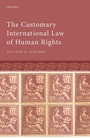
William A. Schabas
The Customary International Law of Human Rights
E-Book
06/2021
1st Edition
OUP eBook
€67.49
Available for download
William A. Schabas
The Customary International Law of Human Rights
E-Book
06/2021
1st Edition
OUP eBook
€67.49
Available for download
Person
William A. Schabas is professor of international law at Middlesex University London. He is also emeritus professor at the National University of Ireland Galway and Leiden University. As a UN human rights expert, he chaired the Commission of Inquiry on the Gaza conflict and authored the Secretary-General's quinquennial report on capital punishment. He served as a commissioner on the Sierra Leone Truth and Reconciliation Commission. He has acted as counsel at the Grand Chamber of the European Court of Human Rights and the International Court of Justice. He is an Officer of the Order of Canada and a Member of the Royal Irish Academy.
Content
Introduction
1: The belated emergence of the customary international law of human rights
2: Identifying the norms of the customary international law of human rights
3: Methodological considerations
4: The right to dignity
5: Equality
6: Fundamental freedoms
7: Political rights
8: Justice
9: Economic, social, and cultural rights
10: Solidarity
Conclusion: The future of the customary law of human rights
1: The belated emergence of the customary international law of human rights
2: Identifying the norms of the customary international law of human rights
3: Methodological considerations
4: The right to dignity
5: Equality
6: Fundamental freedoms
7: Political rights
8: Justice
9: Economic, social, and cultural rights
10: Solidarity
Conclusion: The future of the customary law of human rights