

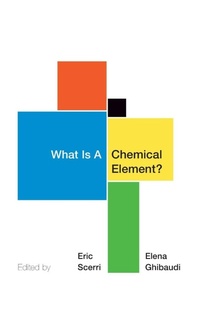
What Is A Chemical Element?
A Collection of Essays by Chemists, Philosophers, Historians, and Educators
Published on 1. July 2020
Book
Hardback
312 pages
978-0-19-093378-4 (ISBN)
Description
The concept of a chemical element is foundational within the field of chemistry, but there is wide disagreement over its definition. Even the International Union for Pure and Applied Chemistry (IUPAC) claims two distinct definitions: a species of atoms versus one which identifies chemical elements with the simple substances bearing their names. The double definition of elements proposed by the International Union for Pure and Applied Chemistry contrasts an abstract meaning and an operational one. Nevertheless, the philosophical aspects of this notion are not fully captured by the IUPAC definitions, despite the fact that they were crucial for the construction of the Periodic Table. Although rich scientific literature on the element and the periodic table exists as well as a recent growth in the philosophy of chemistry, scholars are still searching for a definitive answer to this important question: What is an element?
Eric Scerri and Elena Ghibaudi have teamed up to assemble a group of scholars to provide readers an overview of the current state of the debate on chemical elements from epistemological, historical, and educational perspectives. What Is A Chemical Element? fills a gap for the benefit of the whole chemistry community-experimental researchers, philosophers, chemistry educators, and anyone looking to learn more about the elements of the periodic table.
Eric Scerri and Elena Ghibaudi have teamed up to assemble a group of scholars to provide readers an overview of the current state of the debate on chemical elements from epistemological, historical, and educational perspectives. What Is A Chemical Element? fills a gap for the benefit of the whole chemistry community-experimental researchers, philosophers, chemistry educators, and anyone looking to learn more about the elements of the periodic table.
Reviews / Votes
This volume marks a maturation in the field of philosophy of chemistry...Whether or not the reader is already acquainted with the problem of the element concept, they will find something of interest in this volume, as it builds upon recent literature without assuming a deep familiarity. * Nicholas W. Best, Metascience * Essential reading for anyone with an interest in the philosophy of Cognitive Science. * Ray Buchanan, Alex Grzankowsk, Metascience * Whether or not the reader is already acquainted with the problem of the element concept, they will find something of interest in this volume, as it builds upon recent literature without assuming a deep familiarity. They will find multiple answers to the question, 'What is a chemical element?' * Nicholas W. Best, Western Sydney University, Metascience * This work will be of interest especially to philosophers and historians of science and of chemistry, as well as to practicing chemists and students of chemistry. * R. E. Buntrock, CHOICE * The essays in this book examine the concept of "element" from a variety of schools of thought, and they should prove interesting and informative to philosophers and historians of science in addition to practicing scientists (especially chemists) with a philosophical bent . . . the authors do a commendable job of illustrating the historical and philosophical points using chemical concepts that should be understandable to anyone who has completed a first-year undergraduate chemistry course. Similarly, most philosophical concepts used . . . are explained for the benefit of readers trained in natural science but not academic philosophy. The book is thus suitable for readers with a wide range of interests and academic backgrounds, and will surely stimulate many useful further discussions and debates. * W. Christopher Boyd, Department of Chemistry, Cleveland State University, Bulletin for the History of Chemistry (American Chemical Society) * I am not a chemist but I was able to learn from and be challenged by this volume with my interest in philosophy... I think the philosophers of chemistry as represented in this book would benefit from seeing how philosophers without a background in their discipline approach some of the broader questions they try to address. The philosophers in their turn would benefit from some particular knowledge of the sciences and of the work of scientists with a philosophical turn of mind, such as Scerri. This volume will reward reading by those with a serious interest in both philosophy and in the natural sciences. * Robin Friedman, Midwest Book Review * With his pleasing writing style that combines scientific information, historical perspectives and personal reflection, this book will be an ideal starting point for readers new to Eric Scerri. Meanwhile, those more familiar with his scholarship will find enough that is new in this edition to maintain their interest. * Peter Hodder, Victoria University of Wellington, Chemistry in New Zealand * This book, therefore, is a must-buy in the context of having a fundamental understanding of this central concept in chemistry... Of all the readers of this review who purchase this book, therefore, it is the chemical educators amongst you who will benefit the most. * Geoff Rayner-Canham, Memorial University, Corner Brook, NL Canada, Centaurus * The book...offers a series of wide-ranging and in part innovative scholarly analyses of the subject. The attentive reader will not find a final answer to what an element is, but he or she will better appreciate the complexity and many facets of the question. * Helge Kragh, Substantia, An International Journal of the History of Chemistry *More details
Language
English
Place of publication
New York
United States
Target group
Professional and scholarly
Dimensions
Height: 240 mm
Width: 161 mm
Thickness: 21 mm
Weight
628 gr
ISBN-13
978-0-19-093378-4 (9780190933784)
Copyright in bibliographic data and cover images is held by Nielsen Book Services Limited or by the publishers or by their respective licensors: all rights reserved.
Schweitzer Classification
Other editions
Additional editions
Eric Scerri | Elena Ghibaudi
What Is A Chemical Element?
A Collection of Essays by Chemists, Philosophers, Historians, and Educators
E-Book
05/2020
1st Edition
OUP eBook
€94.99
Available for download
Eric Scerri | Elena Ghibaudi
What Is A Chemical Element?
A Collection of Essays by Chemists, Philosophers, Historians, and Educators
E-Book
05/2020
1st Edition
OUP eBook
€94.99
Available for download
Persons
Eric Scerri is a leading philosopher of science specializing in the history and philosophy of chemistry and especially the periodic table. He is also the founder and editor in chief of the international journal Foundations of Chemistry and has been a full-time lecturer at UCLA for the past twenty years where he regularly teaches classes of 350 chemistry students as well as classes in history and the philosophy of science. Altogether, Scerri has authored or edited a total of 11 books and over 150 journal articles.
Elena Ghibaudi is a bioinorganic chemist with interest in the philosophy of chemistry and chemical education. She is Assistant Professor within the Department of Chemistry at the University of Torino in Italy, and she teaches classes in general and bioinorganic chemistry, as well as in chemical education. Ghibaudi is the author of several articles in the field of chemical education and the philosophy of chemistry including an influential article on the notion of chemical
element. She is a member of the International Society for the Philosophy of Chemistry.
Elena Ghibaudi is a bioinorganic chemist with interest in the philosophy of chemistry and chemical education. She is Assistant Professor within the Department of Chemistry at the University of Torino in Italy, and she teaches classes in general and bioinorganic chemistry, as well as in chemical education. Ghibaudi is the author of several articles in the field of chemical education and the philosophy of chemistry including an influential article on the notion of chemical
element. She is a member of the International Society for the Philosophy of Chemistry.
Content
Foreword Philip Ball
Introduction Eric R. Scerri
CHAPTER 1: The many questions raised by the dual concept of 'element' Eric R. Scerri
CHAPTER 2: From simple substance to chemical element Bernadette Bensaude-Vincent
CHAPTER 3: Dmitrii Mendeleev's concept of the chemical element prior to the Periodic Law Nathan M. Brooks
CHAPTER 4: Referring to chemical elements and compounds: Colourless airs in late eighteenth century chemical practice Geoffrey Blumenthal, James Ladyman, and Vanessa Seifert
CHAPTER 5: The Changing Relation Between Atomicity and Elementarity: From Lavoisier to Dalton Marina P. Banchetti-Robino
CHAPTER 6: Origins of the Ambiguity of the Current Definition of Chemical Element Joseph E. Earley
CHAPTER 7: The Existence of Elements, and the Elements of Existence Robin F. Hendry
CHAPTER 8: Kant, Cassirer, and the Idea of Chemical Element Farzad Mahootian
CHAPTER 9: The Operational Definition of the Elements: A Philosophical Reappraisal Joachim Schummer
CHAPTER 10: Substance and Function: The case of Chemical Elements Jean-Pierre Llored
CHAPTER 11: Making elements Klaus Ruthenberg
CHAPTER 12: A formal approach to the conceptual development of chemical element Guillermo Restrepo
CHAPTER 13: Chemical Elements and Chemical Substances: Rethinking Paneth's Distinction Sara N. Hjimans
CHAPTER 14: The dual conception of the chemical element: epistemic aspects and implications for chemical education Elena Ghibaudi, Alberto Regis, and Ezio Roletto
Appendix: Reference list on the philosophy of chemistry
Index
Introduction Eric R. Scerri
CHAPTER 1: The many questions raised by the dual concept of 'element' Eric R. Scerri
CHAPTER 2: From simple substance to chemical element Bernadette Bensaude-Vincent
CHAPTER 3: Dmitrii Mendeleev's concept of the chemical element prior to the Periodic Law Nathan M. Brooks
CHAPTER 4: Referring to chemical elements and compounds: Colourless airs in late eighteenth century chemical practice Geoffrey Blumenthal, James Ladyman, and Vanessa Seifert
CHAPTER 5: The Changing Relation Between Atomicity and Elementarity: From Lavoisier to Dalton Marina P. Banchetti-Robino
CHAPTER 6: Origins of the Ambiguity of the Current Definition of Chemical Element Joseph E. Earley
CHAPTER 7: The Existence of Elements, and the Elements of Existence Robin F. Hendry
CHAPTER 8: Kant, Cassirer, and the Idea of Chemical Element Farzad Mahootian
CHAPTER 9: The Operational Definition of the Elements: A Philosophical Reappraisal Joachim Schummer
CHAPTER 10: Substance and Function: The case of Chemical Elements Jean-Pierre Llored
CHAPTER 11: Making elements Klaus Ruthenberg
CHAPTER 12: A formal approach to the conceptual development of chemical element Guillermo Restrepo
CHAPTER 13: Chemical Elements and Chemical Substances: Rethinking Paneth's Distinction Sara N. Hjimans
CHAPTER 14: The dual conception of the chemical element: epistemic aspects and implications for chemical education Elena Ghibaudi, Alberto Regis, and Ezio Roletto
Appendix: Reference list on the philosophy of chemistry
Index