


Austinian Themes
Illocution, Action, Knowledge, Truth, and Philosophy
Published on 4. July 2024
Book
Hardback
394 pages
978-0-19-284436-1 (ISBN)
Description
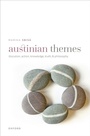
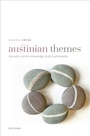
Austinian Themes offers a reconstruction of philosophical views on several themes developed by J. L. Austin. Exploring Austin's work in detail through a series of thematically organized chapters, Marina Sbisa draws on both published work as well as unpublished manuscript notes to offer a defence of Austin's speech act theory, characterized by a specific notion of illocution, against some important criticisms. Sbisa offers a reconstruction of Austin's responsibility-based conception of action drawing on his remarks on acts and actions in How to Do Things with Words and in later papers. Exploring Austin's contributions to epistemology and the philosophy of perception (including his realist stance, anti-scepticism, and presentational view of perception), Sbisa analyses the roles that he assigns to knowledge in the dynamics of assertion. On the theme of truth, Austin's claims are expounded and explained as worthy of reassessment. Other chapters explore the ways in which Austin deals with sense, reference, 'family resemblances', truth-falsity assessments, and context-dependence. Austin's most famous statement of method, as outlining a 'linguistic phenomenology', is cast as analogous to Husserl's phenomenology in adopting an epoche which isolates language (rather than consciousness), a reading which helps to clarify several characteristic positions adopted by Austin. On metaphilosophical themes, Sbisa analyses the notion of ordinariness, distinguishing it from common sense and the endorsement of the 'Linguistic Turn', approaching it instead in terms of the by-default nature of the social bond and conversational cooperation. Various recurrent aspects of Austin's philosophy are illuminated: the opposition to dichotomies, the attention paid to intersubjectivity, the commitment to a 'sober' philosophy, and a strong sense of human situatedness.
More details
Language
English
Place of publication
Oxford
United Kingdom
Target group
Professional and scholarly
Product notice
sewn/stitched
Cloth over boards
Dimensions
Height: 226 mm
Width: 155 mm
Thickness: 30 mm
Weight
748 gr
ISBN-13
978-0-19-284436-1 (9780192844361)
Copyright in bibliographic data and cover images is held by Nielsen Book Services Limited or by the publishers or by their respective licensors: all rights reserved.
Schweitzer Classification
Other editions
Additional editions
E-Book
07/2024
1st Edition
OUP eBook
€113.99
Available for download
E-Book
06/2024
1st Edition
OUP eBook
€113.99
Available for download
Person
Marina Sbisa is Senior Scholar at the University of Trieste. She was awarded her Laurea in Philosophy at the University of Trieste in 1971, and was previously Researcher in Philosophy and Professor in Philosophy of Language at the same university, until retiring in 2018. She has held visiting positions Fuji Women's University, the University of Amiens and CURAPP-CNRS, Sczeczin, and Magdalen College and New College, Oxford. She is a member of the Consultation Board of the International Pragmatics Association and President of the Society for Women in Philosophy Italy. She is the author of Essays on Speech Acts and Other Topics in Pragmatics (OUP, 2023).
Content
Preface
Part 1: Illocution
1: The Discovery of Illocution
2: Discussing Illocution
Part 2: Action
3: Speech as Action
4: From Failure to Action
5: Further Aspects and Implications of Austin's View of Action
Part 3: Knowledge
6: Knowledge and Assertion
7: Perception and Knowledge
8: When We Do Not Know
9: Knowledge in its Making
Part 4: Truth
10: Getting to Grips with Truth
11: Meaning
12: Use
13: Context
Part 5: Philosophy
14: Linguistic Phenomenology
15: Philosophy and the Ordinary
Conclusions
Part 1: Illocution
1: The Discovery of Illocution
2: Discussing Illocution
Part 2: Action
3: Speech as Action
4: From Failure to Action
5: Further Aspects and Implications of Austin's View of Action
Part 3: Knowledge
6: Knowledge and Assertion
7: Perception and Knowledge
8: When We Do Not Know
9: Knowledge in its Making
Part 4: Truth
10: Getting to Grips with Truth
11: Meaning
12: Use
13: Context
Part 5: Philosophy
14: Linguistic Phenomenology
15: Philosophy and the Ordinary
Conclusions