

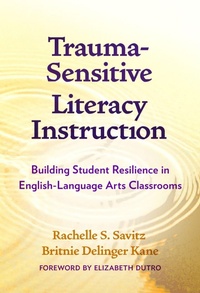
Trauma-Sensitive Literacy Instruction
Building Student Resilience in English-Language Arts Classrooms
Published on 28. July 2023
Book
Paperback/Softback
176 pages
978-0-8077-6892-1 (ISBN)
Description
It is vital for educators to be aware of how traumatic experiences affect today's students, yet few teachers learn the tools needed to successfully teach these students. This book highlights how English Language Arts teachers, who are typically not licensed or specifically trained to work with trauma issues, can design and implement instruction that helps students see that they are supported. This book provides specific strategies for teaching literacy based on the authors' extensive knowledge and experience in trauma-sensitive instruction, adolescent literacy, and culturally responsive-sustaining pedagogies. The authors show how to support middle and high school students with specific literacy practices (reading, speaking, listening, and writing) that build resilience. Trauma-Sensitive Literacy Instruction is for the many teachers who are unsure how to invite students and their traumas into classroom instruction and embed critical discussions and learning within their teaching practices and pedagogy. It will help ELA teachers navigate student trauma in a way that empowers both students and teachers.Book Features:
Responds to research that consistently shows how schools are often places that marginalize-and sometimes traumatize or retraumatize-children.
Offers specific information related to literature, writing, discussion, and inquiry activities focused on various traumatic experiences.
Provides rationales and research, along with examples, teacher vignettes, and steps for incorporating relevant practices in classrooms (grades 6-12).
Responds to research that consistently shows how schools are often places that marginalize-and sometimes traumatize or retraumatize-children.
Offers specific information related to literature, writing, discussion, and inquiry activities focused on various traumatic experiences.
Provides rationales and research, along with examples, teacher vignettes, and steps for incorporating relevant practices in classrooms (grades 6-12).
Reviews / Votes
"The authors describe the negative effects of trauma and give suggestions to teachers for how they can help without taking on the role of certified school counselors.... They recommend various classroom activities, including using text sets, book clubs, reading conferences, anticipation guides, circles of viewpoints, and writing conferences."-CHOICE"(A)n approachable, actionable, and relevant reference for literacy instructors."-Teachers College Record
More details
Language
English
Place of publication
New York
United States
Target group
Professional and scholarly
Product notice
Paperback (trade)
Unsewn / adhesive bound
Dimensions
Height: 226 mm
Width: 155 mm
Thickness: 13 mm
Weight
249 gr
ISBN-13
978-0-8077-6892-1 (9780807768921)
Copyright in bibliographic data and cover images is held by Nielsen Book Services Limited or by the publishers or by their respective licensors: all rights reserved.
Schweitzer Classification
Persons
Rachelle S. Savitz is an associate professor in the Department of Literacy Studies, English Education and History Education in the College of Education at East Carolina University in Greenville, North Carolina. Britnie Delinger Kane is an associate professor of literacy education in the Zucker Family School of Education at The Citadel in Charleston, South Carolina, where she also serves as the department head.
Content
Contents (Tentative)
Foreword
Acknowledgments
1. Introduction
What Is Trauma?
Trauma in Schools
How Does Trauma Influence Learning?
How Can Schools Become More Supportive Places?
The Purpose of This Book
Who are We and Why are We Writing This Book?
2. Three Pillars of Trauma-Sensitive Literacy Instruction
The Research Base for This Book
Five Pillars of Trauma-Sensitive Literacy Instruction: A Framework
3. Curating Appropriate, High-Quality Literature in TSLI
What Does Literature Have to Do With It?
Curating Novels to Build Classroom Libraries
Conclusion
4. Critical Dialogue and Discussion in TSLI
Dialogic Teaching and Critical Literacy Practices
5. Using Writing in TSLI
What About Teachers? Should We Be Using Expressive Writing to Support Students Experiencing Trauma?
Teaching Writing in Trauma-Sensitive Ways: A Vignette
Conclusion
6. Critical Inquiry in TSLI
Critical Inquiry as a Trauma-Sensitive Literacy Practice
Guiding Principles for Designing Units of Trauma-Sensitive Critical Inquiry
Conclusion
7. Hot Moments-Teacher Self Care
Handling "Hot Moments"
The Emotional Labor of Teaching, Compassion Fatigue, and Compassion Satisfaction
Conclusion
References
Index
About the Authors
Foreword
Acknowledgments
1. Introduction
What Is Trauma?
Trauma in Schools
How Does Trauma Influence Learning?
How Can Schools Become More Supportive Places?
The Purpose of This Book
Who are We and Why are We Writing This Book?
2. Three Pillars of Trauma-Sensitive Literacy Instruction
The Research Base for This Book
Five Pillars of Trauma-Sensitive Literacy Instruction: A Framework
3. Curating Appropriate, High-Quality Literature in TSLI
What Does Literature Have to Do With It?
Curating Novels to Build Classroom Libraries
Conclusion
4. Critical Dialogue and Discussion in TSLI
Dialogic Teaching and Critical Literacy Practices
5. Using Writing in TSLI
What About Teachers? Should We Be Using Expressive Writing to Support Students Experiencing Trauma?
Teaching Writing in Trauma-Sensitive Ways: A Vignette
Conclusion
6. Critical Inquiry in TSLI
Critical Inquiry as a Trauma-Sensitive Literacy Practice
Guiding Principles for Designing Units of Trauma-Sensitive Critical Inquiry
Conclusion
7. Hot Moments-Teacher Self Care
Handling "Hot Moments"
The Emotional Labor of Teaching, Compassion Fatigue, and Compassion Satisfaction
Conclusion
References
Index
About the Authors