


Realistic and Ethical Use of Artificial Intelligence
1st Edition
Will be published approx. on 8. December 2025
Book
Paperback/Softback
182 pages
978-1-041-03236-6 (ISBN)
Description
Current perspectives on artificial intelligence (AI) tend to focus on the wide parameters between fear and hope. Realistic and Ethical Use of Artificial Intelligence provides some (ethical) hope with realistic solutions. It deals with the complexities of AI, unpacking specific challenges presented by the AI problem and suggesting what we do about them.
This book is written by an experienced researcher and a young innovator, with expert reflections from researchers and practitioners. It promotes community-focused, collective values and ethical uses of AI, and it challenges ideologies based on capitalist modes of consumption, privilege and exploitation. Chapters explain current understandings of AI, how it has developed since its inception and the various types of AI. The text explores issues such as scraping of data, privacy, unethical corporate practices, trust and AI abuse, as well as outlining the potential environmental, social and psychological impact of AI - for better and for worse. Discussions across this book are underpinned by both research and media perspectives that introduce concerns and offer suggestions and explanations about ways to use AI in realistic and ethical ways.
This up-to-date text is ideal for anyone looking for a deeper understanding of what counts as AI, the moral questions troubling both researchers and the general public and how AI can be a fantastic tool if built and used ethically.
This book is written by an experienced researcher and a young innovator, with expert reflections from researchers and practitioners. It promotes community-focused, collective values and ethical uses of AI, and it challenges ideologies based on capitalist modes of consumption, privilege and exploitation. Chapters explain current understandings of AI, how it has developed since its inception and the various types of AI. The text explores issues such as scraping of data, privacy, unethical corporate practices, trust and AI abuse, as well as outlining the potential environmental, social and psychological impact of AI - for better and for worse. Discussions across this book are underpinned by both research and media perspectives that introduce concerns and offer suggestions and explanations about ways to use AI in realistic and ethical ways.
This up-to-date text is ideal for anyone looking for a deeper understanding of what counts as AI, the moral questions troubling both researchers and the general public and how AI can be a fantastic tool if built and used ethically.
More details
Language
English
Place of publication
London
United Kingdom
Publishing group
Taylor & Francis Ltd
Target group
College/higher education
Professional and scholarly
Academic, Postgraduate, and Professional Practice & Development
Illustrations
11 s/w Tabellen, 5 s/w Zeichnungen, 17 s/w Abbildungen, 12 s/w Photographien bzw. Rasterbilder
11 Tables, black and white; 5 Line drawings, black and white; 12 Halftones, black and white; 17 Illustrations, black and white
Dimensions
Height: 234 mm
Width: 156 mm
Thickness: 11 mm
Weight
313 gr
ISBN-13
978-1-041-03236-6 (9781041032366)
Copyright in bibliographic data and cover images is held by Nielsen Book Services Limited or by the publishers or by their respective licensors: all rights reserved.
Schweitzer Classification
Other editions
Additional editions
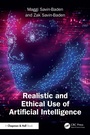
Maggi Savin-Baden | Zak Savin-Baden
Realistic and Ethical Use of Artificial Intelligence
E-Book
12/2025
Chapman and Hall
€69.99
Available for download
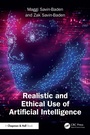
Maggi Savin-Baden | Zak Savin-Baden
Realistic and Ethical Use of Artificial Intelligence
E-Book
12/2025
Chapman and Hall
€69.99
Available for download

Maggi Savin-Baden | Zak Savin-Baden
Realistic and Ethical Use of Artificial Intelligence
Book
approx. 12/2025
1st Edition
CRC Press
€174.70
Not yet published
Persons
Maggi Savin-Baden is a Professor and Senior Research Fellow at Las Casas Institute for Social Justice Blackfriars Hall, University of Oxford. She has authored, coauthored and edited 29 books in the areas of innovative learning, digital fluency, artificial intelligence, the postdigital, digital afterlife, pedagogical agents, qualitative research methods, problem-based learning and the metaverse. She is currently co-editor of the Metaverse book series. In her spare time, she runs, bakes, climbs, does triathlons and wild swimming.
Zak Savin-Baden completed his degree in Computer Science from Birmingham City University, gaining a first. He has since completed his master's degree in Artificial Intelligence, published an article and 2 book chapters as well as providing introductory talks on AI, and he is currently working towards a PhD. In his spare time, he is a runner, gamer, programmer and enjoys making 3D models with his 3D printer.
Zak Savin-Baden completed his degree in Computer Science from Birmingham City University, gaining a first. He has since completed his master's degree in Artificial Intelligence, published an article and 2 book chapters as well as providing introductory talks on AI, and he is currently working towards a PhD. In his spare time, he is a runner, gamer, programmer and enjoys making 3D models with his 3D printer.
Content
1. The AI problem 2. Understanding AI 3. Large Language Models and Generative AI 4. The uses and dangers of LLMs 5. Climate change 6. The morals in the machine 7. Ethics and AI 8. Realistic options 9. The panic of the future and the need for dissent 10. Death, ethics and artificial intelligence Reflection and strategy for realistic and responsible AI