


Development of Movement Coordination in Children
Applications in the Field of Ergonomics, Health Sciences and Sport
Published on 22. May 2003
Book
Paperback/Softback
288 pages
978-0-415-24737-5 (ISBN)
Description
Co-ordination of movement plays a key role in human development and is an important area in sport and health sciences. This book looks in detail at how children develop basic skills, such as walking and reaching for objects, and more complex skills such as throwing and catching a ball accurately or riding a bicycle.
Development of Movement Co-ordination in Children is informed by five major theoretical perspectives and are explained in an introductory chapter:
* neural maturation
* information processing
* direct perception
* dynamic systems
* constraint theory.
The international contributions are brought together under the headings of ergonomics, health sciences and sport. Focusing on practical applications, individual chapters cover many different aspects of movement behaviour and development, ranging from children's over-estimation of their physical abilities and the links to injury proneness, to the co-ordination of kicking techniques. Both normal and abnormal development is considered.
This text will be of considerable interest to students, teachers and professionals in the fields of sport science, kinesiology, physical education, ergonomics and developmental psychology.
Development of Movement Co-ordination in Children is informed by five major theoretical perspectives and are explained in an introductory chapter:
* neural maturation
* information processing
* direct perception
* dynamic systems
* constraint theory.
The international contributions are brought together under the headings of ergonomics, health sciences and sport. Focusing on practical applications, individual chapters cover many different aspects of movement behaviour and development, ranging from children's over-estimation of their physical abilities and the links to injury proneness, to the co-ordination of kicking techniques. Both normal and abnormal development is considered.
This text will be of considerable interest to students, teachers and professionals in the fields of sport science, kinesiology, physical education, ergonomics and developmental psychology.
Reviews / Votes
'Very well-structured, well-written and important contribution to the motor learning literature. Many individuals, including students, teachers and those working in the sport, health and exercise sciences will find in it a great deal of valuable information, and therefore I strongly recommend it to those working in these fields.' - European Physical Education ReviewMore details
Language
English
Place of publication
London
United Kingdom
Publishing group
Taylor & Francis Ltd
Target group
College/higher education
Professional and scholarly
Dimensions
Height: 234 mm
Width: 156 mm
Thickness: 16 mm
Weight
447 gr
ISBN-13
978-0-415-24737-5 (9780415247375)
Copyright in bibliographic data and cover images is held by Nielsen Book Services Limited or by the publishers or by their respective licensors: all rights reserved.
Schweitzer Classification
Other editions
Additional editions
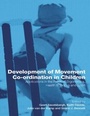
Geert Savelsbergh | Keith Davids | John van der Kamp
Development of Movement Coordination in Children
Applications in the Field of Ergonomics, Health Sciences and Sport
E-Book
04/2013
1st Edition
Routledge
€78.99
Available for download
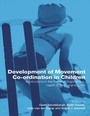
Geert Savelsbergh | Keith Davids | John van der Kamp
Development of Movement Coordination in Children
Applications in the Field of Ergonomics, Health Sciences and Sport
E-Book
04/2013
1st Edition
Routledge
€78.99
Available for download

Geert Savelsbergh | Keith Davids | John van der Kamp
Development of Movement Coordination in Children
Applications in the Field of Ergonomics, Health Sciences and Sport
Book
05/2003
Routledge
€313.10
Shipment within 15-20 days
Persons
John van der Kamp, Geert Savelsbergh, Keith Davids, Simon J. Bennett
Content
1. Theoretical Perspectives on the Development of Movement Co-ordination in Children ergonomics 2. Motor Development and Ergonomics: Lifting Objects as a Window on Motor Control Children 3. Children's Overestimation of their Physical Abilities: Links to Injury Proneness 4. Road-Crossing Behaviour in Young Children 5. Learning to Draw and to Write: Issues of Variability and Constraints 6. Constraints in Children's Learning to use Spoon Health Sciences 7. Reflexes Reflected: Past and Present of Theory and Practice 8. Children's Co-ordination and Developmental Movement Difficulty 9. Perceptual-Motor Behaviour of Children with Down Syndrome 10. Discrete Bimanual Movement Co-ordination in Children with Hemiparetic Cerebral Palsy 11. Locomotion in Children with Cerebral Palsy: Early Predictive Factors for Ambulation and Gait Analysis Sport 12. Catching Action Development 13. degrees of Freedom, Movement Co-Ordination and Interceptive Action of Children With and Without Cerebral Palsy 14. The Development of Throwing Behaviour 15. The Co-ordination of Kicking Techniques in Children 16. Development of Locomotor Co-ordination and Control in Children