

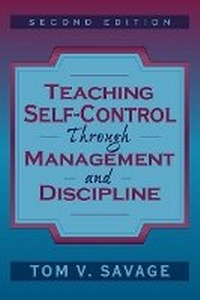
Teaching Self-Control Through Management and Discipline
2nd Edition
Published on 26. May 1999
Book
Paperback/Softback
272 pages
978-0-205-28819-9 (ISBN)
Description
New teachers need specific and concrete concepts and applications to help them manage a classroom environment so that learning can take place. This book takes the unique perspective of integrating management and discipline, giving teachers the tools to teach self-discipline and prevent student misbehavior. Instead of directing the focus on how to handle misbehavior, teachers are shown tactics for avoiding discipline problems, using numerous discipline scenarios and applications. For the student, learning self-control is one of the most important outcomes of the school experience, and the author uses this goal as a framework for directing the teacher to decide on a personal management and discipline plan.
More details
Other editions
Previous edition

Tom V. Savage
Discipline for Self-control
Book
12/1991
Allyn & Bacon
€19.80
Article exhausted; check for reprint
Content
Each chapter begins with "Introduction" and concludes with "Summary," "Suggested Applications," and "Suggested Readings."
1.Understanding Management and Discipline in the Classroom.
What Are the Causes of Discipline Problems?
Defining Management and Discipline.
Discipline as a Central Educational Concept.
The Goal of Discipline.
The Management and Discipline Domain.
I.EFFECTIVE CLASSROOM MANAGEMENT.
2.Establishing Teacher Authority and Leadership.
What Is Leadership?
Teacher Consistency.
Sharing Power and Responsibility.
Establishing Authority and Leadership.
Sharing Power through Establishment of Classroom Rules.
3.Motivation and Discipline.
Motivational Variables.
Valuing Learning Goals.
Accommodating Needs and Interests in the Classroom.
Altering Perceptions of Required Effort.
Increasing the Probability of Success.
4.Arranging the Physical Environment.
Goals to Be Considered When Planning the Environment.
Dimensions of the Physical Environment.
The Classroom Ambiance.
Classroom Density.
5.Preventing Problems through Time Management.
Understanding Different Types of Time.
Pacing Classroom Activities.
Providing Clear Directions.
Managing Transitions.
Monitoring Student Work.
6.Preventing Problems through Lesson Management.
The Dimensions of Lesson Management.
II.RESPONDING TO PROBLEMS.
7.Responding to Inappropriate Behavior.
The Purpose of Discipline.
Some Principles to Consider Choosing a Response.
Choosing a Response to Misbehavior.
8.Responding to Minor Problems and Supporting Self-Control.
Modeling Self-Control.
Low Profile Responses.
Gaining Cooperation through Communication.
9.Direct Teacher Intervention.
Teacher Assertiveness.
Understanding the Link between Behavior and Consequence.
Implementing Reasonable Consequences.
Identifying Alternative Consequences.
Mistaken Goals.
10.Responding to Persistent Misbehavior.
Teacher Responses.
Behavior Modification.
11.Responding to Serious Behavior Problems.
Attendance Problems.
Cheating.
Stealing.
Vandalism.
Violence against Other Students.
Violence against Teachers.
Drug and Alcohol Abuse.
12.Teaching Conflict Resolution.
Understanding Conflict.
Responses to Conflict.
Solving Conflicts Using Negotiation, Mediation, and Arbitration.
1.Understanding Management and Discipline in the Classroom.
What Are the Causes of Discipline Problems?
Defining Management and Discipline.
Discipline as a Central Educational Concept.
The Goal of Discipline.
The Management and Discipline Domain.
I.EFFECTIVE CLASSROOM MANAGEMENT.
2.Establishing Teacher Authority and Leadership.
What Is Leadership?
Teacher Consistency.
Sharing Power and Responsibility.
Establishing Authority and Leadership.
Sharing Power through Establishment of Classroom Rules.
3.Motivation and Discipline.
Motivational Variables.
Valuing Learning Goals.
Accommodating Needs and Interests in the Classroom.
Altering Perceptions of Required Effort.
Increasing the Probability of Success.
4.Arranging the Physical Environment.
Goals to Be Considered When Planning the Environment.
Dimensions of the Physical Environment.
The Classroom Ambiance.
Classroom Density.
5.Preventing Problems through Time Management.
Understanding Different Types of Time.
Pacing Classroom Activities.
Providing Clear Directions.
Managing Transitions.
Monitoring Student Work.
6.Preventing Problems through Lesson Management.
The Dimensions of Lesson Management.
II.RESPONDING TO PROBLEMS.
7.Responding to Inappropriate Behavior.
The Purpose of Discipline.
Some Principles to Consider Choosing a Response.
Choosing a Response to Misbehavior.
8.Responding to Minor Problems and Supporting Self-Control.
Modeling Self-Control.
Low Profile Responses.
Gaining Cooperation through Communication.
9.Direct Teacher Intervention.
Teacher Assertiveness.
Understanding the Link between Behavior and Consequence.
Implementing Reasonable Consequences.
Identifying Alternative Consequences.
Mistaken Goals.
10.Responding to Persistent Misbehavior.
Teacher Responses.
Behavior Modification.
11.Responding to Serious Behavior Problems.
Attendance Problems.
Cheating.
Stealing.
Vandalism.
Violence against Other Students.
Violence against Teachers.
Drug and Alcohol Abuse.
12.Teaching Conflict Resolution.
Understanding Conflict.
Responses to Conflict.
Solving Conflicts Using Negotiation, Mediation, and Arbitration.