

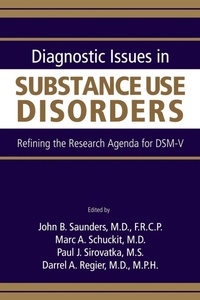
Diagnostic Issues in Substance Use Disorders
Refining the Research Agenda for DSM-V
Published on 23. June 2007
Book
Paperback/Softback
352 pages
978-0-89042-299-1 (ISBN)
Description
Inviting the help of colleagues worldwide, the concise
Diagnostic Issues in Substance Use Disorders is part of the new
series Advancing the Research Agenda for DSM-V. Its 19 chapters by an
international group of experts are designed to stimulate questions that will
help guide research related to the development of the next editions of the
Diagnostic and Statistical Manual of Mental Disorders (DSM-V) and
the International Classification of Diseases (ICD-11), with the goal
of ensuring that the major substance use diagnoses represent the same
condition in both references. They cover 10 major issues in three main sections:
* Overarching issues relevant for the development of international
diagnostic systems-statistical modeling techniques and whether DSM-V
should use categorical and/or dimensional diagnostic approaches; methods
review, emphasizing new hybrid techniques for developing and testing
diagnostic concepts; the need for separate clinical and research-oriented
diagnostic criteria, incorporating both categorical and dimensional
attributes; neurobiological changes characterizing substance dependence; the
importance of cultural attributes in developing definitions of substance use
disorders; and the history of the development of diagnostic systems and how
to optimize the "crosswalk" between DSM and ICD.
* Research questions
more specific to the substance use disorders section of
DSM-comorbidity between substance use disorders and other psychiatric
conditions, the relatively unique clinical course of substance-induced
mental disorders and appropriate treatment approaches; the precision of the
criteria and threshold for a diagnosis and how to improve them; the subtypes
of substance use disorder, including how they have been derived and the
extent to which they relate to neurobiological processes; the seemingly high
prevalence of alcohol dependence in young people; suggested research
questions to evaluate the application of diagnostic criteria to adolescents;
and the specific psychoactive substances cannabis and nicotine.
*
Whether substance use disorders should be included in a broader
section termed "addictive disorders"-impulse-control disorders
(especially pathological gambling and the advantages and disadvantages of
adding it to the current substance use disorders section), identifying
research opportunities regarding their assessment and neurocognitive and
physiological bases, discussing the specifics of the research agenda and how
it might be implemented, and presenting questions generated by the research
agenda developmental process.
This informative compendium distills
the findings of a wealth of recent research and concludes with
recommendations for exploiting research opportunities that promise to inform
decisions regarding DSM-V and other classification systems. As such, it will
prove invaluable for clinicians and researchers everywhere.
Diagnostic Issues in Substance Use Disorders is part of the new
series Advancing the Research Agenda for DSM-V. Its 19 chapters by an
international group of experts are designed to stimulate questions that will
help guide research related to the development of the next editions of the
Diagnostic and Statistical Manual of Mental Disorders (DSM-V) and
the International Classification of Diseases (ICD-11), with the goal
of ensuring that the major substance use diagnoses represent the same
condition in both references. They cover 10 major issues in three main sections:
* Overarching issues relevant for the development of international
diagnostic systems-statistical modeling techniques and whether DSM-V
should use categorical and/or dimensional diagnostic approaches; methods
review, emphasizing new hybrid techniques for developing and testing
diagnostic concepts; the need for separate clinical and research-oriented
diagnostic criteria, incorporating both categorical and dimensional
attributes; neurobiological changes characterizing substance dependence; the
importance of cultural attributes in developing definitions of substance use
disorders; and the history of the development of diagnostic systems and how
to optimize the "crosswalk" between DSM and ICD.
* Research questions
more specific to the substance use disorders section of
DSM-comorbidity between substance use disorders and other psychiatric
conditions, the relatively unique clinical course of substance-induced
mental disorders and appropriate treatment approaches; the precision of the
criteria and threshold for a diagnosis and how to improve them; the subtypes
of substance use disorder, including how they have been derived and the
extent to which they relate to neurobiological processes; the seemingly high
prevalence of alcohol dependence in young people; suggested research
questions to evaluate the application of diagnostic criteria to adolescents;
and the specific psychoactive substances cannabis and nicotine.
*
Whether substance use disorders should be included in a broader
section termed "addictive disorders"-impulse-control disorders
(especially pathological gambling and the advantages and disadvantages of
adding it to the current substance use disorders section), identifying
research opportunities regarding their assessment and neurocognitive and
physiological bases, discussing the specifics of the research agenda and how
it might be implemented, and presenting questions generated by the research
agenda developmental process.
This informative compendium distills
the findings of a wealth of recent research and concludes with
recommendations for exploiting research opportunities that promise to inform
decisions regarding DSM-V and other classification systems. As such, it will
prove invaluable for clinicians and researchers everywhere.
Reviews / Votes
This book documents the thoughtful approach of thesubstance use disorder working group in approaching the future DSM-V
disorders. This well written and scholarly text will provide readers with
useful insights into the DSM process for substance use disorders. -- Michael Schrift, DO * Doody Review *
More details
Language
English
Place of publication
VA
United States
Target group
Professional and scholarly
US School Grade: College Graduate Student and over
Product notice
Paperback (trade)
Illustrations
22 Tables, unspecified; 7 Line drawings, black and white
Dimensions
Height: 229 mm
Width: 152 mm
Thickness: 19 mm
Weight
475 gr
ISBN-13
978-0-89042-299-1 (9780890422991)
Copyright in bibliographic data and cover images is held by Nielsen Book Services Limited or by the publishers or by their respective licensors: all rights reserved.
Schweitzer Classification
Other editions
Additional editions
E-Book
12/2007
1st Edition
American Psychiatric Publishing
€88.59
Available for download
Persons
John B. Saunders, M.D., F.R.C.P., is Professor of
Alcohol and Drug Studies and Director of Alcohol and Drug Services at the
University of Queensland School of Medicine and Royal Brisbane and Women's
Hospital in Herston, Queensland, Australia.
Marc A. Schuckit, M.D.,
is Professor of Psychiatry at the Alcohol Research Center, and Director
of the Alcohol and Drug Treatment Program, at VA San Diego Healthcare System
in La Jolla, California.
Paul Sirovatka, M.S., is Associate
Director for Research Policy Analysis in the Division of Research/American
Psychiatric Institute for Research and Education in Arlington,
Virginia.
Darrel A. Regier, M.D., M.P.H., is Executive
Director of the American Psychiatric Institute for Research and Education
(APIRE) of the American Psychiatric Association in Arlington, Virginia.
Alcohol and Drug Studies and Director of Alcohol and Drug Services at the
University of Queensland School of Medicine and Royal Brisbane and Women's
Hospital in Herston, Queensland, Australia.
Marc A. Schuckit, M.D.,
is Professor of Psychiatry at the Alcohol Research Center, and Director
of the Alcohol and Drug Treatment Program, at VA San Diego Healthcare System
in La Jolla, California.
Paul Sirovatka, M.S., is Associate
Director for Research Policy Analysis in the Division of Research/American
Psychiatric Institute for Research and Education in Arlington,
Virginia.
Darrel A. Regier, M.D., M.P.H., is Executive
Director of the American Psychiatric Institute for Research and Education
(APIRE) of the American Psychiatric Association in Arlington, Virginia.
Content
CONTRIBUTORS
DISCLOSURE
STATEMENT
FOREWORD
INTRODUCTION: DEVELOPMENT OF A RESEARCH AGENDA
FOR SUBSTANCE USE DISORDERS DIAGNOSIS IN DSM-V
Chapter 1. SHOULD
SUBSTANCE USE DISORDERS BE CONSIDERED CATEGORICAL OR
DIMENSIONAL?
Chapter 2. SHOULD THERE BE BOTH CATEGORICAL AND DIMENSIONAL
CRITERIA FOR THE SUBSTANCE USE DISORDERS IN DSM-V?
Chapter 3.
NEUROBIOLOGY OF ADDICTION: A Neuroadaptational View Relevant for
Diagnosis
Chapter 4. CULTURAL AND SOCIETAL INFLUENCES ON SUBSTANCE USE
DIAGNOSES AND CRITERIA
Chapter 5. CULTURAL ISSUES AND PSYCHIATRIC
DIAGNOSIS: Providing a General Background for Considering Substance Use
Diagnoses
Chapter 6. SUBSTANCE DEPENDENCE AND NONDEPENDENCE IN DSM AND
THE ICD: Can an Identical Conceptualization Be Achieved?
Chapter 7.
SUBSTANCE USE DISORDERS: DSM-IV and ICD-10
Chapter 8. COMORBIDITY OF
SUBSTANCE USE DISORDERS WITH PSYCHIATRIC CONDITIONS
Chapter 9.
COMORBIDITY OF SUBSTANCE USE WITH DEPRESSION AND OTHER MENTAL DISORDERS:
From DSM-IV to DSM-V
Chapter 10. ARE THERE EMPIRICALLY SUPPORTED AND
CLINICALLY USEFUL SUBTYPES OF ALCOHOL DEPENDENCE?
Chapter 11. SUBTYPES
OF SUBSTANCE DEPENDENCE AND ABUSE: Implications for Diagnostic
Classification and Empirical Research
Chapter 12. DIAGNOSIS OF ALCOHOL
DEPENDENCE IN EPIDEMIOLOGICAL SURVEYS: An Epidemic of Youthful Alcohol
Dependence or a Case of Measurement Error?
Chapter 13. ADOLESCENTS AND
SUBSTANCE-RELATED DISORDERS: Research Agenda to Guide Decisions About
DSM-V
Chapter 14. ARE SPECIFIC DEPENDENCE CRITERIA NECESSARY FOR
DIFFERENT SUBSTANCES?: How Can Research on Cannabis Inform This
Issue?
Chapter 15. SHOULD CRITERIA FOR DRUG DEPENDENCE DIFFER ACROSS
DRUGS?
Chapter 16. SHOULD ADDICTIVE DISORDERS INCLUDE
NON-SUBSTANCE-RELATED CONDITIONS?
Chapter 17. SHOULD THE SCOPE OF
ADDICTIVE BEHAVIORS BE BROADENED TO INCLUDE PATHOLOGICAL
GAMBLING?
Chapter 18. CHARACTERISTICS OF NOSOLOGICALLY INFORMATIVE DATA
SETS THAT ADDRESS KEY DIAGNOSTIC ISSUES FACING THE DSM-V AND ICD-11
SUBSTANCE USE DISORDERS WORKGROUPS
Chapter 19. EMPIRICAL BASIS OF
SUBSTANCE USE DISORDERS DIAGNOSIS: Research Recommendations for
DSM-V
INDEX
DISCLOSURE
STATEMENT
FOREWORD
INTRODUCTION: DEVELOPMENT OF A RESEARCH AGENDA
FOR SUBSTANCE USE DISORDERS DIAGNOSIS IN DSM-V
Chapter 1. SHOULD
SUBSTANCE USE DISORDERS BE CONSIDERED CATEGORICAL OR
DIMENSIONAL?
Chapter 2. SHOULD THERE BE BOTH CATEGORICAL AND DIMENSIONAL
CRITERIA FOR THE SUBSTANCE USE DISORDERS IN DSM-V?
Chapter 3.
NEUROBIOLOGY OF ADDICTION: A Neuroadaptational View Relevant for
Diagnosis
Chapter 4. CULTURAL AND SOCIETAL INFLUENCES ON SUBSTANCE USE
DIAGNOSES AND CRITERIA
Chapter 5. CULTURAL ISSUES AND PSYCHIATRIC
DIAGNOSIS: Providing a General Background for Considering Substance Use
Diagnoses
Chapter 6. SUBSTANCE DEPENDENCE AND NONDEPENDENCE IN DSM AND
THE ICD: Can an Identical Conceptualization Be Achieved?
Chapter 7.
SUBSTANCE USE DISORDERS: DSM-IV and ICD-10
Chapter 8. COMORBIDITY OF
SUBSTANCE USE DISORDERS WITH PSYCHIATRIC CONDITIONS
Chapter 9.
COMORBIDITY OF SUBSTANCE USE WITH DEPRESSION AND OTHER MENTAL DISORDERS:
From DSM-IV to DSM-V
Chapter 10. ARE THERE EMPIRICALLY SUPPORTED AND
CLINICALLY USEFUL SUBTYPES OF ALCOHOL DEPENDENCE?
Chapter 11. SUBTYPES
OF SUBSTANCE DEPENDENCE AND ABUSE: Implications for Diagnostic
Classification and Empirical Research
Chapter 12. DIAGNOSIS OF ALCOHOL
DEPENDENCE IN EPIDEMIOLOGICAL SURVEYS: An Epidemic of Youthful Alcohol
Dependence or a Case of Measurement Error?
Chapter 13. ADOLESCENTS AND
SUBSTANCE-RELATED DISORDERS: Research Agenda to Guide Decisions About
DSM-V
Chapter 14. ARE SPECIFIC DEPENDENCE CRITERIA NECESSARY FOR
DIFFERENT SUBSTANCES?: How Can Research on Cannabis Inform This
Issue?
Chapter 15. SHOULD CRITERIA FOR DRUG DEPENDENCE DIFFER ACROSS
DRUGS?
Chapter 16. SHOULD ADDICTIVE DISORDERS INCLUDE
NON-SUBSTANCE-RELATED CONDITIONS?
Chapter 17. SHOULD THE SCOPE OF
ADDICTIVE BEHAVIORS BE BROADENED TO INCLUDE PATHOLOGICAL
GAMBLING?
Chapter 18. CHARACTERISTICS OF NOSOLOGICALLY INFORMATIVE DATA
SETS THAT ADDRESS KEY DIAGNOSTIC ISSUES FACING THE DSM-V AND ICD-11
SUBSTANCE USE DISORDERS WORKGROUPS
Chapter 19. EMPIRICAL BASIS OF
SUBSTANCE USE DISORDERS DIAGNOSIS: Research Recommendations for
DSM-V
INDEX