

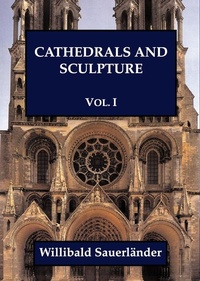
Cathedrals and Sculpture, Volume I
Published on 12. January 1999
Book
Hardback
456 pages
978-0-907132-88-2 (ISBN)
Description
Professor Sauerlaender is the leading authority on Gothic sculpture of the twelfth and thirteenth centuries. The papers collected here have been published over the last 35 years. They represent important contributions to the subject - two are published here for the first time - and reflect sensible shifts of method and approach in the study of the art of this period.
The studies form two volumes, and are grouped around a number of common themes: the great centers, the survival of antiquity, the new interest in nature and its representation, and the European spread of the Gothic style. Ten are in German, six in French, and six in English. Early studies have been updated with references to the more recent literature. There is a comprehensive index and a bibliography of Professor Sauerlaender's work.
The studies form two volumes, and are grouped around a number of common themes: the great centers, the survival of antiquity, the new interest in nature and its representation, and the European spread of the Gothic style. Ten are in German, six in French, and six in English. Early studies have been updated with references to the more recent literature. There is a comprehensive index and a bibliography of Professor Sauerlaender's work.
More details
Edition
Multilingual edition
Language
English
French
German
Place of publication
London
United Kingdom
Target group
College/higher education
Professional and scholarly
Edition type
Multilingual edition
Product notice
Laminated cover
Illustrations
370 illus.
Dimensions
Height: 230 mm
Width: 160 mm
Thickness: 23 mm
Weight
1090 gr
ISBN-13
978-0-907132-88-2 (9780907132882)
Copyright in bibliographic data and cover images is held by Nielsen Book Services Limited or by the publishers or by their respective licensors: all rights reserved.
Schweitzer Classification
Person
Professor Sauerlaender was the leading authority on Gothic sculpture of the twelfth and thirteenth centuries.
Content
Introduction
The Milieu. Medieval Paris, Centre of European Taste. Fame and Realities
The Great Centres. Tombeaux chartrains du premier quart du XIIIeme siecle
Die kunstgeschichtliche Stellung der Westportale von Notre-Dame in Paris. Ein Beitrag zur Genesis des hochgotischen Stils in der franzoesischen Skulptur
Zu den neugefundenen Fragmenten von Notre-Dame in Paris
Les statues royales du transept de Reims
Observations sur la topographie et l'iconologie de la Cathedrale du sacre
The Survival of Antiquity. "Premiere architecture gothique" or "Renaissance of the Twelfth Century"?
Changing Perspectives in the Evaluation of Architectural History
Renaissance and Revival in The Twelfth Century.
Architecture and the Figural Arts outside Italy
L'art antique et sculpture autour de 1200. St. Denis, Lisieux, Chartres
The Mirror of Nature. "Intentio vera nostra est manifestare ea quae sunt sicut sunt". Bildtradition und Wirklichkeitserfahrung in Spannungsfeld der staufischen Kunst
"Kleider machen Leute". Vergessenes aus Viollet-le-Duc's "Dictionnaire du mobilier francais"
The Milieu. Medieval Paris, Centre of European Taste. Fame and Realities
The Great Centres. Tombeaux chartrains du premier quart du XIIIeme siecle
Die kunstgeschichtliche Stellung der Westportale von Notre-Dame in Paris. Ein Beitrag zur Genesis des hochgotischen Stils in der franzoesischen Skulptur
Zu den neugefundenen Fragmenten von Notre-Dame in Paris
Les statues royales du transept de Reims
Observations sur la topographie et l'iconologie de la Cathedrale du sacre
The Survival of Antiquity. "Premiere architecture gothique" or "Renaissance of the Twelfth Century"?
Changing Perspectives in the Evaluation of Architectural History
Renaissance and Revival in The Twelfth Century.
Architecture and the Figural Arts outside Italy
L'art antique et sculpture autour de 1200. St. Denis, Lisieux, Chartres
The Mirror of Nature. "Intentio vera nostra est manifestare ea quae sunt sicut sunt". Bildtradition und Wirklichkeitserfahrung in Spannungsfeld der staufischen Kunst
"Kleider machen Leute". Vergessenes aus Viollet-le-Duc's "Dictionnaire du mobilier francais"