

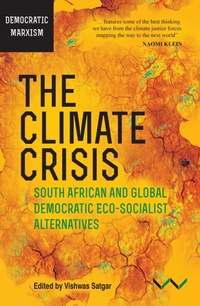
Climate Crisis, the
South African and Global Democratic Eco-Socialist Alternatives
Published on 1. February 2018
Book
Paperback/Softback
372 pages
978-1-77614-054-1 (ISBN)
Description
Essays that address the question: how can people and class agency change this destructive course of history?
Capitalism's addiction to fossil fuels is heating our planet at a pace and scale never before experienced. Extreme weather patterns, rising sea levels and accelerating feedback loops are a commonplace feature of our lives. The number of environmental refugees is increasing and several island states and low-lying countries are becoming vulnerable. Corporate-induced climate change has set us on an ecocidal path of species extinction. Governments and their international platforms such as the Paris Climate Agreement deliver too little, too late. Most states, including South Africa, continue on their carbon-intensive energy paths, with devastating results. Political leaders across the world are failing to provide systemic solutions to the climate crisis. This is the context in which we must ask ourselves: how can people and class agency change this destructive course of history? Volume three in the Democratic Marxism series, The Climate Crisis investigates eco-socialist alternatives that are emerging. It presents the thinking of leading climate justice activists, campaigners and social movements advancing systemic alternatives and developing bottom-up, just transitions to sustain life. Through a combination of theoretical and empirical work, the authors collectively examine the challenges and opportunities inherent in the current moment. This volume builds on the class-struggle focus of Volume 2 by placing ecological issues at the centre of democratic Marxism. Most importantly, it explores ways to renew historical socialism with democratic, eco-socialist alternatives to meet current challenges in South Africa and the world.
Capitalism's addiction to fossil fuels is heating our planet at a pace and scale never before experienced. Extreme weather patterns, rising sea levels and accelerating feedback loops are a commonplace feature of our lives. The number of environmental refugees is increasing and several island states and low-lying countries are becoming vulnerable. Corporate-induced climate change has set us on an ecocidal path of species extinction. Governments and their international platforms such as the Paris Climate Agreement deliver too little, too late. Most states, including South Africa, continue on their carbon-intensive energy paths, with devastating results. Political leaders across the world are failing to provide systemic solutions to the climate crisis. This is the context in which we must ask ourselves: how can people and class agency change this destructive course of history? Volume three in the Democratic Marxism series, The Climate Crisis investigates eco-socialist alternatives that are emerging. It presents the thinking of leading climate justice activists, campaigners and social movements advancing systemic alternatives and developing bottom-up, just transitions to sustain life. Through a combination of theoretical and empirical work, the authors collectively examine the challenges and opportunities inherent in the current moment. This volume builds on the class-struggle focus of Volume 2 by placing ecological issues at the centre of democratic Marxism. Most importantly, it explores ways to renew historical socialism with democratic, eco-socialist alternatives to meet current challenges in South Africa and the world.
Reviews / Votes
'This volume reminds us that fossil fuel corporations, petro states and ruling elites are the key forces deepening the climate crisis. Hurricanes like Harvey and Irma have once again demonstrated the ways that extreme weather events disproportionately impact working people, the poor and Black lives. The wealthy, meanwhile, take cover in their wine cellars on private islands. Only systemic change, led from below, holds out the hope for a safe and sturdy future. This volume features some of the best thinking we have from the climate justice forces who are already mapping the way to that next world.' - Naomi Klein, author of No Is Not Enough, This Changes Everything, The Shock Doctrine and No Logo.'This volume convincingly explains how capitalism has caused the climate crisis and why it cannot solve the crisis. Its perspectives take us beyond fatalism and provide a way forward for a thorough-going just transition anchored in people driven systemic transformation. Its democratic eco-socialist vision is rational, absolutely necessary and urgent as a basis to sustain life.' - Mazibuko Jara activist and Director of Ntinga Ntaba kaNdoda.
'South Africa's National Development Plan supports resource nationalism, particularly more coal mines. Together with our carbon intensive economy, addiction to fossil fuels and now the push for an expensive nuclear deal we are heading down the wrong path. Our drought is a window into the future. This volume provides systemic alternatives for a feminist, climate justice and radical non-racial future for present and future generations. It should be read by all concerned about a climate driven world.' - Makoma Lekalakala, Climate Justice Activist and Director of Earthlife Africa, Johannesburg.
More details
Language
English
Place of publication
Johannesburg
South Africa
Target group
Professional and scholarly
Product notice
Paperback (trade)
Dimensions
Height: 229 mm
Width: 154 mm
Thickness: 25 mm
Weight
548 gr
ISBN-13
978-1-77614-054-1 (9781776140541)
Copyright in bibliographic data and cover images is held by Nielsen Book Services Limited or by the publishers or by their respective licensors: all rights reserved.
Schweitzer Classification
Other editions
Additional editions
E-Book
02/2018
Abingdon Press
€34.49
Available for download
Persons
Vishwas Satgar is an associate professor of International Relations at the University of the Witwatersrand, Johannesburg. He is the editor of the Democratic Marxism series, and is the principal investigator for the Emancipatory Futures Studies in the Anthropocene project and a democratic eco-socialist.
Mateo Martinez Abarca is a philosopher, activist and writer from Ecuador. He is a PhD candidate in Philosophy at the National Autonomous University of Mexico and a junior researcher at the Center for Social Studies, Universidade de Coimbra, Portugal
Vishwas Satgar is an associate professor of International Relations at the University of the Witwatersrand, Johannesburg. He is the editor of the Democratic Marxism series, and is the principal investigator for the Emancipatory Futures Studies in the Anthropocene project and a democratic eco-socialist.
Alberto Acosta is an Ecuadorian economist, a professor and researcher in FLACSO-Ecuador and honorary professor at Ricardo Palma University in Lima. He is the former minister of energy and mines, the former president of the Constitutional Assembly and former candidate to the presidency of the republic of Ecuador. He is the author of several books and, above all, a comrade of popular struggles.
Brian Ashley is the director of the Alternative Information and Development Centre and the editor of Amandla, a current affairs and new politics project.
Mateo Martinez Abarca is a philosopher, activist and writer from Ecuador. He is a PhD candidate in Philosophy at the National Autonomous University of Mexico and a junior researcher at the Center for Social Studies, Universidade de Coimbra, Portugal
Vishwas Satgar is an associate professor of International Relations at the University of the Witwatersrand, Johannesburg. He is the editor of the Democratic Marxism series, and is the principal investigator for the Emancipatory Futures Studies in the Anthropocene project and a democratic eco-socialist.
Alberto Acosta is an Ecuadorian economist, a professor and researcher in FLACSO-Ecuador and honorary professor at Ricardo Palma University in Lima. He is the former minister of energy and mines, the former president of the Constitutional Assembly and former candidate to the presidency of the republic of Ecuador. He is the author of several books and, above all, a comrade of popular struggles.
Brian Ashley is the director of the Alternative Information and Development Centre and the editor of Amandla, a current affairs and new politics project.
Content
Tables, figures and box
Acknowledgements
Acronyms and abbreviations
1 The Climate Crisis and Systemic Alternatives
PART ONE :THE CLIMATE CRISIS AS CAPITALIST CRISIS
2 The Limits of Capitalist Solutions to the Climate Crisis
3 The Anthropocene and Imperial Ecocide: Prospects for Just Transitions
PART TWO: DEMOCRATIC ECO-SOCIALIST ALTERNATIVES IN THE WORLD
4 The Employment Crisis, Just Transition and the Universal Basic Income Grant
5 The Rights of Mother Earth
6 Buen Vivir: An Alternative Perspective from the Peoples of the Global South
7 Challenging the Growth Paradigm: Marx, Buddha and the Pursuit of 'Happiness'
8 Ubuntu and the Struggle for an African Eco-socialist Alternative
9 The Climate Crisis and the Struggle for African Food Sovereignty
PART THREE: DEMOCRATIC ECO-SOCIALIST ALTERNATIVES IN SOUTH AFRICA
10 The Climate Crisis and a 'Just Transition' in South Africa: An Eco-Feminist-Socialist Perspective
11 Energy, Labour, and Democracy in South Africa
12 Capital, Climate and the Politics of Nuclear Procurement in South Africa
13 Climate Jobs at Two Minutes to Midnight
14 Deepening the Just Transition Through Food Sovereignty and the Solidarity Economy
15 Eco-Capitalist Crises in the 'Blue Economy': Operation Phakisa's Small, Slow Failures
CONCLUSION
Contributors
Index
Acknowledgements
Acronyms and abbreviations
1 The Climate Crisis and Systemic Alternatives
PART ONE :THE CLIMATE CRISIS AS CAPITALIST CRISIS
2 The Limits of Capitalist Solutions to the Climate Crisis
3 The Anthropocene and Imperial Ecocide: Prospects for Just Transitions
PART TWO: DEMOCRATIC ECO-SOCIALIST ALTERNATIVES IN THE WORLD
4 The Employment Crisis, Just Transition and the Universal Basic Income Grant
5 The Rights of Mother Earth
6 Buen Vivir: An Alternative Perspective from the Peoples of the Global South
7 Challenging the Growth Paradigm: Marx, Buddha and the Pursuit of 'Happiness'
8 Ubuntu and the Struggle for an African Eco-socialist Alternative
9 The Climate Crisis and the Struggle for African Food Sovereignty
PART THREE: DEMOCRATIC ECO-SOCIALIST ALTERNATIVES IN SOUTH AFRICA
10 The Climate Crisis and a 'Just Transition' in South Africa: An Eco-Feminist-Socialist Perspective
11 Energy, Labour, and Democracy in South Africa
12 Capital, Climate and the Politics of Nuclear Procurement in South Africa
13 Climate Jobs at Two Minutes to Midnight
14 Deepening the Just Transition Through Food Sovereignty and the Solidarity Economy
15 Eco-Capitalist Crises in the 'Blue Economy': Operation Phakisa's Small, Slow Failures
CONCLUSION
Contributors
Index