

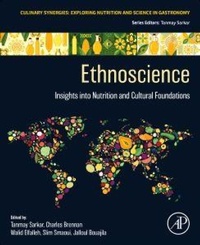
Ethnoscience
Insights into Nutrition and Cultural Foundations
Will be published approx. on 26. June 2026
Book
Paperback/Softback
664 pages
978-0-443-45513-1 (ISBN)
Description
Ethnoscience: Insights into Nutrition and Cultural Foundations, the first book in the series Culinary Synergies: Exploring Nutrition and Science in Gastronomy, a five-book exploration into food education, innovation, and preservation, encompasses everything from flavor chemistry and sensory science to the role of micro- and macronutrients in traditional and culturally specific diets. The book begins with an introduction to the discovery of food through nutrition and cultural identity, discussing modern technological advances such as machine learning, digital tools, and sustainability. It then moves into the culinary traditions of Southeast Asia, where food diversity and ingredient preparation's influence on nutritional value are discussed.
Section two highlights Southern Europe, focusing on foraging and the health benefits of fermented foods and more. Finally, section three introduces sustainable and indigenous farming practices in North Africa, along with healing herbs, their medicinal properties, and much more. Each section includes case studies highlighting nutrition, innovation, and health.
Section two highlights Southern Europe, focusing on foraging and the health benefits of fermented foods and more. Finally, section three introduces sustainable and indigenous farming practices in North Africa, along with healing herbs, their medicinal properties, and much more. Each section includes case studies highlighting nutrition, innovation, and health.
More details
Series
Language
English
Place of publication
San Diego
United States
Publishing group
Elsevier Science Publishing Co Inc
Target group
Professional and scholarly
Product notice
Paperback (trade)
Unsewn / adhesive bound
Dimensions
Height: 235 mm
Width: 191 mm
Weight
449 gr
ISBN-13
978-0-443-45513-1 (9780443455131)
Copyright in bibliographic data and cover images is held by Nielsen Book Services Limited or by the publishers or by their respective licensors: all rights reserved.
Schweitzer Classification
Persons
Dr. Tanmay Sarkar is currently working as a Lecturer in the Government of West Bengal. With 9 years of experience in both teaching and research, his areas of interest include bioactive components from natural sources, ethnic foods, mathematical modeling, and phytochemicals. He is an editor for several SCI, SCIE, and Scopus- indexed journals and has edited numerous books with Elsevier and Springer.
Charles Brennan is a Professor of Food Science at RMIT University, Australia, where he is the Dean of the School of Science. Brennan's research interests lies in the interface between food science and human nutrition with a particular interest in how bio-active ingredients and processing manipulate the nutritional quality of foods, in particular, the role of plant dietary fibre in manipulating the glycaemic response. Brennan is a graduate of London University, Wye College (BSc in Applied Plant Science) and King's College London (Ph.D. in Food Science and Nutrition). During his career, he has also worked at Durham University (UK), Plymouth University (UK), Massey University (NZ) and Manchester Metropolitan University (UK). He currently serves as Editor in chief for the journal International Journal of Molecular Sciences, and International Journal of Food Science & Technology and in the Editorial Board of the Journal of Bioactive Carbohydrates and Dietary Fibre. Dr. Walid Elfalleh obtained his PhD in Biochemistry from the University of Tunis El-Manar, Tunisia. He has been teaching in Tunisian universities since 2006, and currently he is an Associate Professor at Imam Mohammad Ibn Saud Islamic University, Riyadh, Saudi Arabia. His research focuses on plant valorization for medicinal and food applications. He is currently working on the extraction, separation, and chromatographic identification of bioactive molecules of industrial interest. Furthermore, he is interested in the optimization of extraction methods for bioactive molecules and the elucidation of their biological activities in vivo and in vitro. He is the author of more than 200 papers in international peer-reviewed journals.
He serves on the editorial boards of several journals as an Associate Editor, including Food Bioscience (Elsevier), Quality Assurance and Safety of Crops & Foods (Codon Publications), and Euro-Mediterranean Journal for Environmental Integration (Springer), and as an Editorial Board Member of Grain & Oil Science and Technology (Elsevier) and Food Nutrition (Elsevier).
Dr. Slim Smaoui is ranked among the top 2% of scientists worldwide according to the 2024 and 2025 updates of the "Updated science-wide author databases of standardized citation indicators? (Elsevier-Stanford University), in the field of Agriculture, Fishery and Forestry, with specialization in Food Science. His research focuses on the development of healthier meat products, the valorization of agro-food industry by-products as sources of bioactive compounds, and the design of functional foods enriched with bioactive ingredients. Dr. Smaoui has authored and co-authored numerous Scopus-indexed publications in international peer-reviewed journals. His scientific output includes over 250 publications (research articles, reviews, and book chapters), 6 edited books, and 10 national patents. He serves on the editorial boards of several reputable international journals and is also active as a guest editor and reviewer for multiple ISI-indexed journals.
Dr. Jalloul Bouajila is a professor at the Faculty of Pharmacy in Toulouse since 2004. He received his Doctorate in 2002 in analytical chemistry. Since 2003, he is specializing in natural products, extraction, fractionation, analytical chemistry, identification and biological activities in vitro. Dr Bouajila is responsible of research team and a partner of several regional, national, international and industrials research projects. He has published 162 scientific papers in international peer-reviewed journals. He is the co-inventor of 2 patents.
Charles Brennan is a Professor of Food Science at RMIT University, Australia, where he is the Dean of the School of Science. Brennan's research interests lies in the interface between food science and human nutrition with a particular interest in how bio-active ingredients and processing manipulate the nutritional quality of foods, in particular, the role of plant dietary fibre in manipulating the glycaemic response. Brennan is a graduate of London University, Wye College (BSc in Applied Plant Science) and King's College London (Ph.D. in Food Science and Nutrition). During his career, he has also worked at Durham University (UK), Plymouth University (UK), Massey University (NZ) and Manchester Metropolitan University (UK). He currently serves as Editor in chief for the journal International Journal of Molecular Sciences, and International Journal of Food Science & Technology and in the Editorial Board of the Journal of Bioactive Carbohydrates and Dietary Fibre. Dr. Walid Elfalleh obtained his PhD in Biochemistry from the University of Tunis El-Manar, Tunisia. He has been teaching in Tunisian universities since 2006, and currently he is an Associate Professor at Imam Mohammad Ibn Saud Islamic University, Riyadh, Saudi Arabia. His research focuses on plant valorization for medicinal and food applications. He is currently working on the extraction, separation, and chromatographic identification of bioactive molecules of industrial interest. Furthermore, he is interested in the optimization of extraction methods for bioactive molecules and the elucidation of their biological activities in vivo and in vitro. He is the author of more than 200 papers in international peer-reviewed journals.
He serves on the editorial boards of several journals as an Associate Editor, including Food Bioscience (Elsevier), Quality Assurance and Safety of Crops & Foods (Codon Publications), and Euro-Mediterranean Journal for Environmental Integration (Springer), and as an Editorial Board Member of Grain & Oil Science and Technology (Elsevier) and Food Nutrition (Elsevier).
Dr. Slim Smaoui is ranked among the top 2% of scientists worldwide according to the 2024 and 2025 updates of the "Updated science-wide author databases of standardized citation indicators? (Elsevier-Stanford University), in the field of Agriculture, Fishery and Forestry, with specialization in Food Science. His research focuses on the development of healthier meat products, the valorization of agro-food industry by-products as sources of bioactive compounds, and the design of functional foods enriched with bioactive ingredients. Dr. Smaoui has authored and co-authored numerous Scopus-indexed publications in international peer-reviewed journals. His scientific output includes over 250 publications (research articles, reviews, and book chapters), 6 edited books, and 10 national patents. He serves on the editorial boards of several reputable international journals and is also active as a guest editor and reviewer for multiple ISI-indexed journals.
Dr. Jalloul Bouajila is a professor at the Faculty of Pharmacy in Toulouse since 2004. He received his Doctorate in 2002 in analytical chemistry. Since 2003, he is specializing in natural products, extraction, fractionation, analytical chemistry, identification and biological activities in vitro. Dr Bouajila is responsible of research team and a partner of several regional, national, international and industrials research projects. He has published 162 scientific papers in international peer-reviewed journals. He is the co-inventor of 2 patents.
Editor
Lecturer, Government of West Bengal, India
Dean, School of Science , RMIT University, Melbourne, Australia
Imam Mohammad Ibn Saud Islamic University (IMSIU), Riyadh Saudi Arabia
Associate Professor, Centre of Biotechnology University of Sfax, Tunisia
Faculty of Pharmacy, Universite de Toulouse, Toulouse, France
Content
I. Introduction
1. Modern Technology Application in Ethnoscience: Machine Learning, Digital Tools, and Sustainability
2. Global Trends in Traditional Diets: Adapting to Modern Health Concerns
II. Discovering Food through Nutrition, and Cultural Identity
3. Role in Preserving and Promoting Global Food Diversity Through Culture and Identity
4. Nutritional Foundations of Ethnoscience
5. Cultural Influences of Ethnoscience
6. Food Preparation and Preservation Techniques Promoting Enhanced Nutritional Values
7. Advancing the Foundations of Ethnoscience through Science and Technology
III. Culinary Traditions and Nutritional Aspects of Foods in Southeast Asia
8. Traditional Southeast Asian Diets: Cultural Perspectives and Historical Context
9. Rice: Staple Crop, Cultural Symbol, and Nutritional Powerhouse
10. Fermentation Techniques: Science and Tradition in Southeast Asian Cuisine
11. Healing Foods: Traditional Remedies and Culinary Medicine
12. Tea: Rituals, Health benefits and Scientific insight
13. Seafood and Seaweed: Nutrition and Sustainability in Southeast Asian Diets
14. Culinary Diversity in Southeast Asia: Flavors, Ingredients, and Traditions
15. Case study in Tboli indigenous food system: ingredients, preparations, and nutritional components
IV. Culinary Traditions and Nutritional Aspects of Foods in Southern Europe
16. Gastronomic Traditions of Southern Europe: Historical Evolution and Cultural Significance
17. The Mediterranean Diet: Nutritional Insights and Sustainability
18. Iconic Staples: Cheese, Wine, and Bread in Southern European Cuisine
19. Fermented Foods of Southern Europe: Health Benefits and Cultural Practices
20. Culinary Tourism in Southern Europe: Economic Impacts and Cultural Preservation
21. Seasonal Foraging and Wild Edibles: Nutritional and Gastronomic Practices in Southern Europe
22. Culinary Pharmacognosy: Medicinal Plants in Traditional Diets
23. Case Studies in Southern European Gastronomy: Tradition, Innovation, and Health
24. Culinary Traditions of North Africa: Historical Roots and Cultural Influences
25. Couscous: Nutritional Value and Techniques
V. Culinary Traditions and Nutritional Aspects of Foods in North Africa
26. Berber Gastronomy - Indigenous Food Practices
27. Healing Herbs and Medicinal Foods: Remedies and Research
28. Food, religion and hospitality of North Africa: Rituals, Taboos, Social functions and Nutritional impacts
29. Dates and Olive Oil: Nutritional Powerhouses
30. Sustainable Farming Practices in North Africa: Insights and Innovations
31. Case Studies in North African Gastronomy: Tradition, Innovation, and Health
1. Modern Technology Application in Ethnoscience: Machine Learning, Digital Tools, and Sustainability
2. Global Trends in Traditional Diets: Adapting to Modern Health Concerns
II. Discovering Food through Nutrition, and Cultural Identity
3. Role in Preserving and Promoting Global Food Diversity Through Culture and Identity
4. Nutritional Foundations of Ethnoscience
5. Cultural Influences of Ethnoscience
6. Food Preparation and Preservation Techniques Promoting Enhanced Nutritional Values
7. Advancing the Foundations of Ethnoscience through Science and Technology
III. Culinary Traditions and Nutritional Aspects of Foods in Southeast Asia
8. Traditional Southeast Asian Diets: Cultural Perspectives and Historical Context
9. Rice: Staple Crop, Cultural Symbol, and Nutritional Powerhouse
10. Fermentation Techniques: Science and Tradition in Southeast Asian Cuisine
11. Healing Foods: Traditional Remedies and Culinary Medicine
12. Tea: Rituals, Health benefits and Scientific insight
13. Seafood and Seaweed: Nutrition and Sustainability in Southeast Asian Diets
14. Culinary Diversity in Southeast Asia: Flavors, Ingredients, and Traditions
15. Case study in Tboli indigenous food system: ingredients, preparations, and nutritional components
IV. Culinary Traditions and Nutritional Aspects of Foods in Southern Europe
16. Gastronomic Traditions of Southern Europe: Historical Evolution and Cultural Significance
17. The Mediterranean Diet: Nutritional Insights and Sustainability
18. Iconic Staples: Cheese, Wine, and Bread in Southern European Cuisine
19. Fermented Foods of Southern Europe: Health Benefits and Cultural Practices
20. Culinary Tourism in Southern Europe: Economic Impacts and Cultural Preservation
21. Seasonal Foraging and Wild Edibles: Nutritional and Gastronomic Practices in Southern Europe
22. Culinary Pharmacognosy: Medicinal Plants in Traditional Diets
23. Case Studies in Southern European Gastronomy: Tradition, Innovation, and Health
24. Culinary Traditions of North Africa: Historical Roots and Cultural Influences
25. Couscous: Nutritional Value and Techniques
V. Culinary Traditions and Nutritional Aspects of Foods in North Africa
26. Berber Gastronomy - Indigenous Food Practices
27. Healing Herbs and Medicinal Foods: Remedies and Research
28. Food, religion and hospitality of North Africa: Rituals, Taboos, Social functions and Nutritional impacts
29. Dates and Olive Oil: Nutritional Powerhouses
30. Sustainable Farming Practices in North Africa: Insights and Innovations
31. Case Studies in North African Gastronomy: Tradition, Innovation, and Health