


The Importance of Being Fuzzy
And Other Insights from the Border between Math and Computers
Will be published approx. on 22. November 1998
Book
Hardback
200 pages
978-0-691-00144-9 (ISBN)
Description
How has computer science changed mathematical thinking? In this first ever comprehensive survey of the subject for popular science readers, Arturo Sangalli explains how computers have brought a new practicality to mathematics and mathematical applications. By using fuzzy logic and related concepts, programmers have been able to sidestep the traditional and often cumbersome search for perfect mathematical solutions to embrace instead solutions that are "good enough." If mathematicians want their work to be relevant to the problems of the modern world, Sangalli shows, they must increasingly recognize "the importance of being fuzzy." As Sangalli explains, fuzzy logic is a technique that allows computers to work with imprecise terms--to answer questions with "maybe" rather than just "yes" and "no." The practical implications of this flexible type of mathematical thinking are remarkable. Japanese programmers have used fuzzy logic to develop the city of Sendai's unusually energy-efficient and smooth-running subway system--one that does not even require drivers.
Similar techniques have been used in fields as diverse as medical diagnosis, image understanding by robots, the engineering of automatic transmissions, and the forecasting of currency exchange rates. Sangalli also explores in his characteristically clear and engaging manner the limits of classical computing, reviewing many of the central ideas of Turing and Godel. He shows us how "genetic algorithms" can solve problems by an evolutionary process in which chance plays a fundamental role. He introduces us to "neural networks," which recognize ill-defined patterns without an explicit set of rules--much as a dog can be trained to scent drugs without ever having an exact definition of "drug." Sangalli argues that even though "fuzziness" and related concepts are often compared to human thinking, they can be understood only through mathematics--but the math he uses in the book is straightforward and easy to grasp. Of equal appeal to specialists and the general reader, The Importance of Being Fuzzy reveals how computer science is changing both the nature of mathematical practice and the shape of the world around us.
Similar techniques have been used in fields as diverse as medical diagnosis, image understanding by robots, the engineering of automatic transmissions, and the forecasting of currency exchange rates. Sangalli also explores in his characteristically clear and engaging manner the limits of classical computing, reviewing many of the central ideas of Turing and Godel. He shows us how "genetic algorithms" can solve problems by an evolutionary process in which chance plays a fundamental role. He introduces us to "neural networks," which recognize ill-defined patterns without an explicit set of rules--much as a dog can be trained to scent drugs without ever having an exact definition of "drug." Sangalli argues that even though "fuzziness" and related concepts are often compared to human thinking, they can be understood only through mathematics--but the math he uses in the book is straightforward and easy to grasp. Of equal appeal to specialists and the general reader, The Importance of Being Fuzzy reveals how computer science is changing both the nature of mathematical practice and the shape of the world around us.
Reviews / Votes
Winner of the 1998 Award for Best Professional/Scholarly Book in Computer Science, Association of American Publishers "I know quite a few books on the fuzzy set theory and neuro-fuzzy systems, but this work is unique. No other book have I found so pleasant to read and, at the same time, no other book seems so informative for the fuzzy or soft computing newcomer... [T]he book presents an excellent, clear written, and easy-to-understand advertisement for fuzzy computing."--H. Toth, Computing Reviews "[Sangalli's] goal is to describe this recent work to a broad audience; he succeeds quite admirably. The Importance of Being Fuzzy is clear and easy to read, and yet it provides enough mathematical detail to give some appreciation for the meaning behind the metaphors."--Mark Johnson, The Mathematical Association of America Online Book ReviewMore details
Language
English
Place of publication
New Jersey
United States
Target group
Professional and scholarly
College/higher education
Product notice
Trade binding
Illustrations
25 line drawings 1 table
Dimensions
Height: 240 mm
Width: 161 mm
Thickness: 15 mm
Weight
464 gr
ISBN-13
978-0-691-00144-9 (9780691001449)
Copyright in bibliographic data and cover images is held by Nielsen Book Services Limited or by the publishers or by their respective licensors: all rights reserved.
Schweitzer Classification
Other editions
Additional editions
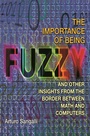
Arturo Sangalli
The Importance of Being Fuzzy
And Other Insights from the Border between Math and Computers
E-Book
11/2018
1st Edition
Princeton University Press
€56.99
Available for download
Person
Arturo Sangalli is Professor of Mathematics at Champlain Regional College in Lennoxville, Quebec.
Content
PrefaceAcknowledgmentsTo the ReaderPt. 1Blurred Visions1Ch. 1Classes with Uncertain Borders3Ch. 2Fuzzy Does It19Pt. 2Limits47Ch. 3The Limits of Classical Computing49Ch. 4The Limits of Formal Reasoning76Pt. 3Natural Solutions93Ch. 5Net Gains95Ch. 6Solutions via Evolution126Afterword157App. 1Fuzzy Inferences159App. 2The Functions of Natural Numbers Cannot Be Enumerated162App. 3The Halting Problem Is Unsolvable164App. 4Learning with the Back-Propagation Algorithm166Index171