

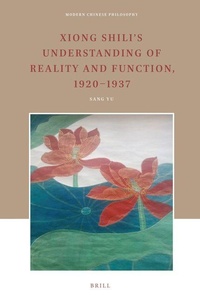
Xiong Shili's Understanding of Reality and Function, 1920-1937
Published on 4. June 2020
Book
Hardback
270 pages
978-90-04-43157-7 (ISBN)
Description
Xiong Shili ???(1885-1968) was one of the most important Chinese philosophers of the twentieth century, and a founding figure of the modern New Confucian school of philosophy. At the core of his metaphysics is one of the key conceptual polarities in traditional Chinese philosophy: Reality (ti ?) and Function (yong ?). Xiong Shili's Understanding of Reality and Function, 1920-1937 presents a detailed examination and analysis of the development of Xiong Shili's conception of Reality and Function between 1920 and 1937. While scholars have tended to focus on Xiong's mature ti-yong philosophical system, which was initially established in the early 1930s, this study explains how that system was gradually formed, providing a more comprehensive basis for understanding the development of Xiong's philosophical thought in later periods.
Reviews / Votes
"... this is in fact the first English-language monograph entirely dedicated to Xiong's philosophy. This in itself marks Sang's work as an important step forward in the field of modern Chinese philosophy in the English-speaking world. [...] Sang's monograph will serve as a reference for years to come on the topic of Xiong's theory of the nonduality of Reality and Function, a topic that deserves much more attention than it has so far received in European languages. In itself, this is a great contribution to the slowly but steadily expanding field of modern Chinese philosophy."-Philippe Major, University of Basel, Dao: A Journal of Comparative Philosophy, Vol 20 (2021), pp. 165-169
More details
Series
Language
English
Place of publication
Leiden
Netherlands
Target group
Professional and scholarly
Product notice
sewn/stitched
Cloth over boards
Dimensions
Height: 235 mm
Width: 155 mm
Thickness: 21 mm
Weight
528 gr
ISBN-13
978-90-04-43157-7 (9789004431577)
Copyright in bibliographic data and cover images is held by Nielsen Book Services Limited or by the publishers or by their respective licensors: all rights reserved.
Schweitzer Classification
Person
SANG Yu, Ph.D. (2019) in Chinese Studies, The Australian National University, is a postdoctoral researcher in the Institute of Philosophy at the Chinese Academy of Social Sciences, Beijing, and a visiting scholar in the Australian Centre on China in the World at the ANU. Her research focuses on Chinese philosophy, in particular Buddhism and New Confucianism, and the intellectual history of modern China.
Content
Acknowledgements
Introduction
?1?Objectives of the Study
?2?Methodology of the Study
?3?Significance of the Study
?4?Chapter Outlines
?5?Xiong's Biographical Information and Its Historical Context
1 The Philosophical Background to the Development of Xiong's Ti-yong Metaphysics
?1?The Formation and Development of the Ti-yong Conceptual Polarity in Chinese Philosophical History
?2?Xiong's Reflections on the Ontological and the Phenomenal before 1920
?3?A Dispute Concerning Reality and Function in the Early Twentieth Century
?4?Concluding Remarks
2 Xiong's Two-level Ti-yong System between 1920 and 1923
?1?Level 1: Suchness as Reality and Consciousness as Function
?2?Level 2: Productive Power as Reality and Manifest Activity as Function
?3?The Influence of Ouyang Jingwu's Ti-yong Perspective
?4?Concluding Remarks
3 The Modification of Xiong's Conception of Reality and Function between 1923 and 1927
?1?The 1926 Weishixue Gailun
?2?Weishi Lun
?3?The Structure and Main Arguments of This Chapter
?4?Xiong's Understanding of Ti-yong in the 1926 Weishixue Gailun
?5?Xiong's Understanding of Ti-yong in His Weishi Lun
?6?Concluding Remarks
?7?Appendix: A Clarification of the Period Xiong Composed the Weishi Lun
4 The Development of Xiong's Conception of Reality and Function between 1927 and 1937
?1?Whether or Not Sentient Beings Share the Same Reality
?2?The Development of Xiong's Understanding of Reality
?3?The Relationship between Reality and Function
?4?Concluding Remarks
Conclusion
?1?A Review of Xiong's Changing Understanding of Reality and Function between 1920 and 1937
?2?Why is Xiong's Philosophy of Reality and Function Unique?
?3?Why Did Xiong Continue to Modify and Develop His Conception of Reality and Function?
Works Cited
Index
Introduction
?1?Objectives of the Study
?2?Methodology of the Study
?3?Significance of the Study
?4?Chapter Outlines
?5?Xiong's Biographical Information and Its Historical Context
1 The Philosophical Background to the Development of Xiong's Ti-yong Metaphysics
?1?The Formation and Development of the Ti-yong Conceptual Polarity in Chinese Philosophical History
?2?Xiong's Reflections on the Ontological and the Phenomenal before 1920
?3?A Dispute Concerning Reality and Function in the Early Twentieth Century
?4?Concluding Remarks
2 Xiong's Two-level Ti-yong System between 1920 and 1923
?1?Level 1: Suchness as Reality and Consciousness as Function
?2?Level 2: Productive Power as Reality and Manifest Activity as Function
?3?The Influence of Ouyang Jingwu's Ti-yong Perspective
?4?Concluding Remarks
3 The Modification of Xiong's Conception of Reality and Function between 1923 and 1927
?1?The 1926 Weishixue Gailun
?2?Weishi Lun
?3?The Structure and Main Arguments of This Chapter
?4?Xiong's Understanding of Ti-yong in the 1926 Weishixue Gailun
?5?Xiong's Understanding of Ti-yong in His Weishi Lun
?6?Concluding Remarks
?7?Appendix: A Clarification of the Period Xiong Composed the Weishi Lun
4 The Development of Xiong's Conception of Reality and Function between 1927 and 1937
?1?Whether or Not Sentient Beings Share the Same Reality
?2?The Development of Xiong's Understanding of Reality
?3?The Relationship between Reality and Function
?4?Concluding Remarks
Conclusion
?1?A Review of Xiong's Changing Understanding of Reality and Function between 1920 and 1937
?2?Why is Xiong's Philosophy of Reality and Function Unique?
?3?Why Did Xiong Continue to Modify and Develop His Conception of Reality and Function?
Works Cited
Index