

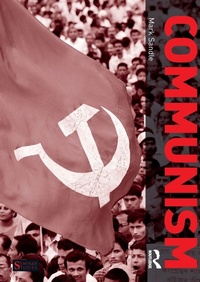
Communism
2nd Edition
Published on 16. September 2011
Book
Paperback/Softback
232 pages
978-1-4082-6450-8 (ISBN)
Description
Why did communism grow so quickly? Why did it spread to turn almost half of the world red by the mid-1970s? What impact did it have upon capitalism and capitalist society?
Communism is a concise introduction to one of the most important and influential movements of the 20th century. It shows how the modern communist movement emerged out of radical millenarian movements of the Middle Ages and the English Civil War, becoming a mass movement of industrial society, seeking to overturn capitalism and replace it with a society of equality, justice, harmony and co-operation. It traces the growth of modern communism from its beginnings in the early nineteenth century to its position of global power at the end of the Second World War.
Mark Sandle investigates the ultimate failure of communism as a political ideology, and concludes by asking how far the historical record of communism has been used to conceal the historical record of capitalism.
Ideal for courses in both History and Politics.
Communism is a concise introduction to one of the most important and influential movements of the 20th century. It shows how the modern communist movement emerged out of radical millenarian movements of the Middle Ages and the English Civil War, becoming a mass movement of industrial society, seeking to overturn capitalism and replace it with a society of equality, justice, harmony and co-operation. It traces the growth of modern communism from its beginnings in the early nineteenth century to its position of global power at the end of the Second World War.
Mark Sandle investigates the ultimate failure of communism as a political ideology, and concludes by asking how far the historical record of communism has been used to conceal the historical record of capitalism.
Ideal for courses in both History and Politics.
Reviews / Votes
"By looking at radical millenarian movements of the Middle Ages and the English Civil War, Mark Sandle explains how communism became a mass movement seeking to overturn capitalism and replace it with a society of equality, justice, harmony and cooperation."- Times Higher Education
More details
Series
Edition
2nd edition
Language
English
Place of publication
London
United Kingdom
Publishing group
Taylor & Francis Ltd
Target group
Professional and scholarly
Dimensions
Height: 246 mm
Width: 174 mm
Thickness: 13 mm
Weight
425 gr
ISBN-13
978-1-4082-6450-8 (9781408264508)
Schweitzer Classification
Other editions
Person
Mark Sandle is Professor of History at The King's University College, Canada. His previous publications include A Short History of Soviet Socialism (1999) and Brezhnev Reconsidered (2002) and Gorbachev (2008).
Content
Chronology
Who's Who
Glossary
Maps
PART ONE: ANALYSIS
1. A Short Introduction
1.1: What is Communism?
1.2: Communism: The Early Years
2. The Rise of "Modern" Communism
2.1 Introduction
2.2 The Emergence of Communism and Socialism after 1789
2.3 1848: Revolution and the Communist Manifesto
2.4 Marx and Engels on socialism and communism
2.5 The Evolution of the Communist Movement 1850 - 1915
2.6 Conclusion: Communism Before Power
3. Communism in the USSR: The Early Years 1917-53
3.1 Introduction
3.2 The Bolshevik Understanding of Communism
3.3 Exporting Communism: Comintern and the Third International
3.4 Building Communism: Politics, Economics, Society in the USSR 1917 - 53
3.5 Conclusion
4. The Rise of Global Communism 1945 - 82
4.1 Introduction
4.2 "Communisms" in Eastern Europe
4.3 Red Star in The East: China
4.4 Communism in Asia: Nationalism, Communism and Anti-colonialism
4.5 Cuba and Latin America
4.6 Africa
4.7 Communism in the Developed World
4.8 Conclusion: Communism Across the Globe 1945 - 1982
5. Living Under/With/For Communism
5.1 Ideology/Reality Gap
5.2 Material Life
5.3Work
5.4 Housing
5.5 Health
5.6 Fertility and Contraception
5.7 Consumption
5.8 Equality and Inequality
5.9 Education, Upbringing, Spirituality
5.10 Harmony?
5.11 Living between dissent and support: the conditional loyalty of communist citizens
6. The Decline and Fall Communism
6.1 Introduction
6.2 The Crisis of Faith 1953-91
6.3 The Crisis of the Communist System 1953 - 1991
6.4 The End is Nigh!
6.5 Conclusion
7. Conclusion
7.1 Reflection One: Why did communism fall/collapse/was overthrown? Mind the Gap!
7.2 Reflection Two: How will history judge communism?
7.3 Reflection Three: The Future of Communism?
PART TWO: Documents
Further Reading
References
Who's Who
Glossary
Maps
PART ONE: ANALYSIS
1. A Short Introduction
1.1: What is Communism?
1.2: Communism: The Early Years
2. The Rise of "Modern" Communism
2.1 Introduction
2.2 The Emergence of Communism and Socialism after 1789
2.3 1848: Revolution and the Communist Manifesto
2.4 Marx and Engels on socialism and communism
2.5 The Evolution of the Communist Movement 1850 - 1915
2.6 Conclusion: Communism Before Power
3. Communism in the USSR: The Early Years 1917-53
3.1 Introduction
3.2 The Bolshevik Understanding of Communism
3.3 Exporting Communism: Comintern and the Third International
3.4 Building Communism: Politics, Economics, Society in the USSR 1917 - 53
3.5 Conclusion
4. The Rise of Global Communism 1945 - 82
4.1 Introduction
4.2 "Communisms" in Eastern Europe
4.3 Red Star in The East: China
4.4 Communism in Asia: Nationalism, Communism and Anti-colonialism
4.5 Cuba and Latin America
4.6 Africa
4.7 Communism in the Developed World
4.8 Conclusion: Communism Across the Globe 1945 - 1982
5. Living Under/With/For Communism
5.1 Ideology/Reality Gap
5.2 Material Life
5.3Work
5.4 Housing
5.5 Health
5.6 Fertility and Contraception
5.7 Consumption
5.8 Equality and Inequality
5.9 Education, Upbringing, Spirituality
5.10 Harmony?
5.11 Living between dissent and support: the conditional loyalty of communist citizens
6. The Decline and Fall Communism
6.1 Introduction
6.2 The Crisis of Faith 1953-91
6.3 The Crisis of the Communist System 1953 - 1991
6.4 The End is Nigh!
6.5 Conclusion
7. Conclusion
7.1 Reflection One: Why did communism fall/collapse/was overthrown? Mind the Gap!
7.2 Reflection Two: How will history judge communism?
7.3 Reflection Three: The Future of Communism?
PART TWO: Documents
Further Reading
References