


Dancing Jacobins
A Venezuelan Genealogy of Latin American Populism
Will be published approx. on 28. April 2016
Book
Hardback
408 pages
978-0-8232-6365-3 (ISBN)
Description
Since independence from Spain, a trope has remained pervasive in Latin America's republican imaginary: that of an endless antagonism pitting civilization against barbarism as irreconcilable poles within which a nation's life unfolds. This book apprehends that trope not just as the phantasmatic projection of postcolonial elites fearful of the popular sectors but also as a symptom of a stubborn historical predicament: the cyclical insistence with which the subaltern populations menacingly return to the nation's public spaces in the form of crowds.
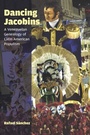
Focused on Venezuela but relevant to the rest of Latin America, and drawing on a rich theoretical literature including authors like Derrida, Foucault, Lacoue-Labarthe, Nancy, Lyotard, Laclau, Taussig, and others, Dancing Jacobins is a genealogical investigation of the intrinsically populist "monumental governmentality" that in response to this predicament began to take shape in that nation at the time of independence. Informed by a Bolivarian political theology, the nation's representatives, or "dancing Jacobins," recursively draw on the repertoire of busts, portraits, and equestrian statues of national heroes scattered across Venezuela in a montage of monuments and dancing-or universal and particular. They monumentalize themselves on the stage of the polity as a ponderously statuesque yet occasionally riotous reflection of the nation's general will.
To this day, the nervous oscillation between crowds and peoplehood intrinsic to this form of government has inflected the republic's institutions and constructs, from the sovereign "people" to the nation's heroic imaginary, its constitutional texts, representative figures, parliamentary structures, and, not least, its army. Through this movement of collection and dispersion, these institutions are at all times haunted and imbued from within by the crowds they otherwise set out to mold, enframe, and address.
Focused on Venezuela but relevant to the rest of Latin America, and drawing on a rich theoretical literature including authors like Derrida, Foucault, Lacoue-Labarthe, Nancy, Lyotard, Laclau, Taussig, and others, Dancing Jacobins is a genealogical investigation of the intrinsically populist "monumental governmentality" that in response to this predicament began to take shape in that nation at the time of independence. Informed by a Bolivarian political theology, the nation's representatives, or "dancing Jacobins," recursively draw on the repertoire of busts, portraits, and equestrian statues of national heroes scattered across Venezuela in a montage of monuments and dancing-or universal and particular. They monumentalize themselves on the stage of the polity as a ponderously statuesque yet occasionally riotous reflection of the nation's general will.
To this day, the nervous oscillation between crowds and peoplehood intrinsic to this form of government has inflected the republic's institutions and constructs, from the sovereign "people" to the nation's heroic imaginary, its constitutional texts, representative figures, parliamentary structures, and, not least, its army. Through this movement of collection and dispersion, these institutions are at all times haunted and imbued from within by the crowds they otherwise set out to mold, enframe, and address.
Reviews / Votes
"I found this book spellbinding. It has a wildly original thesis (of 'monumentalization') to expound. It is staggeringly erudite in terms of Venezuelan history. And it has a marvelously relaxed writing style-ironic, easy, witty, and rounded. Like a mature wine composed of various blends, it brings wonderfully well-wrought ideas to the reader's attention, and while it seems to bear the gravitas of a life's work assiduously distilled, it retains the sparkle of fresh discoveries. Rarely have anthropology and history, events and theory, been so beautifully entwined as here, not to mention the shocking relevance of the past to the present. I know of no publication like this." -- -Michael Taussig Columbia University "Indispensable reading for any serious student of contemporary Latin American populism." -- -Claudio Lomnitz Columbia UniversityMore details
Language
English
Place of publication
New York
United States
Target group
College/higher education
Product notice
Cloth over boards
Dimensions
Height: 236 mm
Width: 157 mm
Thickness: 30 mm
Weight
703 gr
ISBN-13
978-0-8232-6365-3 (9780823263653)
Copyright in bibliographic data and cover images is held by Nielsen Book Services Limited or by the publishers or by their respective licensors: all rights reserved.
Schweitzer Classification
Other editions
Additional editions
E-Book
04/2016
1st Edition
Fordham University Press
€31.99
Available for download
Person
Rafael Sanchez (1950-2024) was senior lecturer at the Geneva Graduate Institute. He is the author of Dancing Jacobins: A Venezuelan Genealogy of Latin American Populism (Fordham, 2016).
Content
Introduction: Populist Governmentality Overture 1 Archeologies 2 Bullying for Independence 3 Statues and Statutes 4 Theater for the Masses 5 Monumental Governmentality 6 The French Repertoire 7 Scenes of the Imaginary: I/The Fragile Collection 8 Scenes of the Imaginary: II/Bolivar Superstar 9 The (Bolivarian) People is in the Army 10 Conclusion: "In my image and likeness" 11 Works cited