

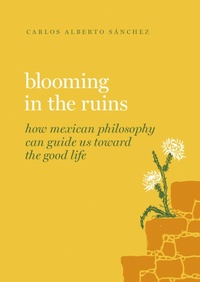
Blooming in the Ruins
How Mexican Philosophy Can Guide Us toward the Good Life
Published on 3. December 2024
Book
Hardback
328 pages
978-0-19-769100-7 (ISBN)
Description
When we think of philosophy that can guide us in our everyday lives, we are more likely to think of Ancient Greece or Rome than we are 20th-century Mexico. But Mexican philosophy, which came into focus in the last century, following the Mexican Revolution, is a rich and wide-ranging tradition with much to offer readers today. Emerging in defiance of the Western philosophy bound up with colonial power--first brought to Mexico with the Augustinians in the 16th century, and, like so much else, imposed on Mexicans for centuries after that--it boasts a range of powerful ideas and advice for modern-day life. A tradition deeply tied to Mexico's history of colonization, revolution, resistance, and persistence through hardship, this philosophy has much to teach us.
Mexican philosophers had to grapple with questions particular to Mexico that have implications that anyone can and should learn from. Given the way we all must contend with life's unexpected twists and turns, how can we preserve a sense of ourselves, and a coherent way of thinking about the world? If history is really a sequence of accidents, each affecting the next, how can we think about what we should be doing in our lives? How can we understand who we are, if we are the product of such accidents of history? How can we deal with emotions that conflict with one another? How can we keep our spirits up when we feel like we are always on our way to a far-off goal? Mexican philosophy offers a specific, historically- and culturally-rooted way to think about these universal questions. We can appreciate the way its ideas followed from the accidents of history that created modern-day Mexico, while also appreciating that they are as universally profound as those passed down in the Western tradition. Mexican philosophy also offers an array of fascinating concepts and directives, from recommending cultivating a rival as a source of motivation to teaching how to deal with trouble-makers and reminding us to respect other people on their own terms.
Mexican philosophy is a varied, dynamic, and deeply modern resource for meaningful, distinctive wisdom to guide us through our lives. Incorporating stories from his family's and his ancestors' Mexican and Mexican-American experiences, Carlos Alberto Sanchez provides an intriguing guide for readers of all backgrounds, including those who will be learning about philosophy (or Mexico) for the first time.
Mexican philosophers had to grapple with questions particular to Mexico that have implications that anyone can and should learn from. Given the way we all must contend with life's unexpected twists and turns, how can we preserve a sense of ourselves, and a coherent way of thinking about the world? If history is really a sequence of accidents, each affecting the next, how can we think about what we should be doing in our lives? How can we understand who we are, if we are the product of such accidents of history? How can we deal with emotions that conflict with one another? How can we keep our spirits up when we feel like we are always on our way to a far-off goal? Mexican philosophy offers a specific, historically- and culturally-rooted way to think about these universal questions. We can appreciate the way its ideas followed from the accidents of history that created modern-day Mexico, while also appreciating that they are as universally profound as those passed down in the Western tradition. Mexican philosophy also offers an array of fascinating concepts and directives, from recommending cultivating a rival as a source of motivation to teaching how to deal with trouble-makers and reminding us to respect other people on their own terms.
Mexican philosophy is a varied, dynamic, and deeply modern resource for meaningful, distinctive wisdom to guide us through our lives. Incorporating stories from his family's and his ancestors' Mexican and Mexican-American experiences, Carlos Alberto Sanchez provides an intriguing guide for readers of all backgrounds, including those who will be learning about philosophy (or Mexico) for the first time.
Reviews / Votes
Blooming in the Ruins is a rare achievement - a genuinely gripping philosophy book. Part introduction to major figures and themes in Mexican Philosophy, part autobiography, and part meditation on what it means to do philosophy while taking one's roots seriously, Sanchez blends accessibility and profundity with confidence and skill. Above all, this book shows how attending to cultural and historical particularity can offer insights and wisdom that speaks to everybody. * Dr. Michael J. Monahan, Professor of Philosophy, University of Memphis * Self-proclaimed 'accidental' philosopher Carlos Alberto Sanchez blooms again, delving into lived experience, circumstance, empiricism, death, choice, rights, education, and, above all, respect, this time against the backdrop of a pantheon of major Mexican philosophers including Antonio Caso, Samuel Ramos, Leopoldo Zea, Emilio Uranga, Abelardo Villegas, Luis Villoro, and Jorge Portilla, to reveal ultimately, in accessible and entertaining ways, how self knowledge and serious reflection benefit human experience. * Amy A. Oliver, Associate Professor of Philosophy and Spanish & Latin American Studies, American University * This book is beautiful and wise in equal measure. Only Carlos Sanchez could take us on this exhilarating, kaleidoscopic tour of 20th century Mexican philosophy. He shows how Mexican philosophy provides lessons in transmuting insecurity, violence, liberation, and catastrophe into lessons for living better every day. This is the kind of book that can change people's lives. * Manuel Vargas, University of California San Diego * Sanchez shows how Mexican philosophy inverts traditional assumptions and hierarchies ... and bolsters his analyses through historical context and resonant personal anecdotes ... This captivates. * Publishers Weekly * Surprisingly breezy to read, this book, subtitled "How Mexican Philosophy Can Guide Us Toward the Good Life," revealed mind-blowing concepts from a field I didn't know existed. * Simon Romero, New York Times * The book is...a resounding success in that it leaves the reader with both a feeling of empowerment and a desire to learn more about Mexican philosophy. * Notre Dame Philosophical Reviews *More details
Series
Language
English
Place of publication
New York
United States
Product notice
sewn/stitched
Cloth over boards
Dimensions
Height: 187 mm
Width: 136 mm
Thickness: 29 mm
Weight
370 gr
ISBN-13
978-0-19-769100-7 (9780197691007)
Copyright in bibliographic data and cover images is held by Nielsen Book Services Limited or by the publishers or by their respective licensors: all rights reserved.
Schweitzer Classification
Other editions
Additional editions
Carlos Alberto Sánchez
Blooming in the Ruins
How Mexican Philosophy Can Guide Us toward the Good Life
E-Book
08/2024
OUP eBook
€16.49
Available for download
Carlos Alberto Sánchez
Blooming in the Ruins
How Mexican Philosophy Can Guide Us toward the Good Life
E-Book
08/2024
OUP eBook
€16.49
Available for download
Person
Carlos Alberto Sanchez is Professor of Philosophy at San Jose State University, where he teaches and publishes on Mexican philosophy and its history. He grew up in Michoacan, Mexico and King City, California. He is the co-founder and executive editor of the Journal of Mexican Philosophy.
Content
PREFACE
Mexican Philosophy as a Guide to Life
PART I
TWO VERY SHORT INTRODUCTIONS TO MEXICAN PHILOSOPHY
Chapter 1: In the Beginning. . .Philosophy in Mexico
Chapter 2: In the 20th Century. . . Mexican Philosophy
PART II
4 IMPORTANT THEMES
Chapter 3: You are Always on the Way (On Nepantla)
Chapter 4: You are Where You Are(On Circumstantialism)
Chapter 5: (Un)Fortunate Destinies(On Accidentality)
Chapter 6: About My Mother's Mole(On Anti-Essentialism)
PART III
INSTRUCTIONS, RECOMMENDATIONS, ORIENTATIONS
Chapter 7: Listen In on Yourself
Chapter 8: Be Charitable
Chapter 9: Be Late to Parties
Chapter 10: Don't Fear Ghosts
Chapter 11: Be Originary
Chapter 12: Embrace Zozobra
Chapter 13: Don't Be a Relajiento
Chapter 14: Don't be an Apretado
Chapter 15: The Uses (and Abuses) of Socratic Irony
Chapter 16: Model Personalities
Chapter 17: Be a Dignified Cynic
Chapter 18: Don't Be a Troll
Chapter 19: Insert Yourself in the Narrative
Chapter 20: A Lesson from the Invention of America
Chapter 21: Love Without Violence
Chapter 22: Value Other Perspectives
Chapter 23: Be Like the Rabbit
Chapter 24: When to Look a Gift Horse in the Mouth
Chapter 25: Love What You Do
Chapter 26: Avoid Cults
Chapter 27: Enjoy an Occasional Rivalry
PART IV
DICHOS
Chapter 28: My Abuelo's Favorite Dicho
Chapter 29: My Abuela's Favorite Dicho
PART V
MORE ON MEXICAN PHILOSOPHY
Chapter 30: Doing Philosophy Mexican Style!
Bibliography & Further Reading
Mexican Philosophy as a Guide to Life
PART I
TWO VERY SHORT INTRODUCTIONS TO MEXICAN PHILOSOPHY
Chapter 1: In the Beginning. . .Philosophy in Mexico
Chapter 2: In the 20th Century. . . Mexican Philosophy
PART II
4 IMPORTANT THEMES
Chapter 3: You are Always on the Way (On Nepantla)
Chapter 4: You are Where You Are(On Circumstantialism)
Chapter 5: (Un)Fortunate Destinies(On Accidentality)
Chapter 6: About My Mother's Mole(On Anti-Essentialism)
PART III
INSTRUCTIONS, RECOMMENDATIONS, ORIENTATIONS
Chapter 7: Listen In on Yourself
Chapter 8: Be Charitable
Chapter 9: Be Late to Parties
Chapter 10: Don't Fear Ghosts
Chapter 11: Be Originary
Chapter 12: Embrace Zozobra
Chapter 13: Don't Be a Relajiento
Chapter 14: Don't be an Apretado
Chapter 15: The Uses (and Abuses) of Socratic Irony
Chapter 16: Model Personalities
Chapter 17: Be a Dignified Cynic
Chapter 18: Don't Be a Troll
Chapter 19: Insert Yourself in the Narrative
Chapter 20: A Lesson from the Invention of America
Chapter 21: Love Without Violence
Chapter 22: Value Other Perspectives
Chapter 23: Be Like the Rabbit
Chapter 24: When to Look a Gift Horse in the Mouth
Chapter 25: Love What You Do
Chapter 26: Avoid Cults
Chapter 27: Enjoy an Occasional Rivalry
PART IV
DICHOS
Chapter 28: My Abuelo's Favorite Dicho
Chapter 29: My Abuela's Favorite Dicho
PART V
MORE ON MEXICAN PHILOSOPHY
Chapter 30: Doing Philosophy Mexican Style!
Bibliography & Further Reading