

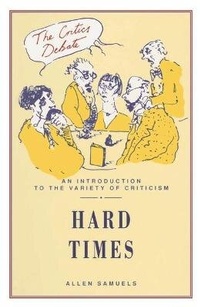
"Hard Times"
Published on 17. January 1992
Book
Hardback
104 pages
978-0-333-45933-1 (ISBN)
Description
Possibly the least liked of Dickens's novels, Hard Times has generated considerable critical disagreement, usually not for what it is about, but for how good it is. Allen Samuels considers the critical views of several 19th and 20th century critics to show how they have responded in their various ways to this question. Believing that ultimately the question of value is a dead duck, he offers his own interpretation in which he considers how the novel dramatizes within itself the competing rivalry of the literary and sociological imaginations. He focuses on three key critical areas - the novel's genre, the metaphores of reading within the text, and the theme of self-interest as characterised by Bitzer's success.
More details
Series
Language
English
Place of publication
Basingstoke
United Kingdom
Target group
College/higher education
Dimensions
Height: 222 mm
Width: 141 mm
Weight
235 gr
ISBN-13
978-0-333-45933-1 (9780333459331)
Copyright in bibliographic data and cover images is held by Nielsen Book Services Limited or by the publishers or by their respective licensors: all rights reserved.
Schweitzer Classification
Content
Part 1 Survey: textual approach; the 19th century, a social approach; Ruskin; socio-political approaches - 20th century; "only a surface failure"; shifting the argument; a political note - George Orwell; new criticism - the great debate; what is the Leavisite approach?; the Leavisite approach to "Hard Times"; Leavisite practical criticism; a rejoinder to Leavis; nice work; the historical approach; carpets and wallpaper; theoretical approaches - deconstruction; a deconstructive example - Mrs Sparsit's staircase. Part 2 Appraisal: what is "Hard Times"?; Dickens the dramatiser; relations between dramatic and satiric; the dramatic scene; the theatrical device; the broad purpose; writing; language doubt; fact and fiction; Bounderby's fictions; language and the self; self interest; the inverted parable.