

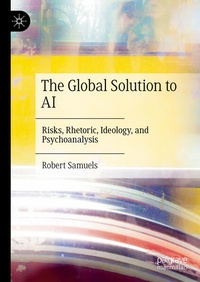
The Global Solution to AI
Description
This book interrogates the notion that artificial intelligence may represent a threat to the world because it lacks both empathy and reason and suggests that - if we do not intervene to limit and control AI - we are at risk of being overtaken by machines, which are not aligned with human ethics and values. To outline how we should counter the worst tendencies of automated intelligence, we must first understand the roots of morality and reason and why we have been misunderstanding the fundamental difference between humans and computers. Moreover, by critiquing the rhetoric and ideology of AI proponents, we can gain a clear understanding of the need to regulate our machines on a global basis through global treaties. Turning to Freud's theories of empathy and reason from his Project for a Scientific Psychology , this book outlines why the human mind is different from AI, and why this difference is important to recognize.
Reviews / Votes
" The global solution to AI is a provocative and timely intervention that excelsin cultural, ethical, and political analysis. While its neglect of computational theory weakens its engagement with the technical limits of AI, the book successfully reframes AI as a global social issue that demands legal, philosophical, and institutional responses. It will be particularly valuable to scholars and policymakers seeking alternatives to purely technocratic approaches to AI." (Bálint Molnár, Computing Reviews, February 25, 2026)
More details
Other editions
Additional editions
Person
Robert Samuels is a Senior Continuing Lecturer at UC Santa Barbra, USA. He holds doctorates in Psychology and English, and he is the author of twenty-five books, including: Viral Rhetoric; The Psychopathology of Political Ideology; Freud for the Twenty-First Century; and Culture Wars, Universities, and the Political Unconscious (Palgrave, 2024). His Substack is Media, Psychoanalysis, and Politics.
Content
Chapter 1. Introduction: The Global Solution to AI: Risks, Rhetoric, Ideology, and Psychoanalysis.- Chapter 2. The Existential Threats of AI.- Chapter 3. The Metaphorical Misunderstanding AI and Ourselves.- Chapter 4. The Political Foundations of AI: From Hippies to Trump.- Chapter 5. Neuro-psychoanalysis and the Representation of Humans as Biological Machines.- Chapter 6. The Global Solution to AI.