

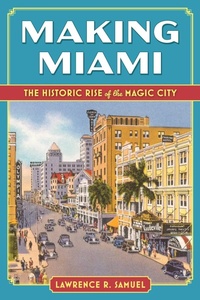
Making Miami
The Historic Rise of the Magic City
Published on 2. September 2025
Book
Paperback/Softback
202 pages
978-1-68334-470-4 (ISBN)
Description
“Very informative—includes subject areas that have remained underserved in terms of historiography.”—Paul George, Resident Historian, HistoryMiami Museum
Making Miami takes a deep dive into the history, growth, and development of the city not just in terms of real estate but also a number of other topics, including the expansion of a transportation and infrastructural network; tourism; the natural ecosystem and threats from residential, recreational, and industrial development; and issues of race, class, ethnicity, immigration, and nationality.
The history of Miami unfolds chronologically, revealing how real estate has consistently fueled its growth. The narrative begins in the Roaring Twenties, when substantial investments flooded into Florida, sparking a land boom that attracted both investors and new residents. The decades of the 1920’s and 30’s transformed Miami from a sleepy southern town into the unique city it is today. As the Great Depression cast its shadow, a handful of bold developers took center stage, creating the iconic art deco district of South Beach. The active World War II years saw Miami become a home for many servicemen and servicewomen stationed there. Postwar challenges in the 1960s and 1970s tested the city’s resilience, as the economic engine sputtered and urban strife reshaped its fabric. However, the 1980s marked a construction renaissance for Miami, driven by funds from sometimes questionable sources.
Despite occasional setbacks, Miami’s real estate market is once again thriving, drawing people from far and wide to visit or make it their home.
Making Miami takes a deep dive into the history, growth, and development of the city not just in terms of real estate but also a number of other topics, including the expansion of a transportation and infrastructural network; tourism; the natural ecosystem and threats from residential, recreational, and industrial development; and issues of race, class, ethnicity, immigration, and nationality.
The history of Miami unfolds chronologically, revealing how real estate has consistently fueled its growth. The narrative begins in the Roaring Twenties, when substantial investments flooded into Florida, sparking a land boom that attracted both investors and new residents. The decades of the 1920’s and 30’s transformed Miami from a sleepy southern town into the unique city it is today. As the Great Depression cast its shadow, a handful of bold developers took center stage, creating the iconic art deco district of South Beach. The active World War II years saw Miami become a home for many servicemen and servicewomen stationed there. Postwar challenges in the 1960s and 1970s tested the city’s resilience, as the economic engine sputtered and urban strife reshaped its fabric. However, the 1980s marked a construction renaissance for Miami, driven by funds from sometimes questionable sources.
Despite occasional setbacks, Miami’s real estate market is once again thriving, drawing people from far and wide to visit or make it their home.
More details
Language
English
Place of publication
United States
Publishing group
Rowman & Littlefield
Product notice
Paperback (trade)
Unsewn / adhesive bound
Dimensions
Height: 229 mm
Width: 152 mm
Thickness: 12 mm
Weight
281 gr
ISBN-13
978-1-68334-470-4 (9781683344704)
Copyright in bibliographic data and cover images is held by Nielsen Book Services Limited or by the publishers or by their respective licensors: all rights reserved.
Schweitzer Classification
Other editions
Additional editions
E-Book
09/2025
Simon + Schuster LLC
€17.79
Available for download
Person
By Laurence R. Samuel