

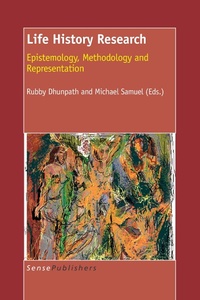
Life History Research
Epistemology, Methodology and Representation
Published on 1. January 2009
Book
Paperback/Softback
240 pages
978-90-8790-856-0 (ISBN)
Description
Much has been written about lifehistory research in recent times. It has been paraded as a counterculture to the traditional research canon, and celebrated as a genre that promotes methodological pluralism. However, lifehistory researchers have an obligation to transcend spurious claims about the perceived merits of the methodology and extend the debates around how the genre simultaneously problematises and responds to the competing challenges of Epistemology, Methodology and Representation.
In conceiving of each of the chapters from an epistemological perspective, the authors focus on how their individual work has crossed or expanded traditional borders of epistemology and ontology; of how the work has satisfied the rigours of thesis production and contributed to changing conceptions of knowledge, what knowledge gets produced and how knowledge is produced when we make particular methodological choices.
Since any methodological orientation is invariably selective, and the researcher is always involved and implicated in the production of data, the authors focus on what selections they have made in their projects, what governed these choices, what benefits/deficits those choices yielded, and what the implications of their research are for those meta-narratives that have established the regimes of truth, legitimacy, and veracity in research.
Knowledge production is inextricably linked to representation. In the process of articulating their findings, each author made particular representational choices, sometimes transgressing conventional approaches. The book explores why these choices were made and how the choices influenced the kinds of knowledge generated. The book provides theoretical justifications for these transgressions and reflect on how the experience of representation helped disrupt the authors' essentialist notions of research production and for whom it is produced.
This book is not another celebration of lifehistory as a counterculture. The book hopes to be a deeply critical contribution to disrupt notions around epistemological authority, voice and power and how these are mediated by the delicate relations of the researcher and researched. The problematises and complicates the assumptions that frame this genre with a view to highlighting the potential hazards of the method while demonstrating its potentiality in shaping our conceptions of Ethics, Methodology and Representation.
In conceiving of each of the chapters from an epistemological perspective, the authors focus on how their individual work has crossed or expanded traditional borders of epistemology and ontology; of how the work has satisfied the rigours of thesis production and contributed to changing conceptions of knowledge, what knowledge gets produced and how knowledge is produced when we make particular methodological choices.
Since any methodological orientation is invariably selective, and the researcher is always involved and implicated in the production of data, the authors focus on what selections they have made in their projects, what governed these choices, what benefits/deficits those choices yielded, and what the implications of their research are for those meta-narratives that have established the regimes of truth, legitimacy, and veracity in research.
Knowledge production is inextricably linked to representation. In the process of articulating their findings, each author made particular representational choices, sometimes transgressing conventional approaches. The book explores why these choices were made and how the choices influenced the kinds of knowledge generated. The book provides theoretical justifications for these transgressions and reflect on how the experience of representation helped disrupt the authors' essentialist notions of research production and for whom it is produced.
This book is not another celebration of lifehistory as a counterculture. The book hopes to be a deeply critical contribution to disrupt notions around epistemological authority, voice and power and how these are mediated by the delicate relations of the researcher and researched. The problematises and complicates the assumptions that frame this genre with a view to highlighting the potential hazards of the method while demonstrating its potentiality in shaping our conceptions of Ethics, Methodology and Representation.
More details
Language
English
Place of publication
Rotterdam
Netherlands
Target group
Professional and scholarly
Product notice
Paperback (trade)
Unsewn / adhesive bound
Dimensions
Height: 233 mm
Width: 159 mm
Thickness: 20 mm
Weight
377 gr
ISBN-13
978-90-8790-856-0 (9789087908560)
Copyright in bibliographic data and cover images is held by Nielsen Book Services Limited or by the publishers or by their respective licensors: all rights reserved.
Schweitzer Classification
Other editions
Additional editions

Michael Anthony Samuel | Rubby Dhunpath | Michael Samuel
Life History Research
Epistemology, Methodology and Representation
Book
01/2009
Sense Publishers
€115.67
Article exhausted; check different version