

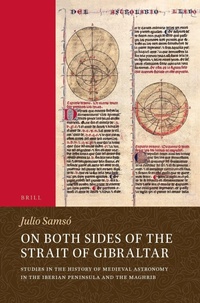
On Both Sides of the Strait of Gibraltar
Studies in the history of medieval astronomy in the Iberian Peninsula and the Maghrib
Published on 27. February 2025
Book
Paperback/Softback
1028 pages
978-90-04-72961-2 (ISBN)
Description
In On Both Sides of the Strait of Gibraltar Julio Samso studies the history of medieval astronomy in al-Andalus (Muslim Spain), the Maghrib and the Christian kingdoms of the Iberian Peninsula. He proves that the Arabic, Latin, Hebrew, Castilian and Catalan sources belong to the same tradition whose origin can be dated in the 11th century due to the changes in Ptolemy's astronomical theory introduced by the Toledan astronomer Ibn al-Zarqalluh/Azarquiel.
The book also analyses the role of al-Andalus and the Iberian Peninsula in the transmission of Islamic astronomy to Europe and justifies the fact that Eastern Islamic works published after ca. 950 CE were not accessible to medieval European scholars because they had not reached al-Andalus.
The book also analyses the role of al-Andalus and the Iberian Peninsula in the transmission of Islamic astronomy to Europe and justifies the fact that Eastern Islamic works published after ca. 950 CE were not accessible to medieval European scholars because they had not reached al-Andalus.
Reviews / Votes
"This massive volume is a remarkable achievement [...] this book is an astounding synthesis comprising pretty much everything there is to know about the subject [...] this book will be the first stop for many research projects in the field for the foreseeable future." Robert G. Morrison, in the Journal for the History of Astronomy 52/4 (2021)"This most impressive volume can be considered the summit of the extensive research undertaken by the author since 1960 on the development of astronomy in the Iberian Peninsula and the Maghrib during the Middle Ages [...] The book is mainly addressed to historians of astronomy but it is written in such a clear and ordered way that all kind of historians, philologists, astronomers, mathematicians, scholars interested in scientific instruments and readers curious about the development of science in the Middle Ages, far from prejudices related to it being just "ten dark centuries", will enjoy the reading." Azucena Hernandez Perez, in Sehepunkte (2021)
More details
Language
English
Place of publication
Leiden
Netherlands
Target group
Professional and scholarly
College/higher education
Product notice
Paperback (trade)
Unsewn / adhesive bound
Dimensions
Height: 235 mm
Width: 155 mm
Thickness: 51 mm
Weight
1406 gr
ISBN-13
978-90-04-72961-2 (9789004729612)
Copyright in bibliographic data and cover images is held by Nielsen Book Services Limited or by the publishers or by their respective licensors: all rights reserved.
Schweitzer Classification
Person
Julio Samso, Ph.D. (1966), University of Barcelona, is Emeritus Professor of Arabic and Islamic Studies at that university. He has published books and many articles on the history of medieval astronomy in al-Andalus and the Maghrib, including Las ciencias de los antiguos en al-Andalus (2nd edition, Fundacion Ibn Tufayl, 2011), Islamic Astronomy and Medieval Spain (Variorum. Aldershot, 1994), Astronomy and Astrology in al-Andalus and the Maghrib (Ashgate Variorum. Aldershot, 2007).
Content
Preface
List of Figures
1 Historical Outline
?A Brief Chronological Survey
?1.0?Foreword
?1.1?Al-Andalus (711-1085)
?1.2?The Maghrib (700-1050)
?1.3?Almoravids (ca. 1050-ca. 1147) and Almohads (ca. 1147-1276)
?1.4?Al-Maghrib and al-Andalus between the Thirteenth and the Fifteenth Centuries
?1.5?Astronomy in the Christian Kingdoms of the Iberian Peninsula
?1.6?A Brief Conclusion
2 Miqat: Timekeeping and Qibla
?2.0?Introduction
?2.1?Calendars and Years
?2.2?Eras
?2.3?The Beginning of the Lunar Month
?2.4?The Hour
?2.5?The qibla
3 Astrology
?3.0?Introduction
?3.1?Patronage and the Practice of Astrology
?3.2?Thematic Surveys
4 Astronomical Instruments
?4.0?Introduction
?4.1?Spherical Instruments
?4.2?The Astrolabe
?4.3?Universal Astrolabes
?4.4?Quadrants
?4.5?Equatoria
?4.6?Jabir ibn Afla?'s Observational Instrument
5 Hay?a (Cosmology)
?5.1?Introduction: on the Meaning of Hay?a in Western Islam
?5.2?The Treatises on hay?a by Dunash ibn Tamim, Qasim ibn Mu?arrif and an Anonymous Eleventh-Century Toledan Astronomer
?5.3?Jabir ibn Afla?'s Mathematical Criticism of the Almagest
?5.4?The Twelfth-Century Andalusi Revolt against Ptolemy
?5.5?Hay?a in Castile during the Reign of Alfonso X (1252-1284)
?5.6?Other hay?a Sources between the Twelfth and the Fifteenth Centuries
?5.7?Conclusions
6 Astronomical Theory
?6.1?Introduction
?6.2?The Motion of Accession and Recession of the Equinoctial Points (al-iqbal wa l-idbar, Trepidation Theory)
?6.3?Ibn al-Zarqalluh's Solar Model
?6.4?The Lunar Model
?6.5?Conclusions
7 Astronomical Tables (zijes)
?7.1?Introduction: the Eastern Input in al-Andalus
?7.2?A General Survey of Andalusi and Maghribi zijes
?7.3?Maghribi zijes: the School of Ibn Is?aq
?7.4?Other Maghribi zijes
?7.5?The Introduction of Eastern zijes in the Maghrib
?7.6?Zijes in the Christian Kingdoms of the Iberian Peninsula
?7.7?Almanacs and Ephemerides
?7.8?Conclusions
Bibliography
Index of Parameters and Numerical Values
Index of Names and Subjects
List of Figures
1 Historical Outline
?A Brief Chronological Survey
?1.0?Foreword
?1.1?Al-Andalus (711-1085)
?1.2?The Maghrib (700-1050)
?1.3?Almoravids (ca. 1050-ca. 1147) and Almohads (ca. 1147-1276)
?1.4?Al-Maghrib and al-Andalus between the Thirteenth and the Fifteenth Centuries
?1.5?Astronomy in the Christian Kingdoms of the Iberian Peninsula
?1.6?A Brief Conclusion
2 Miqat: Timekeeping and Qibla
?2.0?Introduction
?2.1?Calendars and Years
?2.2?Eras
?2.3?The Beginning of the Lunar Month
?2.4?The Hour
?2.5?The qibla
3 Astrology
?3.0?Introduction
?3.1?Patronage and the Practice of Astrology
?3.2?Thematic Surveys
4 Astronomical Instruments
?4.0?Introduction
?4.1?Spherical Instruments
?4.2?The Astrolabe
?4.3?Universal Astrolabes
?4.4?Quadrants
?4.5?Equatoria
?4.6?Jabir ibn Afla?'s Observational Instrument
5 Hay?a (Cosmology)
?5.1?Introduction: on the Meaning of Hay?a in Western Islam
?5.2?The Treatises on hay?a by Dunash ibn Tamim, Qasim ibn Mu?arrif and an Anonymous Eleventh-Century Toledan Astronomer
?5.3?Jabir ibn Afla?'s Mathematical Criticism of the Almagest
?5.4?The Twelfth-Century Andalusi Revolt against Ptolemy
?5.5?Hay?a in Castile during the Reign of Alfonso X (1252-1284)
?5.6?Other hay?a Sources between the Twelfth and the Fifteenth Centuries
?5.7?Conclusions
6 Astronomical Theory
?6.1?Introduction
?6.2?The Motion of Accession and Recession of the Equinoctial Points (al-iqbal wa l-idbar, Trepidation Theory)
?6.3?Ibn al-Zarqalluh's Solar Model
?6.4?The Lunar Model
?6.5?Conclusions
7 Astronomical Tables (zijes)
?7.1?Introduction: the Eastern Input in al-Andalus
?7.2?A General Survey of Andalusi and Maghribi zijes
?7.3?Maghribi zijes: the School of Ibn Is?aq
?7.4?Other Maghribi zijes
?7.5?The Introduction of Eastern zijes in the Maghrib
?7.6?Zijes in the Christian Kingdoms of the Iberian Peninsula
?7.7?Almanacs and Ephemerides
?7.8?Conclusions
Bibliography
Index of Parameters and Numerical Values
Index of Names and Subjects