

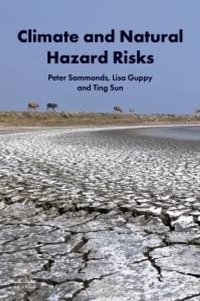
Climate and Natural Hazard Risks
Will be published approx. on 28. November 2025
Book
Paperback/Softback
275 pages
978-0-443-27368-1 (ISBN)
Description
Climate and Natural Hazard Risks is an in-depth examination of the physical, environmental, economic, and social impacts of climate change and natural hazards on vulnerable populations in different regions around the world. The authors open with the simple question "What is risk?," taking a detailed look at historical and global trends and risk frameworks as they relate to the Earth system and climate change. The authors then examine the drivers of social and physical vulnerability. From there, the chapters systematically review different hazards and their implications for risk (hurricanes, cyclones, flooding, extreme temperatures, food insecurity, earthquakes, tsunamis). The authors then delve into the latest methods and research for multihazard risk assessment. The book closes with challenging explorations of resilience, and environmental and social transitions for climate change. Students, practitioners and policy-makers working across climate science, hazard risk assessment, disaster management and humanitarian response will find this instructive and thought-provoking text essential reading.
More details
Language
English
Place of publication
Philadelphia
United States
Target group
Professional and scholarly
Dimensions
Height: 227 mm
Width: 153 mm
Thickness: 33 mm
Weight
996 gr
ISBN-13
978-0-443-27368-1 (9780443273681)
Copyright in bibliographic data and cover images is held by Nielsen Book Services Limited or by the publishers or by their respective licensors: all rights reserved.
Schweitzer Classification
Other editions
Additional editions
Peter Sammonds | Lisa Guppy | University College London Sun Lecturer in Climate and Meteorological Hazard Risks
Climate and Natural Hazard Risks
E-Book
04/2026
Elsevier
€139.99
Available for download
Persons
Peter Sammonds is Professor of Geophysics and Climate Risks. He was founding Director and Head of Department of the UCL Institute for Risk and Disaster Reduction (now department) and established its BSc Global Humanitarian Studies and MSc Risk and Disaster Science programmes. His research has covered earthquakes, volcanoes, hurricanes, landslides, floods and ice hazard risks. He now works at the interface of physical and social sciences on disasters in conflict zones, early warning for refugees and land use change. Lisa Guppy is Associate Professor in Risk and Humanitarianism in the UCL Department of Risk and Disaster Reduction. She has worked across humanitarian and development fields, primarily with United Nations organisations, in Asia, Africa, the Americas and the Middle East. Her roles have spanned local to global level and experience in humanitarian responses, from the 2004 tsunami in Sri Lanka to drought in the Horn of Africa, as well as the ongoing complex emergency in Afghanistan. Ting Sun is Lecturer in Climate and Meteorological Hazard Risks in the UCL Institute for Risk and Disaster Reduction. He is a climate scholar for cities with multidisciplinary background in hydrology, meteorology and built environment. His research interests include impacts of weather and climate extremes (e.g., heat waves, extreme rainfall, etc.) in cities and urban climate modelling across multiple scales (from neighbourhood to globe) as well their broad linkages with public health and building energy sectors. He held a NERC Independent Research Fellowship to lead the project entitled "Building Resilient Cities for Heat Waves?. He is enthusiastic about urban climate modelling-in particular in the role of lead developer of a state-of-the-art urban climate model SUEWS (Surface Urban Energy and Water balance Scheme). He is a core member of the UMEP (Urban Multi-scale Environment Predictor) development team. Building upon his multidisciplinary background centred in hydro-climate and multi-scale modelling skills, at the IRDR he envisions improving understanding of and preparedness for climate and meteorological hazards.
Content
1. What is Risk?
2. Global Trends
3. Risk Frameworks and Mechanisms
4. Dynamic Earth
5. Earth's Climate
6. Climate Change: Threat Multiplier
7. Hurricanes and Cyclones
8. Flooding
9. Heat and Cold Waves
10. Drought and Food Security
11. Geological Hazards
12. Probabilistic Hazard Assessment
13. Multi-Hazard Risk Assessment
14. Resilience
15. Transitions
2. Global Trends
3. Risk Frameworks and Mechanisms
4. Dynamic Earth
5. Earth's Climate
6. Climate Change: Threat Multiplier
7. Hurricanes and Cyclones
8. Flooding
9. Heat and Cold Waves
10. Drought and Food Security
11. Geological Hazards
12. Probabilistic Hazard Assessment
13. Multi-Hazard Risk Assessment
14. Resilience
15. Transitions