

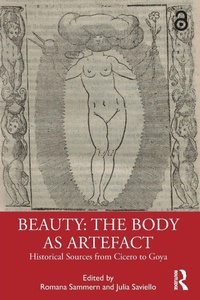
Beauty: The Body as Artefact
Historical Sources from Cicero to Goya
1st Edition
Published on 5. May 2026
Book
Paperback/Softback
386 pages
978-1-032-73570-2 (ISBN)
Description
Beauty: The Body as Artefact traces the history of physical beauty in Western art and thought from antiquity to the eighteenth century. Bringing together foundational texts and newly translated works accompanied by scholarly commentaries, this volume explores how the human body was understood as both a product of nature and an artistic creation.
Examining the intersections of aesthetics, art theory, medical practices and cosmetics, it reveals how ideals of beauty and beautification shaped conceptions of gender, the body and artistic creation. The book focuses on the early modern period, when the cosmetic transformation of the body became closely associated with artistic imagery and techniques. Drawing on art-historical, philosophical and cultural perspectives, the volume presents key writings by figures from Cicero and Alberti to Behn and Hogarth, highlighting shifting notions of imitation, ornament and naturalness.
Suitable for undergraduates, postgraduates, and scholars in art history, cultural history and gender studies, Beauty: The Body as Artefact offers a framework for understanding physical beauty as a historical and artistic category at the intersection of image, body and knowledge.
The Open Access version of this book, available at www.taylorfrancis.com, has
been made available under a Creative Commons Attribution 4.0 International
(CC BY) license
Examining the intersections of aesthetics, art theory, medical practices and cosmetics, it reveals how ideals of beauty and beautification shaped conceptions of gender, the body and artistic creation. The book focuses on the early modern period, when the cosmetic transformation of the body became closely associated with artistic imagery and techniques. Drawing on art-historical, philosophical and cultural perspectives, the volume presents key writings by figures from Cicero and Alberti to Behn and Hogarth, highlighting shifting notions of imitation, ornament and naturalness.
Suitable for undergraduates, postgraduates, and scholars in art history, cultural history and gender studies, Beauty: The Body as Artefact offers a framework for understanding physical beauty as a historical and artistic category at the intersection of image, body and knowledge.
The Open Access version of this book, available at www.taylorfrancis.com, has
been made available under a Creative Commons Attribution 4.0 International
(CC BY) license
Reviews / Votes
'From its beguiling cover to its engaging and carefully curated contents, this is a must-have addition to the early modern corpus and the burgeoning research fields of beauty and embodiment. With texts from Cicero to Goya-each presented in the original alongside translations and pithy commentary by a stellar international team of cutting-edge scholars-students and instructors alike have been gifted a rare and rich package here.'Catherine Kovesi, Professor of History, University of Melbourne
'Is human beauty eternal and unchanging, or highly subjective? Should you praise or condemn cosmetic practices? This edition of key texts shows how writers and philosophers grappled with the question of how to define, modify and manage male and female beauty from antiquity to the eighteenth century. With original texts on beauty, translations, and insightful commentaries, this is an indispensable resource for anyone interested in the history of beauty.'
Evelyn Welch, Vice-Chancellor and President, University of Bristol
More details
Language
English
Place of publication
London
United Kingdom
Publishing group
Taylor & Francis Ltd
Target group
College/higher education
Postgraduate and Undergraduate Advanced
Illustrations
30 farbige Abbildungen, 30 Farbfotos bzw. farbige Rasterbilder
30 Halftones, color; 30 Illustrations, color
Dimensions
Height: 232 mm
Width: 157 mm
Thickness: 22 mm
Weight
684 gr
ISBN-13
978-1-032-73570-2 (9781032735702)
Copyright in bibliographic data and cover images is held by Nielsen Book Services Limited or by the publishers or by their respective licensors: all rights reserved.
Schweitzer Classification
Other editions
Additional editions
E-Book
05/2026
Routledge
€0.00
Available for download
E-Book
05/2026
Routledge
€0.00
Available for download
Book
05/2026
1st Edition
Routledge
€193.50
Shipment within 10-20 days
Persons
Romana Sammern is an art historian based at the Inter-University Organization Arts & Knowledges (University of Salzburg/Mozarteum University). She researches the intersections of body, image, and medicine in the early modern period. She holds a PhD from Humboldt University of Berlin and a habilitation from the University of Passau. Her research has been supported by fellowships in Austria, Germany, Italy, the United Kingdom, and the United States.
Julia Saviello is Assistant Professor at the Institute of Art History, Goethe University Frankfurt. Her research centres on hair and the human body, objects as image carriers, and the intersections of ceramics and nature in the early modern period. Her publications include Verlockungen. Haare in der Kunst der Fruehen Neuzeit (2017) and Der Schild und das Bild (2026).
Julia Saviello is Assistant Professor at the Institute of Art History, Goethe University Frankfurt. Her research centres on hair and the human body, objects as image carriers, and the intersections of ceramics and nature in the early modern period. Her publications include Verlockungen. Haare in der Kunst der Fruehen Neuzeit (2017) and Der Schild und das Bild (2026).
Content
Acknowledgements
Lists of figures
List of contributors
Introduction: The beautiful body artefact
Romana Sammern and Julia Saviello
1. Cicero: Perfect beauty as compound (ca. 86-84 BC)
Julia Saviello
2. Ovid: The appearance of natural beauty (1st century AD)
Romana Sammern
3. Apuleius: The allure of beautiful hair (ca. 160/170)
Julia Saviello
4. Isidore of Seville: Painting as make-up (c. 620)
Wolf-Dietrich Loehr
5. Trota of Salerno: Transmitting beautifying knowledge (first half of the twelfthth century)
Montserrat Cabre
6. Hildegard of Bingen: Hair and adornment of nuns (c.1150)
Philippe Cordez
7. Gerard of Cremona: Galen in translation - canonicity and race (before 1187)
Robert Brennan
8. Vincent of Beauvais: Makeup as the loss of the divine image (1247)
Wolf-Dietrich Loehr
9. Francesco Petrarca: Fragments and colours of beauty (ca. 1336/1374)
Julia Saviello
10. Franco Sacchetti: Women's art as a correction of creation (ca. 1390)
Wolf-Dietrich Loehr
11. Lorenzo Valla: The pleasure of beauty (1431)
Alberto Saviello
12. Leon Battista Alberti: Genealogy of beauty (1433)
Julia Saviello
13. Giovanni Borromeo: Male beauty, cosmetics and power (1468)
Timothy McCall
14. Leonardo da Vinci: Unkempt and naturally beautiful (ca. 1492)
Julia Saviello
15. Baldassare Castiglione: The charm of effortlessness (1528)
Romana Sammern
16. Albrecht Duerer: The diversity of the human body (1528)
Romana Sammern
17. Erasmus von Rotterdam: The body as a moving image (1530)
Wolf-Dietrich Loehr
18. Agnolo Firenzuola: The woman as a beautiful object (1541)
Romana Sammern
19. Benedetto Varchi: Grace and beauty (1540s?)
Fabian Jonietz
20. Giovanni Marinello: Cosmetic recipes (1562)
Elena Lazzarini
21. Alessandro Allori: A beautiful surface and bones that evoke sadness (1560s)
Helen Barr
22. Lodovico Dolce: The beauty of the female complexion (1565)
Romana Sammern
23. Giovanni Paolo Lomazzo: Graceful folds - the textile shell of the body (1584)
Julia Saviello
24. Giovan Battista Della Porta: The physiognomy of the beautiful body (1586)
Romana Sammern
25. Peter Paul Rubens: The beauty of trained bodies (ca. 1610)
Romana Sammern
26. William Shakespeare: The nature of the beautiful (ca. 1610)
Laura Gronius
27. Girard Thibault: Movement in harmony with the body (1630)
Julia Saviello
28. Gian Lorenzo Bernini: Similarity and idealization (1665)
Heiko Damm
29. Marie Meurdrac: Teaching ladies the art of beauty (1666)
Erin Griffey and Victoria Munn
30. Gerard Audran: Measuring the ideal body of antiquity (1683)
Julia Saviello
31. Aphra Behn: Slavery and 'the standard of true beauty'(1688)
Kim F. Hall and Tapiwa Gambura
32. Gerard de Lairesse: The colours of nature (1707)
Ulrike Kern
33. William Hogarth: Curls and other beautiful entanglements (1753)
Julia Saviello
34. Alexander Cozens: The end of the canon of beauty (1778)
Anja Zimmermann
35. Claude-Henri Watelet: Flesh tones and the beauty of white skin (1788)
Mechthild Fend
36. Francisco de Goya: Painting as make-up (1794)
Wolfram Pichler
Index
Lists of figures
List of contributors
Introduction: The beautiful body artefact
Romana Sammern and Julia Saviello
1. Cicero: Perfect beauty as compound (ca. 86-84 BC)
Julia Saviello
2. Ovid: The appearance of natural beauty (1st century AD)
Romana Sammern
3. Apuleius: The allure of beautiful hair (ca. 160/170)
Julia Saviello
4. Isidore of Seville: Painting as make-up (c. 620)
Wolf-Dietrich Loehr
5. Trota of Salerno: Transmitting beautifying knowledge (first half of the twelfthth century)
Montserrat Cabre
6. Hildegard of Bingen: Hair and adornment of nuns (c.1150)
Philippe Cordez
7. Gerard of Cremona: Galen in translation - canonicity and race (before 1187)
Robert Brennan
8. Vincent of Beauvais: Makeup as the loss of the divine image (1247)
Wolf-Dietrich Loehr
9. Francesco Petrarca: Fragments and colours of beauty (ca. 1336/1374)
Julia Saviello
10. Franco Sacchetti: Women's art as a correction of creation (ca. 1390)
Wolf-Dietrich Loehr
11. Lorenzo Valla: The pleasure of beauty (1431)
Alberto Saviello
12. Leon Battista Alberti: Genealogy of beauty (1433)
Julia Saviello
13. Giovanni Borromeo: Male beauty, cosmetics and power (1468)
Timothy McCall
14. Leonardo da Vinci: Unkempt and naturally beautiful (ca. 1492)
Julia Saviello
15. Baldassare Castiglione: The charm of effortlessness (1528)
Romana Sammern
16. Albrecht Duerer: The diversity of the human body (1528)
Romana Sammern
17. Erasmus von Rotterdam: The body as a moving image (1530)
Wolf-Dietrich Loehr
18. Agnolo Firenzuola: The woman as a beautiful object (1541)
Romana Sammern
19. Benedetto Varchi: Grace and beauty (1540s?)
Fabian Jonietz
20. Giovanni Marinello: Cosmetic recipes (1562)
Elena Lazzarini
21. Alessandro Allori: A beautiful surface and bones that evoke sadness (1560s)
Helen Barr
22. Lodovico Dolce: The beauty of the female complexion (1565)
Romana Sammern
23. Giovanni Paolo Lomazzo: Graceful folds - the textile shell of the body (1584)
Julia Saviello
24. Giovan Battista Della Porta: The physiognomy of the beautiful body (1586)
Romana Sammern
25. Peter Paul Rubens: The beauty of trained bodies (ca. 1610)
Romana Sammern
26. William Shakespeare: The nature of the beautiful (ca. 1610)
Laura Gronius
27. Girard Thibault: Movement in harmony with the body (1630)
Julia Saviello
28. Gian Lorenzo Bernini: Similarity and idealization (1665)
Heiko Damm
29. Marie Meurdrac: Teaching ladies the art of beauty (1666)
Erin Griffey and Victoria Munn
30. Gerard Audran: Measuring the ideal body of antiquity (1683)
Julia Saviello
31. Aphra Behn: Slavery and 'the standard of true beauty'(1688)
Kim F. Hall and Tapiwa Gambura
32. Gerard de Lairesse: The colours of nature (1707)
Ulrike Kern
33. William Hogarth: Curls and other beautiful entanglements (1753)
Julia Saviello
34. Alexander Cozens: The end of the canon of beauty (1778)
Anja Zimmermann
35. Claude-Henri Watelet: Flesh tones and the beauty of white skin (1788)
Mechthild Fend
36. Francisco de Goya: Painting as make-up (1794)
Wolfram Pichler
Index