

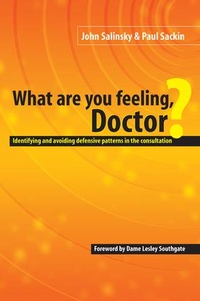
What are You Feeling Doctor?
Identifying and Avoiding Defensive Patterns in the Consultation
1st Edition
Published on 31. August 2000
Book
Paperback/Softback
192 pages
978-1-85775-407-0 (ISBN)
Description
Guidelines are powerful instruments of assistance to clinicians capable of extending the clinical roles of nurses and pharmacists. Purchasers and managers perceive them as technological tools guaranteeing treatment quality. Guidelines also offer mechanisms by which doctors and other health care professionals can be made more accountable to their patients. But how can clinicians tell whether a guideline has authority and whether or not it should be followed? Does the law protect doctors who comply with guidelines? Are guideline developers liable for faulty advice? This timely book provides a comprehensive and accessible analysis of the many medical and legal issues arising from the current explosion of clinical guidelines. Featuring clear summaries of relevant UK US and Commonwealth case law it is vital reading for all doctors health care workers managers purchasers patients and lawyers.
More details
Language
English
Place of publication
London
United Kingdom
Publishing group
Taylor & Francis Ltd
Target group
Professional and scholarly
Professional Reference
Dimensions
Height: 234 mm
Width: 156 mm
Weight
385 gr
ISBN-13
978-1-85775-407-0 (9781857754070)
Copyright in bibliographic data and cover images is held by Nielsen Book Services Limited or by the publishers or by their respective licensors: all rights reserved.
Schweitzer Classification
Other editions
Additional editions
John Salinsky | Paul Sackin
What are You Feeling Doctor?
Identifying and Avoiding Defensive Patterns in the Consultation
E-Book
11/2017
CRC Press
€52.49
Available for download
John Salinsky | Paul Sackin
What are You Feeling Doctor?
Identifying and Avoiding Defensive Patterns in the Consultation
E-Book
11/2017
CRC Press
€52.49
Available for download
Persons
John Salinsky, Paul Sackin
Content
Morning surgery. Setting the scene. Some doctors and their references. The work of the group. The group works on the cases: threats to doctors. The personal factor. How the group reflected on the cases: metaphors and models. Patterns of avoidance: the variety of defensive behaviours. Predisposing factors. The time problem. What are you feeling, doctor? Group members reflect on their experience. What can doctors do? Implications for medical education. Appendix: 'Some medical defences against involvement with patients' 1978 Michael Balint Memorial Lecture.