

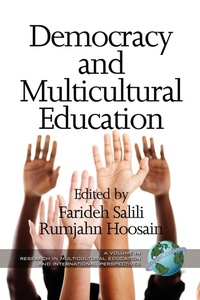
Democracy and Multicultural Education
Will be published approx. on 15. March 2010
Book
Paperback/Softback
394 pages
978-1-60752-422-9 (ISBN)
Description
Democratic political systems and the democratic way of life is aspired by most people around the world. Democracy is considered to be morally superior to other forms of political systems as it aspires to secure civil liberties, human rights, social justice and equality before the law for everyone regardless of their gender, culture, religion and national origin. Enshrined in democracy is separation of religion and state, fair and competitive elections of leaders according to a country's constitution which in turn is based on democratic ideals. Democracy aspires for people of different backgrounds to live together with their differences intact, but all contributing towards a better life for all.
In today's increasingly pluralistic societies many people of different cultural and national backgrounds are brought together. Many have migrated from countries with autocratic political systems. Some with religions that require them to behave in different way, others with cultures teaching them values of harmony, collectivism and conformity as opposed to the culture of their host country emphasizing individualism and cherishing differences. Hence, in multicultural societies development of pluralistic democracy, a democracy which includes respect for diversity is essential.
A truly multicultural education which is based on the assumption that different cultures will be equally represented in education goes a long way towards education for democratic citizenship. Such an education would make students aware of issues of human rights and justice and encourage them to define their own values and ways in which they could contribute to a better world. The aim of this volume is to provide a forum for discussion of how multiple social perspectives and personal values can be brought together on common grounds around matters related to democracy. Contributions from research, and scholarly theoretical work as well as presentation of existing creative models of democracy education will be included. Authors from the major democracies will comment on the models and practice of multicultural education in their respective countries, to facilitate discussion and learning from each others' experiences.
In today's increasingly pluralistic societies many people of different cultural and national backgrounds are brought together. Many have migrated from countries with autocratic political systems. Some with religions that require them to behave in different way, others with cultures teaching them values of harmony, collectivism and conformity as opposed to the culture of their host country emphasizing individualism and cherishing differences. Hence, in multicultural societies development of pluralistic democracy, a democracy which includes respect for diversity is essential.
A truly multicultural education which is based on the assumption that different cultures will be equally represented in education goes a long way towards education for democratic citizenship. Such an education would make students aware of issues of human rights and justice and encourage them to define their own values and ways in which they could contribute to a better world. The aim of this volume is to provide a forum for discussion of how multiple social perspectives and personal values can be brought together on common grounds around matters related to democracy. Contributions from research, and scholarly theoretical work as well as presentation of existing creative models of democracy education will be included. Authors from the major democracies will comment on the models and practice of multicultural education in their respective countries, to facilitate discussion and learning from each others' experiences.
More details
Series
Language
English
Place of publication
Charlotte
United States
Publishing group
Emerald Publishing Inc
Target group
Professional and scholarly
Dimensions
Height: 234 mm
Width: 156 mm
Thickness: 21 mm
Weight
597 gr
ISBN-13
978-1-60752-422-9 (9781607524229)
Copyright in bibliographic data and cover images is held by Nielsen Book Services Limited or by the publishers or by their respective licensors: all rights reserved.
Schweitzer Classification
Other editions
Additional editions
Farideh Salili | Rumjahn Hoosain
Democracy and Multicultural Education
E-Book
04/2010
1st Edition
Information Age Publishing
from
€62.33
Available for download
Content
Preface.
Part I. Introduction.
Chapter 1. Democracy and Multicultural Education; Rumjahn Hoosain and Farideh Salili.
Part II. Conceptual and Theoretical Issues.
Chapter 2. Diversity, Group Identity, and Citizenship Education in a Global Age; James A. Banks.
Chapter 3. Human Rights, Social Justice, Pluralism, and Multicultural Democratic Education; Melissa L. Gibson and Carl A. Grant.
Chapter 4. A National Overview of the Status of Ethnos Relations in the Urban United States; Mario E. Castanda, Ardel M. Broadbent and Baokim Coleman.
Chapter 5. Seeking Democracy in American Schools: Countering Epistemic Violence through Revolutionary Critical Pedagogy; Jean Ryoo and Peter McLaren.
Part III. Methods of Teaching in Multicultural Education.
Chapter 6. Multicultural Education, Critical Race Theory, and Teacher Education; Arlette Ingram Willis and Christina Passos DeNicolo.
Chapter 7. Critical Teaching of History: Toward a Human Rights Agenda for Pre- and In-Service Teacher Education; Jenice L. View.
Chapter 8. The Changing Face of Diversity through the Eyes of Urban Teachers; Joan Sabrina Mims-Cox.
Part IV. Teacher Education.
Chapter 9. Teaching Students How to Live in a Democracy; David W. Johnson and Roger T. Johnson.
Chapter 10. Using the Process of Cultural Reciprocity to Create Multicultural Democratic Classrooms; Monimalika Day, Elizabeth K. DeMulder and Stacia M. Stribling.
Chapter 11. Utilizing a Community Cultural Wealth Model to Explore Parental Engagement During the Transition Into U.S. Urban High Schools; Robert Cooper, Pedro E. Nava, and Cheong R. Huh.
Part V. Other Countries.
Chapter 13. Enacting Democratic Pedagogy in Two International Schools; Theresa Alviar-Martin and Ellen L. Usher.
Chapter 14. Teacher Negotiating Discourse of Equity and Social Justice in Policy and Practice: A New Zealand Perspective; Rachel Patrick.
Chapter 15. Unresolved Contradictions: Australian Multicultural, Social Justice and Pedagogy within the Context of Critical Democratic Spaces; Nado Aveling.
Part I. Introduction.
Chapter 1. Democracy and Multicultural Education; Rumjahn Hoosain and Farideh Salili.
Part II. Conceptual and Theoretical Issues.
Chapter 2. Diversity, Group Identity, and Citizenship Education in a Global Age; James A. Banks.
Chapter 3. Human Rights, Social Justice, Pluralism, and Multicultural Democratic Education; Melissa L. Gibson and Carl A. Grant.
Chapter 4. A National Overview of the Status of Ethnos Relations in the Urban United States; Mario E. Castanda, Ardel M. Broadbent and Baokim Coleman.
Chapter 5. Seeking Democracy in American Schools: Countering Epistemic Violence through Revolutionary Critical Pedagogy; Jean Ryoo and Peter McLaren.
Part III. Methods of Teaching in Multicultural Education.
Chapter 6. Multicultural Education, Critical Race Theory, and Teacher Education; Arlette Ingram Willis and Christina Passos DeNicolo.
Chapter 7. Critical Teaching of History: Toward a Human Rights Agenda for Pre- and In-Service Teacher Education; Jenice L. View.
Chapter 8. The Changing Face of Diversity through the Eyes of Urban Teachers; Joan Sabrina Mims-Cox.
Part IV. Teacher Education.
Chapter 9. Teaching Students How to Live in a Democracy; David W. Johnson and Roger T. Johnson.
Chapter 10. Using the Process of Cultural Reciprocity to Create Multicultural Democratic Classrooms; Monimalika Day, Elizabeth K. DeMulder and Stacia M. Stribling.
Chapter 11. Utilizing a Community Cultural Wealth Model to Explore Parental Engagement During the Transition Into U.S. Urban High Schools; Robert Cooper, Pedro E. Nava, and Cheong R. Huh.
Part V. Other Countries.
Chapter 13. Enacting Democratic Pedagogy in Two International Schools; Theresa Alviar-Martin and Ellen L. Usher.
Chapter 14. Teacher Negotiating Discourse of Equity and Social Justice in Policy and Practice: A New Zealand Perspective; Rachel Patrick.
Chapter 15. Unresolved Contradictions: Australian Multicultural, Social Justice and Pedagogy within the Context of Critical Democratic Spaces; Nado Aveling.