

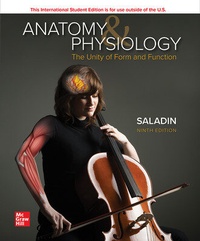
ISE Anatomy & Physiology: The Unity of Form and Function
9th Edition
Published on 4. March 2020
Book
Paperback/Softback
978-1-260-57129-5 (ISBN)
Description
Anatomy & Physiology: The Unity of Form and Function tells a story comprised of many layers, including core science, clinical applications, the history of medicine, and evolution of the human body. Saladin combines this humanistic perspective on anatomy and physiology with vibrant photos and art to convey the beauty and excitement of the subject. To help students manage the tremendous amount of information in this introductory course, the narrative is broken into short segments, each framed by expected learning outcomes and self-testing review questions.
<i>Anatomy & Physiology: The Unity of Form and Function</i> tells a story comprised of many layers, including core science, clinical applications, the history of medicine, and evolution of the human body. Saladin combines this humanistic perspective on anatomy and physiology with vibrant photos and art to convey the beauty and excitement of the subject. To help students manage the tremendous amount of information in this introductory course, the narrative is broken into short segments, each framed by expected learning outcomes and self-testing review questions.
<i>Anatomy & Physiology: The Unity of Form and Function</i> tells a story comprised of many layers, including core science, clinical applications, the history of medicine, and evolution of the human body. Saladin combines this humanistic perspective on anatomy and physiology with vibrant photos and art to convey the beauty and excitement of the subject. To help students manage the tremendous amount of information in this introductory course, the narrative is broken into short segments, each framed by expected learning outcomes and self-testing review questions.
More details
Edition
9th edition
Language
English
Place of publication
OH
United States
Target group
College/higher education
Dimensions
Height: 269 mm
Width: 213 mm
Thickness: 48 mm
Weight
2089 gr
ISBN-13
978-1-260-57129-5 (9781260571295)
Copyright in bibliographic data and cover images is held by Nielsen Book Services Limited or by the publishers or by their respective licensors: all rights reserved.
Schweitzer Classification
Other editions
New editions
Kenneth Saladin
Anatomy & Physiology: The Unity of Form and Function ISE
Book
02/2023
10th Edition
McGraw-Hill Education
€73.50
Shipment within 15-20 days
Person
Kenneth S. Saladin is Professor of Biology at Georgia College & State University in Milledgeville, Georgia, where he has taught since 1977. Ken teaches human anatomy and physiology, introductory medical physiology, histology, animal behavior, and natural history of the Gali?pagos Islands. He has also previously taught introductory biology, general zoology, sociobiology, parasitology, and biomedical etymology. Ken is a member of the Human Anatomy and Physiology Society, American Association of Anatomists, American Physiological Society, Society for Integrative and Comparative Biology, and American Association for the Advancement of Science. He is the author of the best-selling textbooks Anatomy & Physiology: The Unity of Form and Function and Human Anatomy. Ken and his wife Diane have two adult children.
Kenneth S. Saladin is Professor of Biology at Georgia College & State University in Milledgeville, Georgia, where he has taught since 1977. Ken teaches human anatomy and physiology, introductory medical physiology, histology, animal behavior, and natural history of the Gali?pagos Islands. He has also previously taught introductory biology, general zoology, sociobiology, parasitology, and biomedical etymology. Ken is a member of the Human Anatomy and Physiology Society, American Association of Anatomists, American Physiological Society, Society for Integrative and Comparative Biology, and American Association for the Advancement of Science. He is the author of the best-selling textbooks Anatomy & Physiology: The Unity of Form and Function and Human Anatomy. Ken and his wife Diane have two adult children.
Kenneth S. Saladin is Professor of Biology at Georgia College & State University in Milledgeville, Georgia, where he has taught since 1977. Ken teaches human anatomy and physiology, introductory medical physiology, histology, animal behavior, and natural history of the Gali?pagos Islands. He has also previously taught introductory biology, general zoology, sociobiology, parasitology, and biomedical etymology. Ken is a member of the Human Anatomy and Physiology Society, American Association of Anatomists, American Physiological Society, Society for Integrative and Comparative Biology, and American Association for the Advancement of Science. He is the author of the best-selling textbooks Anatomy & Physiology: The Unity of Form and Function and Human Anatomy. Ken and his wife Diane have two adult children.
Content
<b>Part One Organization of the Body</b>
1 Major Themes of Anatomy and Physiology
ATLAS A General Orientation to Human Anatomy
2 The Chemistry of Life
3 Cellular Form and Function
4 Genes and Cellular Function
5 The Human Tissues
<b>Part Two Support and Movement</b>
6 The Integumentary System
7 Bone Tissue
8 The Skeletal System
9 Joints
10 The Muscular System
ATLAS B Regional and Surface Anatomy
11 Muscular Tissue
<b>Part Three Internal Coordination and Control</b>
12 Nervous Tissue
13 The Spinal Cord, Spinal Nerves, and Somatic Reflexes
14 The Brain and Cranial Nerves
15 The Autonomic Nervous System and Visceral Reflexes
16 Sense Organs
17 The Endocrine System
<b>Part Four Circulation and Defense</b>
18 The Circulatory System: Blood
19 The Circulatory System: Heart
20 The Circulatory System: Blood Vessels and Circulation
21 The Lymphatic and Immune Systems
<b>Part Five Intake and Output</b>
22 The Respiratory System
23 The Urinary System
24 Fluid, Electrolyte, and Acid - Base Balance
25 The Digestive System
26 Nutrition and Metabolism
<b>Part Six Reproduction and the Life Cycle</b>
27 The Male Reproductive System
28 The Female Reproductive System
29 Human Development and Aging
APPENDIX A: Answer Keys
APPENDIX B: Symbols, Weights, and Measures
APPENDIX C: Periodic Table of the Elements
APPENDIX D: The Genetic Code and Amino Acids
APPENDIX E: Medical Word Roots and Affixes
1 Major Themes of Anatomy and Physiology
ATLAS A General Orientation to Human Anatomy
2 The Chemistry of Life
3 Cellular Form and Function
4 Genes and Cellular Function
5 The Human Tissues
<b>Part Two Support and Movement</b>
6 The Integumentary System
7 Bone Tissue
8 The Skeletal System
9 Joints
10 The Muscular System
ATLAS B Regional and Surface Anatomy
11 Muscular Tissue
<b>Part Three Internal Coordination and Control</b>
12 Nervous Tissue
13 The Spinal Cord, Spinal Nerves, and Somatic Reflexes
14 The Brain and Cranial Nerves
15 The Autonomic Nervous System and Visceral Reflexes
16 Sense Organs
17 The Endocrine System
<b>Part Four Circulation and Defense</b>
18 The Circulatory System: Blood
19 The Circulatory System: Heart
20 The Circulatory System: Blood Vessels and Circulation
21 The Lymphatic and Immune Systems
<b>Part Five Intake and Output</b>
22 The Respiratory System
23 The Urinary System
24 Fluid, Electrolyte, and Acid - Base Balance
25 The Digestive System
26 Nutrition and Metabolism
<b>Part Six Reproduction and the Life Cycle</b>
27 The Male Reproductive System
28 The Female Reproductive System
29 Human Development and Aging
APPENDIX A: Answer Keys
APPENDIX B: Symbols, Weights, and Measures
APPENDIX C: Periodic Table of the Elements
APPENDIX D: The Genetic Code and Amino Acids
APPENDIX E: Medical Word Roots and Affixes