

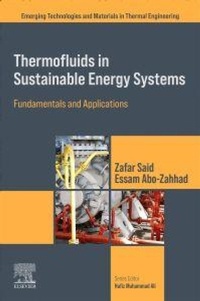
Thermofluids in Sustainable Energy Systems
Fundamentals and Applications
Will be published approx. on 1. October 2026
Book
Paperback/Softback
300 pages
978-0-443-33900-4 (ISBN)
Description
Thermofluids in Sustainable Energy Systems: Fundamentals and Applications is an essential reference that delves into the intricate realm of energy conversion, thermal science, and thermofluids, with a focus on sustainable energy systems. This book offers a comprehensive understanding of fundamental principles, up-to-date applications, and emerging innovations in the field of thermofluids, effectively bridging the gap between theory and practice. It aims to deliver a practical reference on thermodynamics, fluid mechanics, and heat transfer in sustainable energy systems. It equip readers, including students, researchers, engineers, and professionals, with a consolidated knowledge base that merges fundamental principles with practical applications, equipping them to address real-world challenges in energy conversion, thermal management, and energy-efficient solutions. This book addresses the problem of scattered and fragmented information by providing a unified, contemporary resource on thermofluids in sustainable energy systems. It offers readers an in-depth understanding of thermofluid phenomena in energy conversion and their application in various sustainable energy technologies. By unraveling the fundamental principles, challenges, and innovations in the field, the book provides readers the necessary knowledge and skills to contribute to the development and implementation of sustainable energy solutions.
More details
Series
Language
English
Place of publication
Philadelphia
United States
Target group
Professional and scholarly
Dimensions
Height: 229 mm
Width: 152 mm
Weight
450 gr
ISBN-13
978-0-443-33900-4 (9780443339004)
Copyright in bibliographic data and cover images is held by Nielsen Book Services Limited or by the publishers or by their respective licensors: all rights reserved.
Schweitzer Classification
Persons
Dr. Zafar Said is currently working as a Distinguished Associate Professor in the
Department of Mechanical and Aerospace Engineering at the United Arab Emirates
University, UAE. He received his doctoral degree in Mechanical Engineering from
the University of Malaya, Malaysia, and completed his postdoctoral research at
Khalifa University, UAE. Dr. Said is a recognized leader in energy technology,
nanofluids, and sustainable energy. His major areas of interest include heat
transfer, solar energy systems, and advanced thermofluids. His research focuses on
battery thermal management, enhancement of solar collectors using nanofluids
and turbulators, and the development of stable nanorefrigerants and
nanolubricants. He also applies artificial intelligence and machine learning to
predict thermophysical properties and optimize energy systems. He is the recipient
of several prestigious awards, including the Khalifa Award for Education as
Distinguished University Professor (2025), the Future Pioneer Award in
Sustainability (2025), and Best Academic Research at the 13th Dubai Award for
Sustainable Transport (2024). He has also received the Research and Innovation
Award from the UAE Ministry of Energy and Infrastructure (2022) and First Place in
Scientific Research at the Excellence and Creative Engineering Award (2023) by the
Society of Engineers, UAE. In recognition of his contributions, he has been
consistently ranked among the world's top 2% of scientists in the field of energy by
Elsevier BV and Stanford University. In addition to his academic duties, he actively
serves in editorial roles for several international journals and is a frequent keynote
speaker at global conferences. Dr. Essam M. Abo-Zahhad is an Associate Professor of Mechanical Engineering at Aswan University, Egypt, currently on leave serving as Assistant Professor at Liwa University, UAE. He earned his Ph.D. in Thermofluids Science from the Egypt-Japan University of Science and Technology (E-JUST), in collaboration with the Tokyo Institute of Technology, Japan.
With over 12 years of academic and research experience, Dr. Abo-Zahhad specializes in thermofluids, computational fluid dynamics, and energy systems engineering. His research spans advanced thermal management, solar energy technologies, high-concentration photovoltaic systems, microchannel heat sinks, and energy-efficient solutions for harsh, arid environments, areas of critical importance to global energy sustainability and climate resilience.
He has authored more than 50 peer-reviewed articles in high-impact international journals, as well as book chapters, conference contributions, and a U.S. patent. He has secured and contributed to multiple internationally funded research projects, with aggregate funding exceeding several hundred thousand dollars, through collaborations with leading institutions and industrial partners across Europe, Asia, and the Middle East.
Dr. Abo-Zahhad serves as a Guest Editor and Topical Collection Editor for several peer-reviewed journals and is actively engaged in editorial and peer-review activities across the thermofluids and energy engineering communities. He is the co-editor of Thermofluids in Sustainable Energy Systems: Fundamentals and Applications (Elsevier), an interdisciplinary reference that bridges thermofluids principles, renewable energy, and sustainability engineering to address global energy challenges.
Department of Mechanical and Aerospace Engineering at the United Arab Emirates
University, UAE. He received his doctoral degree in Mechanical Engineering from
the University of Malaya, Malaysia, and completed his postdoctoral research at
Khalifa University, UAE. Dr. Said is a recognized leader in energy technology,
nanofluids, and sustainable energy. His major areas of interest include heat
transfer, solar energy systems, and advanced thermofluids. His research focuses on
battery thermal management, enhancement of solar collectors using nanofluids
and turbulators, and the development of stable nanorefrigerants and
nanolubricants. He also applies artificial intelligence and machine learning to
predict thermophysical properties and optimize energy systems. He is the recipient
of several prestigious awards, including the Khalifa Award for Education as
Distinguished University Professor (2025), the Future Pioneer Award in
Sustainability (2025), and Best Academic Research at the 13th Dubai Award for
Sustainable Transport (2024). He has also received the Research and Innovation
Award from the UAE Ministry of Energy and Infrastructure (2022) and First Place in
Scientific Research at the Excellence and Creative Engineering Award (2023) by the
Society of Engineers, UAE. In recognition of his contributions, he has been
consistently ranked among the world's top 2% of scientists in the field of energy by
Elsevier BV and Stanford University. In addition to his academic duties, he actively
serves in editorial roles for several international journals and is a frequent keynote
speaker at global conferences. Dr. Essam M. Abo-Zahhad is an Associate Professor of Mechanical Engineering at Aswan University, Egypt, currently on leave serving as Assistant Professor at Liwa University, UAE. He earned his Ph.D. in Thermofluids Science from the Egypt-Japan University of Science and Technology (E-JUST), in collaboration with the Tokyo Institute of Technology, Japan.
With over 12 years of academic and research experience, Dr. Abo-Zahhad specializes in thermofluids, computational fluid dynamics, and energy systems engineering. His research spans advanced thermal management, solar energy technologies, high-concentration photovoltaic systems, microchannel heat sinks, and energy-efficient solutions for harsh, arid environments, areas of critical importance to global energy sustainability and climate resilience.
He has authored more than 50 peer-reviewed articles in high-impact international journals, as well as book chapters, conference contributions, and a U.S. patent. He has secured and contributed to multiple internationally funded research projects, with aggregate funding exceeding several hundred thousand dollars, through collaborations with leading institutions and industrial partners across Europe, Asia, and the Middle East.
Dr. Abo-Zahhad serves as a Guest Editor and Topical Collection Editor for several peer-reviewed journals and is actively engaged in editorial and peer-review activities across the thermofluids and energy engineering communities. He is the co-editor of Thermofluids in Sustainable Energy Systems: Fundamentals and Applications (Elsevier), an interdisciplinary reference that bridges thermofluids principles, renewable energy, and sustainability engineering to address global energy challenges.
Content
1. Introduction to Thermofluids and Sustainable Energy Systems
2. Fundamentals of Thermodynamics and Thermofluids
3. Fluid Mechanics in Thermofluid Energy Systems
4. Heat Transfer and Energy Conversion in Thermofluids
5. Thermofluids Aspects of Traditional Power Generation Technologies
6. Thermofluid Aspects of Renewable Energy Systems: Solar Power
7. Thermofluid Aspects of Renewable Energy Systems: Wind Power
8. Thermofluid Aspects of Renewable Energy Systems: Geothermal and Hydroelectric Power
9. Thermofluid Aspects of Energy Storage and Distribution Systems
10. Thermal Management in Energy-Efficient Buildings and Industrial Processes Using Thermofluids
11. Thermofluids in Sustainable Design and Energy Systems: An Architectural and Urban Science Perspective
12. Thermofluids Modeling and Simulation Techniques
13. Policy, Economics, and Regulatory Aspects of Thermofluids in Sustainable Energy
14. Advanced Control Strategies for Thermofluid Systems
15. Environmental Impact Assessment and Sustainability Analysis of Thermofluid Systems
16. Economic Analysis in Thermofluid Systems for Sustainable Energy
17. Hybrid Sustainable Energy Systems: Design and Applications
18. Innovations and Future Directions in Thermofluids for Sustainable Energy Systems
2. Fundamentals of Thermodynamics and Thermofluids
3. Fluid Mechanics in Thermofluid Energy Systems
4. Heat Transfer and Energy Conversion in Thermofluids
5. Thermofluids Aspects of Traditional Power Generation Technologies
6. Thermofluid Aspects of Renewable Energy Systems: Solar Power
7. Thermofluid Aspects of Renewable Energy Systems: Wind Power
8. Thermofluid Aspects of Renewable Energy Systems: Geothermal and Hydroelectric Power
9. Thermofluid Aspects of Energy Storage and Distribution Systems
10. Thermal Management in Energy-Efficient Buildings and Industrial Processes Using Thermofluids
11. Thermofluids in Sustainable Design and Energy Systems: An Architectural and Urban Science Perspective
12. Thermofluids Modeling and Simulation Techniques
13. Policy, Economics, and Regulatory Aspects of Thermofluids in Sustainable Energy
14. Advanced Control Strategies for Thermofluid Systems
15. Environmental Impact Assessment and Sustainability Analysis of Thermofluid Systems
16. Economic Analysis in Thermofluid Systems for Sustainable Energy
17. Hybrid Sustainable Energy Systems: Design and Applications
18. Innovations and Future Directions in Thermofluids for Sustainable Energy Systems