

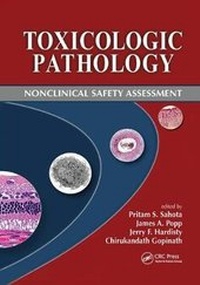
Toxicologic Pathology
Nonclinical Safety Assessment
1st Edition
Published on 23. October 2017
Book
Paperback/Softback
1015 pages
978-1-138-19954-5 (ISBN)
Description
As drug development shifts over time to address unmet medical needs and more targeted therapies are developed, previously unseen pharmacological or off-target effects may occur in treatment. Designed to provide practical information for the bench toxicologic pathologist working in pharmaceutical drug research, Toxicologic Pathology: Nonclinical Safety Assessment presents a histopathologic description of lesions observed during drug development and discusses their implication in the drug development process.
Divided into two sections, the book systematically assists pathologists in making a determination as to the origin and potential importance of a lesion and its relevance for assessing human risk. The first section includes eight "concept" chapters to orient pathologists in areas that are important for effective interaction with other pathologists as well as the many non-pathologists involved in drug development. The second section is made up of organ-based chapters, each including light microscopic and electron microscopic descriptions of pathological lesions, differential diagnoses, biological consequences, pathogenesis, mechanism of lesion formation, and the expected clinical pathology correlates.
This volume presents critical information-both published and unpublished and gained through personal experience-to improve the quality of drug safety evaluation and to expedite and improve the efficiency of the process. This book is crafted to assist students, residents, and toxicologic pathologists in their early career phase by serving as a resource that can effectively be used as a ready reference next to the microscope. In addition, more experienced pathologists will find this volume to be invaluable during their assessments. The book is also a valuable reference for toxicologists to assist in understanding compound-related pathological findings and to provide background for working on a range of toxicological problems.
Divided into two sections, the book systematically assists pathologists in making a determination as to the origin and potential importance of a lesion and its relevance for assessing human risk. The first section includes eight "concept" chapters to orient pathologists in areas that are important for effective interaction with other pathologists as well as the many non-pathologists involved in drug development. The second section is made up of organ-based chapters, each including light microscopic and electron microscopic descriptions of pathological lesions, differential diagnoses, biological consequences, pathogenesis, mechanism of lesion formation, and the expected clinical pathology correlates.
This volume presents critical information-both published and unpublished and gained through personal experience-to improve the quality of drug safety evaluation and to expedite and improve the efficiency of the process. This book is crafted to assist students, residents, and toxicologic pathologists in their early career phase by serving as a resource that can effectively be used as a ready reference next to the microscope. In addition, more experienced pathologists will find this volume to be invaluable during their assessments. The book is also a valuable reference for toxicologists to assist in understanding compound-related pathological findings and to provide background for working on a range of toxicological problems.
Reviews / Votes
" ... the most practical textbook directly available for toxicological research that has been published in recent years ... will be a highly valuable aid for toxicologic pathologists working in pharmaceutical drug research at all stages of their training or career."-Journal of Toxicologic Pathology
"Overall, this is a detailed and up-to-date textbook, appropriate for toxicologic pathologists at different stages of their career who require a quick, but informative, reference. The authors are globally recognised, so each chapter in the book is well structured with extensive reference lists."
-Catherine L. Ross, Covance Laboratories Ltd, UK in bst News
"In summary, this book will serve as an outstanding contemporary resource for practicing and research toxicologists, whether in an industry or academic setting. It is expansive in its coverage and a pleasure to read."
-Mary Beth Genter, PhD, DABT, in International Journal of Toxicology
"I highly recommend this book for pathologists and nonpathologists working in the field of safety assessment and the many other uses of animals in medical research. A real expert reference book."
-Jerrold M. Ward, DVM, PhD, DACVP, in Veterinary Pathology Online
More details
Language
English
Place of publication
London
United Kingdom
Publishing group
Taylor & Francis Ltd
Target group
College/higher education
Toxicologic pathologists in the pharmaceutical industry supporting contract research; pathologists and toxicologists in academia and regulatory agencies; veterinary and medical pathologists engaged in experimental pathology.
Illustrations
18 s/w Abbildungen, 140 farbige Abbildungen, 43 s/w Tabellen
43 Tables, black and white; 140 Illustrations, color; 18 Illustrations, black and white
Dimensions
Height: 254 mm
Width: 178 mm
Weight
2404 gr
ISBN-13
978-1-138-19954-5 (9781138199545)
Copyright in bibliographic data and cover images is held by Nielsen Book Services Limited or by the publishers or by their respective licensors: all rights reserved.
Schweitzer Classification
Other editions
Additional editions
Pritam S. Sahota | James A. Popp | Jerry F. Hardisty
Toxicologic Pathology
Nonclinical Safety Assessment
Book
04/2013
1st Edition
CRC Press
€284.74
Article exhausted; check different version
Persons
Pritam S. Sahota is the Executive Director of Special Projects Pathology at the Novartis Institutes for Biomedical Research in East Hanover, New Jersey, USA.
James A. Popp is with Stratoxon LLC in Lancaster, Pennsylvania, USA. Jerry F. Hardisty is with Experimental Pathology Laboratories in Sterling, Virginia.
Chirukandath Gopinath is an Independent Consultant in Toxicology/Pathology in Cambridgeshire, UK.
James A. Popp is with Stratoxon LLC in Lancaster, Pennsylvania, USA. Jerry F. Hardisty is with Experimental Pathology Laboratories in Sterling, Virginia.
Chirukandath Gopinath is an Independent Consultant in Toxicology/Pathology in Cambridgeshire, UK.
Content
Concepts in Drug Development
Overview of Drug Development
James A. Popp and Jeffery A. Engelhardt
Nonclinical Safety Evaluation of Drugs
Thomas M. Monticello and Jeanine L. Bussiere
Toxicokinetics and Drug Disposition
David D. Christ
Introduction to Toxicologic Pathology
Judit E. Markovits, Page R. Bouchard, Christopher J. Clarke, and Donald N. McMartin
Routine and Special Techniques in Toxicologic Pathology
Daniel J. Patrick and Peter C. Mann
Principles of Clinical Pathology
Robert L. Hall
Toxicogenomics in Toxicologic Pathology
Mark J. Hoenerhoff and David E. Malarkey
Spontaneous Lesions in Control Animals Used in Toxicity Studies
Robert C. Johnson, Robert H. Spaet, and Daniel L. Potenta
Organ Systems
Gastrointestinal Tract
Judit E. Markovits, Graham R. Betton, Donald N. McMartin, and Oliver C. Turner
Liver, Gallbladder, and Exocrine Pancreas
Russell C. Cattley, James A. Popp, and Steven L. Vonderfecht
Respiratory System
David J. Lewis and Tom P. McKevitt
Urinary System
Kendall S. Frazier and John Curtis Seely
Hematopoietic System
Kristin Henson, Glenn Elliott, and Gregory S. Travlos
Lymphoid System
Patrick J. Haley
Bone, Muscle, and Tooth
John L. Vahle, Joel R. Leininger, Philip H. Long, D. Greg Hall, and Heinrich Ernst
Cardiovascular System
Calvert Louden and David Brott
Endocrine Glands
Sundeep Chandra, Mark J. Hoenerhoff, and Richard Peterson
Reproductive System and Mammary Gland
Justin D. Vidal, Michael L. Mirsky, Karyn Colman, Katharine M. Whitney, and Dianne M. Creasy
Skin
Zbigniew W. Wojcinski, Lydia Andrews-Jones, Daher Ibrahim Aibo, and Robert Dunstan
Nervous System
Mark T. Butt, Robert Sills, and Alys Bradley
Special Senses: Eye and Ear
James A. Render, Kenneth A. Schafer, and Richard A. Altschuler
Overview of Drug Development
James A. Popp and Jeffery A. Engelhardt
Nonclinical Safety Evaluation of Drugs
Thomas M. Monticello and Jeanine L. Bussiere
Toxicokinetics and Drug Disposition
David D. Christ
Introduction to Toxicologic Pathology
Judit E. Markovits, Page R. Bouchard, Christopher J. Clarke, and Donald N. McMartin
Routine and Special Techniques in Toxicologic Pathology
Daniel J. Patrick and Peter C. Mann
Principles of Clinical Pathology
Robert L. Hall
Toxicogenomics in Toxicologic Pathology
Mark J. Hoenerhoff and David E. Malarkey
Spontaneous Lesions in Control Animals Used in Toxicity Studies
Robert C. Johnson, Robert H. Spaet, and Daniel L. Potenta
Organ Systems
Gastrointestinal Tract
Judit E. Markovits, Graham R. Betton, Donald N. McMartin, and Oliver C. Turner
Liver, Gallbladder, and Exocrine Pancreas
Russell C. Cattley, James A. Popp, and Steven L. Vonderfecht
Respiratory System
David J. Lewis and Tom P. McKevitt
Urinary System
Kendall S. Frazier and John Curtis Seely
Hematopoietic System
Kristin Henson, Glenn Elliott, and Gregory S. Travlos
Lymphoid System
Patrick J. Haley
Bone, Muscle, and Tooth
John L. Vahle, Joel R. Leininger, Philip H. Long, D. Greg Hall, and Heinrich Ernst
Cardiovascular System
Calvert Louden and David Brott
Endocrine Glands
Sundeep Chandra, Mark J. Hoenerhoff, and Richard Peterson
Reproductive System and Mammary Gland
Justin D. Vidal, Michael L. Mirsky, Karyn Colman, Katharine M. Whitney, and Dianne M. Creasy
Skin
Zbigniew W. Wojcinski, Lydia Andrews-Jones, Daher Ibrahim Aibo, and Robert Dunstan
Nervous System
Mark T. Butt, Robert Sills, and Alys Bradley
Special Senses: Eye and Ear
James A. Render, Kenneth A. Schafer, and Richard A. Altschuler