

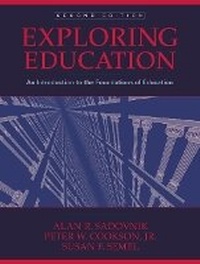
Exploring Education
An Introduction to the Foundations of Education
2nd Edition
Published on 17. October 2000
Book
Paperback/Softback
588 pages
978-0-205-29016-1 (ISBN)
Description
Based upon the belief that a "foundations perspective" is a valuable tool in helping to improve schools, this non-traditional text combines a point-of-view analysis with primary source readings.
Exploring Education, 2/e, offers an alternative to traditional foundations texts. This book provides primary readings and a text in one source, challenging material that encourages critical and reflective thinking, and a point of view about the possibilities and limits of schools and teachers in solving educational problems.
Pre-service and practicing teachers will find a solid introduction to the foundations disciplines - history, philosophy, politics, and sociology of education - and their application to educational issues including school organization and teaching, curriculum and pedagogic practices, education and inequality and school reform and improvement. Exploring Education, 2/e, provides a research and theory based approach that demonstrates the usefulness of the foundations lens for critically examining and solving educational problems.
Exploring Education, 2/e, offers an alternative to traditional foundations texts. This book provides primary readings and a text in one source, challenging material that encourages critical and reflective thinking, and a point of view about the possibilities and limits of schools and teachers in solving educational problems.
Pre-service and practicing teachers will find a solid introduction to the foundations disciplines - history, philosophy, politics, and sociology of education - and their application to educational issues including school organization and teaching, curriculum and pedagogic practices, education and inequality and school reform and improvement. Exploring Education, 2/e, provides a research and theory based approach that demonstrates the usefulness of the foundations lens for critically examining and solving educational problems.
More details
Edition
2nd edition
Language
English
Place of publication
United States
Publishing group
Pearson Education (US)
Target group
Professional and scholarly
Dimensions
Height: 233 mm
Width: 177 mm
Thickness: 27 mm
Weight
888 gr
ISBN-13
978-0-205-29016-1 (9780205290161)
Copyright in bibliographic data and cover images is held by Nielsen Book Services Limited or by the publishers or by their respective licensors: all rights reserved.
Schweitzer Classification
Other editions
New editions
Alan R. Sadovnik | Peter W. Cookson | Susan F. Semel
Exploring Education
An Introduction to the Foundations of Education
Book
02/2006
3rd Edition
Pearson
€104.17
Article is exhausted; no reprint
Content
Preface.
Acknowledgments.
1. The Limits and Promises of Education: Toward Reflective Practitioners.
Educational Problems.
Understanding Education: The Foundations Perspective.
The Foundations Perspective: A Multidisciplinary and Interdisciplinary Approach.
Critical Literacy and Empowerment: Toward the Active Voice of Teachers.
2. The Politics of Education: Conservative, Liberal, and Radical Perspectives.
The Purposes of Schooling.
Political Perspectives.
From Political Perspectives to the Politics of Education.
Readings:
Chester E. Finn, Jr., The Drive for Excellence: Moving Towards a Public Consensus.
Jean Anyon, Ghetto Schooling: A Political Economy of Urban Reform.
3. The History of Education.
Old World and New World Education: The Colonial Era.
The Age of Reform: The Rise of the Common School.
Urbanization and the Progressive Impetus.
The Post-World War II Era: 1945-1980.
Educational Reaction and Reform: 1980s-1990s.
Understanding the History of U.S. Education: Different Historical Interpretations.
Conclusion.
Readings:
Diane Ravitch, Forgetting the Questions: The Problem of Educational Reform.
Lawrence A. Cremin, Popular Schooling.
4. The Sociology of Education.
The Uses of Sociology for Teachers.
The Relation between School and Society.
Effects of Schooling on Individuals.
Inside the Schools.
Education and Inequality.
Sociology and the Current Educational Crisis.
Readings:
Alan R. Sadovnik, Basil Bernstein's Theory of Pedagogic Practice: Code Theory, Pedagogic Discourse, and Symbolic Control.
Ray Rist, On Understanding the Processes of Schooling: The Contributions of Labeling Theory.
Amy Stuart Wells and Irene Serna, The Politics of Culture: Understanding Local Political Resistance to Detracking in Racially Mixed Schools.
5. Philosophy of Education and Its Significance for Teachers.
The Perspective of Philosophy of Education.
Particular Philosophies of Education.
Conclusion.
Readings:
John Dewey, My Pedagogic Creed.
Maxine Greene, Wide-Awakeness and the Moral Life.
Jane Roland Martin, The Ideal of an Educated Person.
6. Schools as Organizations and Teacher Professionalization.
The Structure of U.S. Education.
International Comparisons.
School Processes and School Cultures.
Teachers, Teaching, and Professionalization.
Readings:
Linda M. McNeil, Contradictions of Reform.
Joan E. Talbert, Primacy and Promise of Professional Development in the Nation's Education Reform Agenda: Sociological Views.
James W. Stigler and James Hiebert, The TIMSS Video Tape Study.
7. Curriculum, Pedagogy, and the Transmission of Knowledge.
What Do the Schools Teach?
The History and Philosophy of the Curriculum.
The Politics of the Curriculum.
The Sociology of the Curriculum.
Curriculum Theory and Practice: The Reconceptualization of Curriculum Studies.
Pedagogic Practices: How the Curriculum Is Taught.
The Stratification of the Curriculum.
The Stratification of the Curriculum.
The Effects of the Curriculum: What Is Learned in Schools?
Conclusion.
Readings:
Michael W. Apple, The Politics of a National Curriculum.
Philip W. Jackson, The Mimetic and the Transformative: Alternative Outlooks on Teaching.
Lisa D. Delpit, The Silenced Dialogue: Power and Pedagogy in Educating Other People's Children.
8. Equality of Opportunity and Educational Outcomes.
Calculating Educational and Life Outcomes.
School Differences and Educational Outcomes.
Educational Attainment and Economic Achievement.
Education and Inequality: Mobility or Reproduction?
Readings:
Aaron Pallas, Schooling, Achievement, and Mobility.
Caroline Hodges Persell and Peter W. Cookson, Jr., Chartering and Bartering: Elite Education and Social Reproduction.
James E. Rosenbaum, College-for-All: Do Students Understand What College Demands?
9. Explanations of Educational Inequality.
Explanations of Unequal Educational Achievement.
Student-Centered Explanations.
School-Centered Explanations.
Do Schools Reproduce Inequality?
Readings:
Jeannie Oakes, Keeping Track, Part 1: The Policy and Practice of Curriculum Inequality.
Karen Karp, Females + Mathematics = A Complex Equation.
Annette Lareau, Social Class Differences in Family-School Relationships: The Importance of Cultural Capital.
Imani Perry, A Black Student's Reflection on Public and Private Schools.
10. Educational Reform and School Improvement.
Effective Teachers.
Educational Reform in the 1980s and 1990s.
Education in the 1990s.
Education Reform in the 1980s and 1990s: Major Themes.
A Theory of Educational Problems and Reforms.
Readings:
Jeanne Powers and Peter W. Cookson, Jr., The Politics of School Choice: Fact, fiction, and Statistics.
Deborah Meier, Reinventing Teaching.
References.
Index.
Acknowledgments.
1. The Limits and Promises of Education: Toward Reflective Practitioners.
Educational Problems.
Understanding Education: The Foundations Perspective.
The Foundations Perspective: A Multidisciplinary and Interdisciplinary Approach.
Critical Literacy and Empowerment: Toward the Active Voice of Teachers.
2. The Politics of Education: Conservative, Liberal, and Radical Perspectives.
The Purposes of Schooling.
Political Perspectives.
From Political Perspectives to the Politics of Education.
Readings:
Chester E. Finn, Jr., The Drive for Excellence: Moving Towards a Public Consensus.
Jean Anyon, Ghetto Schooling: A Political Economy of Urban Reform.
3. The History of Education.
Old World and New World Education: The Colonial Era.
The Age of Reform: The Rise of the Common School.
Urbanization and the Progressive Impetus.
The Post-World War II Era: 1945-1980.
Educational Reaction and Reform: 1980s-1990s.
Understanding the History of U.S. Education: Different Historical Interpretations.
Conclusion.
Readings:
Diane Ravitch, Forgetting the Questions: The Problem of Educational Reform.
Lawrence A. Cremin, Popular Schooling.
4. The Sociology of Education.
The Uses of Sociology for Teachers.
The Relation between School and Society.
Effects of Schooling on Individuals.
Inside the Schools.
Education and Inequality.
Sociology and the Current Educational Crisis.
Readings:
Alan R. Sadovnik, Basil Bernstein's Theory of Pedagogic Practice: Code Theory, Pedagogic Discourse, and Symbolic Control.
Ray Rist, On Understanding the Processes of Schooling: The Contributions of Labeling Theory.
Amy Stuart Wells and Irene Serna, The Politics of Culture: Understanding Local Political Resistance to Detracking in Racially Mixed Schools.
5. Philosophy of Education and Its Significance for Teachers.
The Perspective of Philosophy of Education.
Particular Philosophies of Education.
Conclusion.
Readings:
John Dewey, My Pedagogic Creed.
Maxine Greene, Wide-Awakeness and the Moral Life.
Jane Roland Martin, The Ideal of an Educated Person.
6. Schools as Organizations and Teacher Professionalization.
The Structure of U.S. Education.
International Comparisons.
School Processes and School Cultures.
Teachers, Teaching, and Professionalization.
Readings:
Linda M. McNeil, Contradictions of Reform.
Joan E. Talbert, Primacy and Promise of Professional Development in the Nation's Education Reform Agenda: Sociological Views.
James W. Stigler and James Hiebert, The TIMSS Video Tape Study.
7. Curriculum, Pedagogy, and the Transmission of Knowledge.
What Do the Schools Teach?
The History and Philosophy of the Curriculum.
The Politics of the Curriculum.
The Sociology of the Curriculum.
Curriculum Theory and Practice: The Reconceptualization of Curriculum Studies.
Pedagogic Practices: How the Curriculum Is Taught.
The Stratification of the Curriculum.
The Stratification of the Curriculum.
The Effects of the Curriculum: What Is Learned in Schools?
Conclusion.
Readings:
Michael W. Apple, The Politics of a National Curriculum.
Philip W. Jackson, The Mimetic and the Transformative: Alternative Outlooks on Teaching.
Lisa D. Delpit, The Silenced Dialogue: Power and Pedagogy in Educating Other People's Children.
8. Equality of Opportunity and Educational Outcomes.
Calculating Educational and Life Outcomes.
School Differences and Educational Outcomes.
Educational Attainment and Economic Achievement.
Education and Inequality: Mobility or Reproduction?
Readings:
Aaron Pallas, Schooling, Achievement, and Mobility.
Caroline Hodges Persell and Peter W. Cookson, Jr., Chartering and Bartering: Elite Education and Social Reproduction.
James E. Rosenbaum, College-for-All: Do Students Understand What College Demands?
9. Explanations of Educational Inequality.
Explanations of Unequal Educational Achievement.
Student-Centered Explanations.
School-Centered Explanations.
Do Schools Reproduce Inequality?
Readings:
Jeannie Oakes, Keeping Track, Part 1: The Policy and Practice of Curriculum Inequality.
Karen Karp, Females + Mathematics = A Complex Equation.
Annette Lareau, Social Class Differences in Family-School Relationships: The Importance of Cultural Capital.
Imani Perry, A Black Student's Reflection on Public and Private Schools.
10. Educational Reform and School Improvement.
Effective Teachers.
Educational Reform in the 1980s and 1990s.
Education in the 1990s.
Education Reform in the 1980s and 1990s: Major Themes.
A Theory of Educational Problems and Reforms.
Readings:
Jeanne Powers and Peter W. Cookson, Jr., The Politics of School Choice: Fact, fiction, and Statistics.
Deborah Meier, Reinventing Teaching.
References.
Index.