

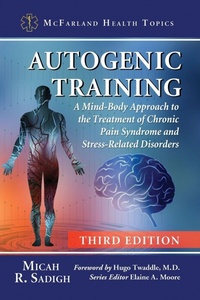
Autogenic Training
A Mind-Body Approach to the Treatment of Chronic Pain Syndrome and Stress-Related Disorders, 3d ed.
3rd Edition
Published on 12. August 2019
Book
Paperback/Softback
285 pages
978-1-4766-7751-4 (ISBN)
Description
Using repeated sets of exercises meant to relax and desensitize the mind, autogenic training equips patients to deal with chronic conditions such as anxiety disorders, recurring pain and stress. Patients learn how to gain control over their symptoms and improve coping to reduce suffering. This expanded edition presents practitioners with a concise exploration of autogenic technique and its clinical use for patients, especially in treating those suffering from chronic pain syndrome and disrupted sleep.
Reviews / Votes
Reviews of the previous editions: "a well-researched and detailed clinical guide, Autogenic Training is a valuable resource for anyone who works with chronic pain patients"-Journal of Pain & Palliative Care Pharmacotheraphy "Autogenic Training has much to recommend it. Micah R. Sadigh has written a book that offers a promising treatment for a difficult to manage illness and it is a book that is so skillfully written it is a joy to read"-Townsend Letters for Doctors and Patients "Sadigh provides a comprehensive guide to autogenic training's uses in treating fibromyalgia and chronic conditions"-Midwest Book Review.More details
Series
Edition
Third Edition
Language
English
Place of publication
Jefferson, NC
United States
Target group
Professional and scholarly
Interest Age: From 18 years
Product notice
Paperback (trade)
Illustrations
20 photos, appendices, bibliography, index
Dimensions
Height: 229 mm
Width: 152 mm
Thickness: 18 mm
Weight
468 gr
ISBN-13
978-1-4766-7751-4 (9781476677514)
Copyright in bibliographic data and cover images is held by Nielsen Book Services Limited or by the publishers or by their respective licensors: all rights reserved.
Schweitzer Classification
Person
Micah R. Sadigh, Ph.D., is professor of psychology at Cedar Crest College in Allentown, Pennsylvania. He is a diplomate in Franklian Psychology/Existential Analysis, and holds membership in the American Psychological Association, the Academy of Psychosomatic Medicine, and the American Psychosomatic Society.
Content
Table of Contents
Acknowledgments
Foreword by Hugo Twaddle, M.D.
Preface
Introduction
Part I: Theoretical Aspects of Chronic Pain and Stress
1. The Dimensions of Chronic Pain Syndrome: A Brief Review of the Literature
2. Stress and Pain
3. Methods of Stress Management
Part II: History and Principles of Autogenic Training
4. History and Basic Principles
5. Medical and Psychological Screening
6. Requirements for Achieving the Autogenic State
Part III: The Standard and Advanced Exercises and Clinical Applications of Autogenic Training
7. The Preliminary Exercises
8. The First Standard Exercise: Heaviness
9. The Second Standard Exercise: Warmth
10. The Third Standard Exercise: Heart
11. The Fourth Standard Exercise: Respiration
12. The Fifth Standard Exercise: Abdominal Warmth
13. The Sixth Standard Exercise: Forehead Cooling
14. Advanced Autogenic Training
15. Autogenic Training and Biofeedback (Psychophysiological Feedback)
16. Sleep, Insomnia, and Pain
17. Autogenic Training for Sleep Enhancement
18. Autogenic Neutralization as Psychophysiological Psychotherapy
19. Autogenic Training and Autogenic Abreaction as Treatments for Post-Traumatic Nightmares
20. Autogenic Training as Palliative Care
21. Questions and Answers
Appendix A: The Autogenic Pain and Tension Checklists (Forms A and B)
Appendix B: The Autogenic Training Progress Index
Appendix C: Fibromyalgia and Psychobiological Disregulation-A Theoretical Formulation
References
Index
Acknowledgments
Foreword by Hugo Twaddle, M.D.
Preface
Introduction
Part I: Theoretical Aspects of Chronic Pain and Stress
1. The Dimensions of Chronic Pain Syndrome: A Brief Review of the Literature
2. Stress and Pain
3. Methods of Stress Management
Part II: History and Principles of Autogenic Training
4. History and Basic Principles
5. Medical and Psychological Screening
6. Requirements for Achieving the Autogenic State
Part III: The Standard and Advanced Exercises and Clinical Applications of Autogenic Training
7. The Preliminary Exercises
8. The First Standard Exercise: Heaviness
9. The Second Standard Exercise: Warmth
10. The Third Standard Exercise: Heart
11. The Fourth Standard Exercise: Respiration
12. The Fifth Standard Exercise: Abdominal Warmth
13. The Sixth Standard Exercise: Forehead Cooling
14. Advanced Autogenic Training
15. Autogenic Training and Biofeedback (Psychophysiological Feedback)
16. Sleep, Insomnia, and Pain
17. Autogenic Training for Sleep Enhancement
18. Autogenic Neutralization as Psychophysiological Psychotherapy
19. Autogenic Training and Autogenic Abreaction as Treatments for Post-Traumatic Nightmares
20. Autogenic Training as Palliative Care
21. Questions and Answers
Appendix A: The Autogenic Pain and Tension Checklists (Forms A and B)
Appendix B: The Autogenic Training Progress Index
Appendix C: Fibromyalgia and Psychobiological Disregulation-A Theoretical Formulation
References
Index