

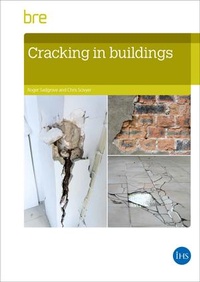
Cracking in Buildings
BR292 2e
2nd Edition
Published on 20. April 2016
Book
Paperback/Softback
96 pages
978-1-84806-429-4 (ISBN)
Description
Cracks are inevitable in virtually all types of construction because of the kind of materials we use, the ways in which we use or misuse them and the service conditions that our buildings experience. Nevertheless, cracks are often unsightly and, to the uninitiated, may be a sign of serious problems. Whether a crack is cause for concern or not, of course, depends on circumstances, and whether subsequent action is needed depends on correct diagnosis of the nature of the problem that brought it about.
This book, first published in 1996, sets out basic information on the science of materials behaviour, which is relevant to understanding how and why cracks occur. Given that understanding, much can be done to avoid their occurrence, and to diagnose their cause and repair them so that they do not recur.
This second edition updates references and any matters where the intervening years have improved or changed knowledge. It is hoped that readers will find merit in this report in that it collects relevant but scattered information into one source, treats cracking in buildings as a subject in its own right and provides a systematic approach to whatever is the reader's role in the building business. Its content should therefore be of interest to all who own, occupy, design, build and maintain buildings.
Cracks are inevitable in virtually all types of construction because of the kind of materials we use, the ways in which we use or misuse them and the service conditions that our buildings experience. Nevertheless, cracks are often unsightly and, to the uninitiated, may be a sign of serious problems. Whether a crack is cause for concern or not, of course, depends on circumstances, and whether subsequent action is needed depends on correct diagnosis of the nature of the problem that brought it about.
This book, first published in 1996, sets out basic information on the science of materials behaviour, which is relevant to understanding how and why cracks occur. Given that understanding, much can be done to avoid their occurrence, and to diagnose their cause and repair them so that they do not recur.
This second edition updates references and any matters where the intervening years have improved or changed knowledge. It is hoped that readers will find merit in this report in that it collects relevant but scattered information into one source, treats cracking in buildings as a subject in its own right and provides a systematic approach to whatever is the reader's role in the building business. Its content should therefore be of interest to all who own, occupy, design, build and maintain buildings.
This book, first published in 1996, sets out basic information on the science of materials behaviour, which is relevant to understanding how and why cracks occur. Given that understanding, much can be done to avoid their occurrence, and to diagnose their cause and repair them so that they do not recur.
This second edition updates references and any matters where the intervening years have improved or changed knowledge. It is hoped that readers will find merit in this report in that it collects relevant but scattered information into one source, treats cracking in buildings as a subject in its own right and provides a systematic approach to whatever is the reader's role in the building business. Its content should therefore be of interest to all who own, occupy, design, build and maintain buildings.
Cracks are inevitable in virtually all types of construction because of the kind of materials we use, the ways in which we use or misuse them and the service conditions that our buildings experience. Nevertheless, cracks are often unsightly and, to the uninitiated, may be a sign of serious problems. Whether a crack is cause for concern or not, of course, depends on circumstances, and whether subsequent action is needed depends on correct diagnosis of the nature of the problem that brought it about.
This book, first published in 1996, sets out basic information on the science of materials behaviour, which is relevant to understanding how and why cracks occur. Given that understanding, much can be done to avoid their occurrence, and to diagnose their cause and repair them so that they do not recur.
This second edition updates references and any matters where the intervening years have improved or changed knowledge. It is hoped that readers will find merit in this report in that it collects relevant but scattered information into one source, treats cracking in buildings as a subject in its own right and provides a systematic approach to whatever is the reader's role in the building business. Its content should therefore be of interest to all who own, occupy, design, build and maintain buildings.
More details
Edition
2nd New edition
Language
English
Place of publication
Bracknell
United Kingdom
Target group
Professional and scholarly
Edition type
New edition
Illustrations
60 Line drawings, color; 13 Tables, color; 34 Tables, black and white; 18 Illustrations, color; 1 Illustrations, black and white
Dimensions
Height: 297 mm
Width: 210 mm
Weight
436 gr
ISBN-13
978-1-84806-429-4 (9781848064294)
Copyright in bibliographic data and cover images is held by Nielsen Book Services Limited or by the publishers or by their respective licensors: all rights reserved.
Schweitzer Classification
Persons
BRE, UK
BRE, UK
BRE, UK
Content
Preface to the First Edition
Preface to the Second Edition
PART I: THE SCIENCE
Introduction to Part I
1 The Causes of Size Changes
-1.1 Temperature-induced Size Changes
-1.2 Moisture-induced Size Changes
-1.3 Size Changes Induced by Simultaneous Temperature and Moisture Content Changes
-1.4 Size Changes Induced by Chemical Reactions
2 The Mechanism of Cracking
3 Joints as Safeguards Against Cracking
-3.1 Movement Joints
-3.2 Assembly Joints
-3.3 Inaccuracies in Building
-3.4 Joints and Accuracy
-3.5 Joints and Fixings
PART II: APPLYING THE SCIENCE
4 Temperature-induced Size Changes
-4.1 Walls and Cladding
-4.2 Flat Roofs
5 Moisture-induced Size Changes
-5.1 Walls
-5.2 Floors
6 Chemically induced Size Changes
-6.1 Corrosion of Metals
-6.2 Sulfate Attack
-6.3 Hydration and Carbonation
-6.4 Alkali-aggregate Reaction
-6.5 Conversion in High Alumina Cement Concrete
7 Cracking Due to Foundation Movements
-7.1 Design
-7.2 Diagnosis
-7.3 Remedial Work
8 Other Causes of Cracking
-8.1 Mechanical Damage
-8.2 Vibration Damage
-8.3 Indirect Damage
-8.4 Frost Damage
9 References
10 Further Reading
PART III: APPENDICES
Appendix A: Classification of Visible Damage to Walls with Particular Reference to Ease of Repair of Plaster and Masonry
Appendix B: Crack Investigation - a Suggested Approach
Preface to the Second Edition
PART I: THE SCIENCE
Introduction to Part I
1 The Causes of Size Changes
-1.1 Temperature-induced Size Changes
-1.2 Moisture-induced Size Changes
-1.3 Size Changes Induced by Simultaneous Temperature and Moisture Content Changes
-1.4 Size Changes Induced by Chemical Reactions
2 The Mechanism of Cracking
3 Joints as Safeguards Against Cracking
-3.1 Movement Joints
-3.2 Assembly Joints
-3.3 Inaccuracies in Building
-3.4 Joints and Accuracy
-3.5 Joints and Fixings
PART II: APPLYING THE SCIENCE
4 Temperature-induced Size Changes
-4.1 Walls and Cladding
-4.2 Flat Roofs
5 Moisture-induced Size Changes
-5.1 Walls
-5.2 Floors
6 Chemically induced Size Changes
-6.1 Corrosion of Metals
-6.2 Sulfate Attack
-6.3 Hydration and Carbonation
-6.4 Alkali-aggregate Reaction
-6.5 Conversion in High Alumina Cement Concrete
7 Cracking Due to Foundation Movements
-7.1 Design
-7.2 Diagnosis
-7.3 Remedial Work
8 Other Causes of Cracking
-8.1 Mechanical Damage
-8.2 Vibration Damage
-8.3 Indirect Damage
-8.4 Frost Damage
9 References
10 Further Reading
PART III: APPENDICES
Appendix A: Classification of Visible Damage to Walls with Particular Reference to Ease of Repair of Plaster and Masonry
Appendix B: Crack Investigation - a Suggested Approach