

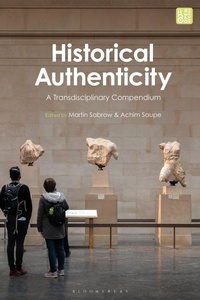
Historical Authenticity
A Transdisciplinary Compendium
Will be published approx. on 11. December 2025
Book
Hardback
672 pages
978-1-350-47481-9 (ISBN)
Description
Authenticity has become a key concept in the culture of history and memory in the 21st century. This open access book explores the multifaceted nature of 'historical authenticity' and its uses in various academic, museum, and historical-cultural contexts. Through 70 alphabetically-arranged articles, Historical Authenticity explains the problems and power of 'historical authenticity' as well as the fascination for authentic objects, authentic places and authentic voices of the past.
The book shines a light on how today's attitudes to the past are characterised by an intense striving for historical authenticity - a phenomenon which began to assume new potency in the last third of the 20th century. It considers how this manifests itself in practical terms, like in the value attached to 'authentic objects' in museums, collections and archives, or to 'authentic places' - be they historic buildings, urban architectural ensembles or memorial sites designated as direct embodiments of history. The volume also reflects on how this desire for historical authenticity and past 'reality' goes hand in hand with a longing to experience history 'first-hand', as evidenced in the degree of public attention accorded to surviving witnesses of historic events, the frequent screenings of historical documentaries and feature films, and the popularity of historical re-enactments. 'Historical Authenticity' convincingly makes the case that this is all ultimately bound up with the human longing for things regarded as 'genuine', and the impulse to reconstruct and preserve what is 'true' and 'original'.
The ebook editions of this book are available open access under a CC BY-NC-ND 4.0 licence on bloomsburycollections.com. Open access was funded by the Leibniz Research Alliance.
The book shines a light on how today's attitudes to the past are characterised by an intense striving for historical authenticity - a phenomenon which began to assume new potency in the last third of the 20th century. It considers how this manifests itself in practical terms, like in the value attached to 'authentic objects' in museums, collections and archives, or to 'authentic places' - be they historic buildings, urban architectural ensembles or memorial sites designated as direct embodiments of history. The volume also reflects on how this desire for historical authenticity and past 'reality' goes hand in hand with a longing to experience history 'first-hand', as evidenced in the degree of public attention accorded to surviving witnesses of historic events, the frequent screenings of historical documentaries and feature films, and the popularity of historical re-enactments. 'Historical Authenticity' convincingly makes the case that this is all ultimately bound up with the human longing for things regarded as 'genuine', and the impulse to reconstruct and preserve what is 'true' and 'original'.
The ebook editions of this book are available open access under a CC BY-NC-ND 4.0 licence on bloomsburycollections.com. Open access was funded by the Leibniz Research Alliance.
Reviews / Votes
This fascinating volume offers conceptual, historical, theoretical, and empirical approaches to authenticity from diverse disciplines. Its exposure of English-language readers to German perspectives is especially important. Organized alphabetically around timely issues - from architecture and archives to tradition and virtual reality - this work will be indispensable in the fields of historic preservation, tourism, museums, memory studies, and cultural heritage. * Helaine Silverman, Research Professor Emerita, University of Illinois, USA * 'Historical Authenticity' is an important book. it clarifies and historicises this increasingly contested notion of authenticity through interdisciplinary perspectives and multiple angles, thereby complexifying the debates. It will be useful for both students and researchers in humanities and social sciences. * Sophia Labadi, Professor of Heritage, University of Kent, UK & University of Bonn, Germany *More details
Language
English
Place of publication
London
United Kingdom
Publishing group
Bloomsbury Publishing PLC
Target group
Professional and scholarly
Product notice
sewn/stitched
Cloth over boards
With dust jacket
Illustrations
1 bw illus
Dimensions
Height: 238 mm
Width: 160 mm
Thickness: 46 mm
Weight
907 gr
ISBN-13
978-1-350-47481-9 (9781350474819)
Copyright in bibliographic data and cover images is held by Nielsen Book Services Limited or by the publishers or by their respective licensors: all rights reserved.
Schweitzer Classification
Persons
Martin Sabrow is Senior Fellow and Former Director of the Leibniz Centre for Contemporary History Potsdam, Germany. He is the author of numerous books, amongst them biographies on Walter Rathenau and Erich Honecker.
Achim Saupe is Research Fellow at the Leibniz Centre for Contemporary History Potsdam, Germany. He is the co-editor of The Politics of Authenticity and Populist Discourses (2021).
Achim Saupe is Research Fellow at the Leibniz Centre for Contemporary History Potsdam, Germany. He is the co-editor of The Politics of Authenticity and Populist Discourses (2021).
Content
List of Contributors
Introduction, Martin Sabrow and Achim Saupe
1. Architectural Reconstruction, Arnold Bartetzky
2. Architecture, Andreas Putz
3. Archives, Bernhard Grau
4. Aura, Katja Stopka
5. Authorship and Authorization, Michael Wetzel
6. Autochthony, Christoph Kohl
7. Belonging, Susannah Eckersley
8. Built Heritage Conservation, Ingrid Scheurmann
9. Canon, Christopher Voigt-Goy
10. Charisma, Achim Saupe
11. Citizen Science, Maike Weisspflug
12. Collections, Ina Heumann
13. Contemporary Witness, Martin Sabrow
14. Credibility, Kristin Meissner
15. Cultural and Natural Heritage, Andrea Rehling
16. Cultural Heritage, Eszter Gantner and Heidi Hein-Kircher
17. Digitality, Andreas Fickers
18. Diversity, Georg Toepfer
19. Eigentlichkeit, Katja Stopka
20. Excavation and Feature, Ursula Warnke
21. Exhibition, Katrin Pieper and Joachim Baur
22. Forgery, Thomas Eser
23. Heimat and Fremde, Maren Moehring
24. Historical Experience, Sabine Moller
25. History Tourism, Hanno Hochmuth
26. History Marketing, Manfred Grieger
27. Hoax, Martin Doll
28. Identity, Achim Saupe
29. Industry Culture, Torsten Meyer and Michael Farrenkopf
30. Intangible Cultural Heritage, Helmut Groschwitz
31. Irony, Christoph Rauen
32. Language and Discourse, Heidrun Kaemper and Rainer Perkuhn
33. Layers of Time, Achim Landwehr
34. Library, Petra Feuerstein-Herz
35. Literature, Christoph Zeller
36. Maps, Peter Haslinger
37. Masterpiece, Heike Zech
38. Materiality, Andreas Ludwig
39. Mediality, Christoph Classen
40. Memorial Sites, Thomas Schaarschmidt and Irmgard Zuendorf
41. Museum, Thomas Thiemeyer
42. Narrative, Antonius Weixler
43. Nostalgia, Tobias Becker
44. Origin, Originality, Helmut Groschwitz
45. Original/Copy, Wolfgang Augustyn
46. Patina, Oliver Mack
47. Photography, Annette Vowinckel
48. Political Myth, Jan Burkamp and Tilmann Siebeneichner
49. Populism, Christoph Kohl
50. Postcolonialism, Barbara Christophe and Heike Liebau
51. Provenance Research, Ulrike Schmiegelt
52. Public Engagement (Vermittlung), Dominik Kimmel and Stephan Schwan
53. Reenactment, Stefanie Samida
54. Relic, Martin Sabrow
55. Representation, Thomas Werneke
56. Restoration Ethics, Stefan Brueggerhoff
57. Rituals, Harald Schmid
58. Sacralization, Johannes Paulmann
59. Self, Nikolaus Buschmann
60. Simulation, Markus Walz
61. Source, Stefan Jordan
62. Substitute, Markus Walz
63. Testimony, Sara Jones
64. The Body, Annelie Ramsbrock
65. The City, Christoph Bernhardt
66. Tradition, Susanne Klien
67. Types, Willy Xylander
68. Victimization, Ulrike Jureit
69. Virtual Reality, Stephan Schwan
Index
Introduction, Martin Sabrow and Achim Saupe
1. Architectural Reconstruction, Arnold Bartetzky
2. Architecture, Andreas Putz
3. Archives, Bernhard Grau
4. Aura, Katja Stopka
5. Authorship and Authorization, Michael Wetzel
6. Autochthony, Christoph Kohl
7. Belonging, Susannah Eckersley
8. Built Heritage Conservation, Ingrid Scheurmann
9. Canon, Christopher Voigt-Goy
10. Charisma, Achim Saupe
11. Citizen Science, Maike Weisspflug
12. Collections, Ina Heumann
13. Contemporary Witness, Martin Sabrow
14. Credibility, Kristin Meissner
15. Cultural and Natural Heritage, Andrea Rehling
16. Cultural Heritage, Eszter Gantner and Heidi Hein-Kircher
17. Digitality, Andreas Fickers
18. Diversity, Georg Toepfer
19. Eigentlichkeit, Katja Stopka
20. Excavation and Feature, Ursula Warnke
21. Exhibition, Katrin Pieper and Joachim Baur
22. Forgery, Thomas Eser
23. Heimat and Fremde, Maren Moehring
24. Historical Experience, Sabine Moller
25. History Tourism, Hanno Hochmuth
26. History Marketing, Manfred Grieger
27. Hoax, Martin Doll
28. Identity, Achim Saupe
29. Industry Culture, Torsten Meyer and Michael Farrenkopf
30. Intangible Cultural Heritage, Helmut Groschwitz
31. Irony, Christoph Rauen
32. Language and Discourse, Heidrun Kaemper and Rainer Perkuhn
33. Layers of Time, Achim Landwehr
34. Library, Petra Feuerstein-Herz
35. Literature, Christoph Zeller
36. Maps, Peter Haslinger
37. Masterpiece, Heike Zech
38. Materiality, Andreas Ludwig
39. Mediality, Christoph Classen
40. Memorial Sites, Thomas Schaarschmidt and Irmgard Zuendorf
41. Museum, Thomas Thiemeyer
42. Narrative, Antonius Weixler
43. Nostalgia, Tobias Becker
44. Origin, Originality, Helmut Groschwitz
45. Original/Copy, Wolfgang Augustyn
46. Patina, Oliver Mack
47. Photography, Annette Vowinckel
48. Political Myth, Jan Burkamp and Tilmann Siebeneichner
49. Populism, Christoph Kohl
50. Postcolonialism, Barbara Christophe and Heike Liebau
51. Provenance Research, Ulrike Schmiegelt
52. Public Engagement (Vermittlung), Dominik Kimmel and Stephan Schwan
53. Reenactment, Stefanie Samida
54. Relic, Martin Sabrow
55. Representation, Thomas Werneke
56. Restoration Ethics, Stefan Brueggerhoff
57. Rituals, Harald Schmid
58. Sacralization, Johannes Paulmann
59. Self, Nikolaus Buschmann
60. Simulation, Markus Walz
61. Source, Stefan Jordan
62. Substitute, Markus Walz
63. Testimony, Sara Jones
64. The Body, Annelie Ramsbrock
65. The City, Christoph Bernhardt
66. Tradition, Susanne Klien
67. Types, Willy Xylander
68. Victimization, Ulrike Jureit
69. Virtual Reality, Stephan Schwan
Index