

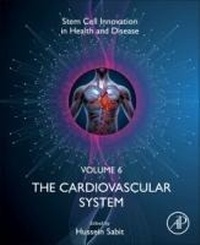
The Cardiovascular System
From Bench to Bedside
Published on 23. July 2025
Book
Paperback/Softback
150 pages
978-0-443-29890-5 (ISBN)
Description
The series "Stem Cell Innovation in Health & Disease" is a timely and fascinating collection of information and new discoveries and provides a contemporary snapshot album from the fast-moving field of regenerative medicine and stem cell therapeutics. The Cardiovascular System, Volume 6 addresses the recent data accumulated on the potential applications of stem cells to treat diseases and disorders of the cardiovascular system. This volume will highlight the recent developments of cutting-edge in vitro and in vivo research tools and approaches, including the human and murine organoid cultures, genetic editing in vitro and in vivo, human iPSC models of diseases, haploid cells for genetic as well as compound screening paradigms, genetically engineered mice, and stem cell transplantation to treat cardiovascular system disorders and diseases. The volume is written for researchers and scientists in stem cell therapy, cell biology, regenerative medicine, and organ transplantation; and is contributed by world-renowned authors in the field.
More details
Series
Language
English
Place of publication
San Diego
United States
Publishing group
Elsevier Science Publishing Co Inc
Target group
Professional and scholarly
Product notice
Paperback (trade)
Unsewn / adhesive bound
Dimensions
Height: 185 mm
Width: 236 mm
Thickness: 13 mm
Weight
318 gr
ISBN-13
978-0-443-29890-5 (9780443298905)
Copyright in bibliographic data and cover images is held by Nielsen Book Services Limited or by the publishers or by their respective licensors: all rights reserved.
Schweitzer Classification
Other editions
Additional editions
E-Book
06/2025
Elsevier
€162.99
Available for download
Person
Hussein Sabit graduated from Ain Shams University, Cairo and received his BSc in Genetics, where he also get his MSc in Microbial Genetics and PhD in Molecular Genetics. He joined Misr University for Science and Technology, Egypt as TA, Assistant Professor. Has been promoted to Associate Professor of Molecular Genetics, and Full Professor in Cancer Epigenetics. His research interest is Cancer Genetic/Epigenetic basis of carcinogenesis, genome editing via CRISPR/Cas9, studying the anti-apoptotic genes and its relations with BC progression, investigating the DNA methylation levels controlling carcinogenesis of BC, studying the chromatin remodelling as a main mechanisms leading to cancer using ChIP assays and others. He published 28 articles; most of them is the main field of Cancer Genetics/Epigenetics. He is the director of Cancer Epigenetics Research Unit (CERU) at MUST, where he leads a research team of postgrad students.
Content
1. Organoid Culture System as Innovative Model of Heart Stem Cell-Based Cardiac Development and Diseases
2. Innovated Therapeutic Gene Editing Technologies in Stem Cell Engineering and Cardiovascular Disorders and Diseases
3. Cardiotoxivity and Cancer Therapy: Mechanisms, Implications, and Mitigation Strategies
4. Advances in stem cell-based therapy of cardiovascular diseases and disorders
5. Derivation and Application of Embryonic Stem Cells as a Model for Heart Development Diseases and Disorders
6. The Potential of Mesenchymal Stem Cell Related Therapies for Cardiovascular Diseases and Disorders
7. Stem Cell Innovation in Cardiovascular Disease, Repair and Regeneration: General Conclusion, Challenges and Prospective
2. Innovated Therapeutic Gene Editing Technologies in Stem Cell Engineering and Cardiovascular Disorders and Diseases
3. Cardiotoxivity and Cancer Therapy: Mechanisms, Implications, and Mitigation Strategies
4. Advances in stem cell-based therapy of cardiovascular diseases and disorders
5. Derivation and Application of Embryonic Stem Cells as a Model for Heart Development Diseases and Disorders
6. The Potential of Mesenchymal Stem Cell Related Therapies for Cardiovascular Diseases and Disorders
7. Stem Cell Innovation in Cardiovascular Disease, Repair and Regeneration: General Conclusion, Challenges and Prospective