

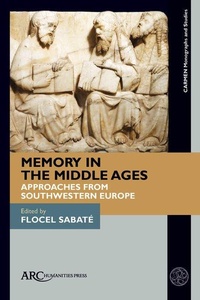
Memory in the Middle Ages
Approaches from Southwestern Europe
Published on 28. February 2021
Book
Hardback
432 pages
978-1-64189-262-9 (ISBN)
Description
With a focus on examples from southern Europe, this interdisciplinary collection explores how commonly held memories influenced the thought, identity, and status of individuals, religions, rulers, cities, and nations in the European Middle Ages.
More details
Series
Edition
New edition
Language
English
Place of publication
Leeds
United States
Target group
Professional and scholarly
Edition type
New edition
Product notice
sewn/stitched
Cloth over boards
Illustrations
18 s/w Abbildungen, 1 Diagramm, 3 Karten, 7 farbige Abbildungen
7 Illustrations, color; 3 Maps; 1 Diagrams; 18 Illustrations, black and white
Dimensions
Height: 231 mm
Width: 157 mm
Thickness: 30 mm
Weight
839 gr
ISBN-13
978-1-64189-262-9 (9781641892629)
Copyright in bibliographic data and cover images is held by Nielsen Book Services Limited or by the publishers or by their respective licensors: all rights reserved.
Schweitzer Classification
Person
Flocel Sabaté ============= Prof. Flocel Sabaté (Univ. of Lleida) has been awarded the main research prizes in Catalonia (Distinció 2000; ICREA 2015) and Doctor Honoris Causa of the Univ. of Cuyo (2014)
Content
Foreword, by Flocel Sabaté
Introduction: Memory in the Middle Ages, by Flocel Sabaté
PART 1: MEMORY AND SCIENCE
1. Memory and the Body in Medieval Medicine, by Fernando Salmón
2. James I of Aragon, Vicent Ferrer, and Francesc Eiximenis: Natural Memory and Artificial Memory, by Xavier Renedo
PART 2: MEMORY OF THE PAST AS IDENTITY
3. History, Memory, and Ideas: About the Past in the Early Middle Ages, by Rosamond McKitterick
4. Charter Writing and Documentary Memory in the Origins of Catalan History, by Michel Zimmermann
5. The Memory of Saints in the Hispanic Translationes of the Eleventh and Twelfth Centuriess, by Ariel Guiance
6. Establishing a Memory in Medieval Spain, by Adeline Rucquoi
7. The Legend of the Princess of Navarre: A Founding Myth in the Sardinian Conflict against the Kings of Aragon, by Luciano Gallinari
PART 3: MEMORY AND POWER
8. Memory of the State or Memory of the Kingdom? A Comparative Approach to the Construction of Memory in France and England, by Jean-Philippe Genet
9. Coronation Ceremonies and the Sword as Symbol of Power: Aragon, 1200-1400, by Marta Serrano
10. Architecture and Legacy in Medieval Navarre, by Javier Martínez de Aguirre
11. Family Memory in Late Medieval Catalonia: The Example of the Marcs, Lords of Eramprunyà, by Mireia Comas-Via
PART 4: MEMORY AND COMMEMORATING THE DEAD
12. The Tomb as Tool for Keeping Memory Alive: The Case of Late-Medieval Zaragoza, by Ana del Campo Gutiérrez
13. Wills, Tombs, and Preparation for a Good Death in Late Medieval Portugal, by Marta Ramos Dias
14. Ceremonial Topography in the Consueta Antiga of the Cathedral of Majorca, by Antoni Pons Cortès
PART 5: REMEMBERING THE MIDDLE AGES
15. Catalan-Aragonese Sardinia: Memory and Identity from 1323 to the Present, by Esther Martí
16. Nineteenth-Century French Historiography and the Memory of the Middle Ages, by Luis Rojas Donat
17. Spolia and Memory: Notes for a Preliminary Study of Venice in the Nineteenth Century, by Myriam Pilutti Namer
18. Neo-Medievalism and the Anchoring of New Spatial Identities: Linking New Regional and Urban Identities with Medieval Memories, by Kees Terlouw
19. The Hegemony of the Cult of Anniversaries and its Disadvantages for Historians, by William M. Johnston
Introduction: Memory in the Middle Ages, by Flocel Sabaté
PART 1: MEMORY AND SCIENCE
1. Memory and the Body in Medieval Medicine, by Fernando Salmón
2. James I of Aragon, Vicent Ferrer, and Francesc Eiximenis: Natural Memory and Artificial Memory, by Xavier Renedo
PART 2: MEMORY OF THE PAST AS IDENTITY
3. History, Memory, and Ideas: About the Past in the Early Middle Ages, by Rosamond McKitterick
4. Charter Writing and Documentary Memory in the Origins of Catalan History, by Michel Zimmermann
5. The Memory of Saints in the Hispanic Translationes of the Eleventh and Twelfth Centuriess, by Ariel Guiance
6. Establishing a Memory in Medieval Spain, by Adeline Rucquoi
7. The Legend of the Princess of Navarre: A Founding Myth in the Sardinian Conflict against the Kings of Aragon, by Luciano Gallinari
PART 3: MEMORY AND POWER
8. Memory of the State or Memory of the Kingdom? A Comparative Approach to the Construction of Memory in France and England, by Jean-Philippe Genet
9. Coronation Ceremonies and the Sword as Symbol of Power: Aragon, 1200-1400, by Marta Serrano
10. Architecture and Legacy in Medieval Navarre, by Javier Martínez de Aguirre
11. Family Memory in Late Medieval Catalonia: The Example of the Marcs, Lords of Eramprunyà, by Mireia Comas-Via
PART 4: MEMORY AND COMMEMORATING THE DEAD
12. The Tomb as Tool for Keeping Memory Alive: The Case of Late-Medieval Zaragoza, by Ana del Campo Gutiérrez
13. Wills, Tombs, and Preparation for a Good Death in Late Medieval Portugal, by Marta Ramos Dias
14. Ceremonial Topography in the Consueta Antiga of the Cathedral of Majorca, by Antoni Pons Cortès
PART 5: REMEMBERING THE MIDDLE AGES
15. Catalan-Aragonese Sardinia: Memory and Identity from 1323 to the Present, by Esther Martí
16. Nineteenth-Century French Historiography and the Memory of the Middle Ages, by Luis Rojas Donat
17. Spolia and Memory: Notes for a Preliminary Study of Venice in the Nineteenth Century, by Myriam Pilutti Namer
18. Neo-Medievalism and the Anchoring of New Spatial Identities: Linking New Regional and Urban Identities with Medieval Memories, by Kees Terlouw
19. The Hegemony of the Cult of Anniversaries and its Disadvantages for Historians, by William M. Johnston