

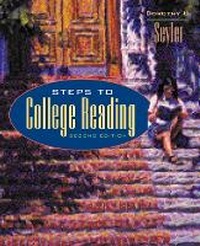
Steps to College Reading
2nd Edition
Published on 1. March 2002
Book
Paperback/Softback
432 pages
978-0-205-31905-3 (ISBN)
Description
The first in a two-book developmental reading series, Steps emphasizes the idea of reading as a three-step process in a "prepare-read-respond" strategy, stressing the importance of pre-reading - preparing to read.
This book offers more assistance to students with the pre-reading step than other texts. Steps reinforces the prepare step with pre-reading questions prior to each reading selection. Reading passages cover a broad range of topics that will interest students and be relevant to their college work. Chapters contain numerous short pieces for illustration and practice and move to longer pieces for more sustained reading. However, because the book is designed for the more basic course, the readings are always of a manageable length for students.
Steps differs from its more advanced companion text, The Reading Context, by providing shorter and simpler explanations of key concepts; by using more visuals to accommodate alternate learning styles; by providing more vocabulary work; by covering reading rates; and by using simpler readings. In addition, Steps offers more help with reading textbook material and provides full chapters on understanding the difference between specific and general statements, understanding implied ideas, reading graphics, and responding to expressive and persuasive writing.
This book offers more assistance to students with the pre-reading step than other texts. Steps reinforces the prepare step with pre-reading questions prior to each reading selection. Reading passages cover a broad range of topics that will interest students and be relevant to their college work. Chapters contain numerous short pieces for illustration and practice and move to longer pieces for more sustained reading. However, because the book is designed for the more basic course, the readings are always of a manageable length for students.
Steps differs from its more advanced companion text, The Reading Context, by providing shorter and simpler explanations of key concepts; by using more visuals to accommodate alternate learning styles; by providing more vocabulary work; by covering reading rates; and by using simpler readings. In addition, Steps offers more help with reading textbook material and provides full chapters on understanding the difference between specific and general statements, understanding implied ideas, reading graphics, and responding to expressive and persuasive writing.
More details
Edition
2nd edition
Language
English
Place of publication
United States
Publishing group
Pearson Education (US)
Target group
Professional and scholarly
Dimensions
Height: 235 mm
Width: 191 mm
Weight
1000 gr
ISBN-13
978-0-205-31905-3 (9780205319053)
Copyright in bibliographic data and cover images is held by Nielsen Book Services Limited or by the publishers or by their respective licensors: all rights reserved.
Schweitzer Classification
Other editions
New editions
Dorothy U. Seyler
Steps to College Reading
Book
02/2004
3rd Edition
Pearson
€73.03
Article is exhausted; no reprint
Content
Most chapters begin with "Prepare to Read" and conclude with "Chapter Review Quiz."
Preface.
1. Getting Started.
Commit.
Concentrate.
Know about Reading.
Be an Active Reader.
Cherokee Nation, How the Sun Came.
Thomas V. DiBacco, Dr. Franklin's Tips for Staying Well.
2. Developing a Reading Strategy.
Prepare to Read.
Why Have a Reading Strategy?
Prepare-Read-Respond: How the Steps Connect.
Prepare.
Read.
Respond.
James M. Henslin, Open Season: Children as Prey.
Joe Schwarcz, Hydrogen and the Hindenburg.
3. Word Power 1: Using Context Clues and Building Vocabulary.
Context Clues.
Learning New Words.
A Brief Book List.
Sydney J. Harris, Opposing Principles Help Balance Society.
4. Word Power 2: Recognizing Word Parts and Knowing Your Dictionary.
Compound Words.
Learning from Word Parts: Prefixes, Roots, and Suffixes.
Knowing Your Dictionary.
Pronunciation.
Abbreviations Used in Dictionary Entries.
Working with Word Meanings.
Ellen Goodman, Defining English.
5. Distinguishing between General and Specific Statements.
General and Specific Statements.
Levels of Specificity.
Recognizing General and Specific Sentences.
Understanding Complicated Sentences.
Michael Scott, In the Rain Forest.
6. Understanding Main Ideas.
Identifying a Paragraph's Topic.
Identifying Main Ideas.
Reading Longer Passages.
The Summary.
Jackson J. Spielvogel, The Pyramids.
Kendall Hamilton and Tessa Namuth, Sticky Stuff.
7. Recognizing Strategies and Structures in Writing.
Explaining by Listing.
Time Sequence and Process.
Definition.
Comparison and Contrast.
Cause and Effect.
Mixed Patterns.
Carol Krucoff, Smoke and Mirrors.
Suzanne Britt, Neat People vs. Sloppy People.
8. Reading Graphics.
How to Read Graphics.
Pictures and Photographs.
Diagrams.
Maps.
Tables.
Graphs and Charts.
Boyce Rensberger, Graphs Can Lie, Easy as Pie.
9. Reading and Studying for College Classes.
Reading Textbooks.
Writing-to-Learn Strategies.
Learning from Three Textbook Sections.
Reinforcing Learning in Class.
Preparing for Testing.
10. Reading More Efficiently.
Scanning.
Skimming.
Improving Visual Skills.
Improving Visual Skills through Improved Spelling.
Efficient Reading through Aggressive Reading.
Timed Reading I: J. A. DeVito, Some Principles of Communication.
Timed Reading II: Jeanne Marie Laskas, The Rude Awaken.
Timed Reading III: Lefton and Valvatne, Coping, Health, and a Positive Attitude.
11. Drawing Inferences and Understanding Implied Main Ideas.
What Are Inferences?
Drawing Inferences from Reading.
Connotation.
Figurative Language.
Characteristics of Appropriate Inferences.
Understanding Implied Main Ideas.
Drawing Inferences and Understanding Implied Meanings in Longer Passages.
Vincent Wilson, Jr., Amelia Earhart.
Langston Hughes, Early Autumn.
Amy Lowell, Taxi.
12.Reading and Thinking Critically.
Distinguishing Fact from Opinion.
Recognizing Your Biases.
Understanding the Writer's Position.
Evaluating Arguments and Taking a Stand.
Nat Hentoff, Ban Boxing Now.
William Raspberry, The Real Pregnancy Problem.
Additional Readings.
Helena Curtis and N. Sue Barnes, Plate Tectonics and the Breakup of Pangaea.
Vincent Ryan Ruggiero, Conformity.
David Ignatius, The Revolution Within.
Richard Harwood, America's Unchecked Epidemic.
James Herriot, A New Day for Alfred.
Glossary.
Index.
Preface.
1. Getting Started.
Commit.
Concentrate.
Know about Reading.
Be an Active Reader.
Cherokee Nation, How the Sun Came.
Thomas V. DiBacco, Dr. Franklin's Tips for Staying Well.
2. Developing a Reading Strategy.
Prepare to Read.
Why Have a Reading Strategy?
Prepare-Read-Respond: How the Steps Connect.
Prepare.
Read.
Respond.
James M. Henslin, Open Season: Children as Prey.
Joe Schwarcz, Hydrogen and the Hindenburg.
3. Word Power 1: Using Context Clues and Building Vocabulary.
Context Clues.
Learning New Words.
A Brief Book List.
Sydney J. Harris, Opposing Principles Help Balance Society.
4. Word Power 2: Recognizing Word Parts and Knowing Your Dictionary.
Compound Words.
Learning from Word Parts: Prefixes, Roots, and Suffixes.
Knowing Your Dictionary.
Pronunciation.
Abbreviations Used in Dictionary Entries.
Working with Word Meanings.
Ellen Goodman, Defining English.
5. Distinguishing between General and Specific Statements.
General and Specific Statements.
Levels of Specificity.
Recognizing General and Specific Sentences.
Understanding Complicated Sentences.
Michael Scott, In the Rain Forest.
6. Understanding Main Ideas.
Identifying a Paragraph's Topic.
Identifying Main Ideas.
Reading Longer Passages.
The Summary.
Jackson J. Spielvogel, The Pyramids.
Kendall Hamilton and Tessa Namuth, Sticky Stuff.
7. Recognizing Strategies and Structures in Writing.
Explaining by Listing.
Time Sequence and Process.
Definition.
Comparison and Contrast.
Cause and Effect.
Mixed Patterns.
Carol Krucoff, Smoke and Mirrors.
Suzanne Britt, Neat People vs. Sloppy People.
8. Reading Graphics.
How to Read Graphics.
Pictures and Photographs.
Diagrams.
Maps.
Tables.
Graphs and Charts.
Boyce Rensberger, Graphs Can Lie, Easy as Pie.
9. Reading and Studying for College Classes.
Reading Textbooks.
Writing-to-Learn Strategies.
Learning from Three Textbook Sections.
Reinforcing Learning in Class.
Preparing for Testing.
10. Reading More Efficiently.
Scanning.
Skimming.
Improving Visual Skills.
Improving Visual Skills through Improved Spelling.
Efficient Reading through Aggressive Reading.
Timed Reading I: J. A. DeVito, Some Principles of Communication.
Timed Reading II: Jeanne Marie Laskas, The Rude Awaken.
Timed Reading III: Lefton and Valvatne, Coping, Health, and a Positive Attitude.
11. Drawing Inferences and Understanding Implied Main Ideas.
What Are Inferences?
Drawing Inferences from Reading.
Connotation.
Figurative Language.
Characteristics of Appropriate Inferences.
Understanding Implied Main Ideas.
Drawing Inferences and Understanding Implied Meanings in Longer Passages.
Vincent Wilson, Jr., Amelia Earhart.
Langston Hughes, Early Autumn.
Amy Lowell, Taxi.
12.Reading and Thinking Critically.
Distinguishing Fact from Opinion.
Recognizing Your Biases.
Understanding the Writer's Position.
Evaluating Arguments and Taking a Stand.
Nat Hentoff, Ban Boxing Now.
William Raspberry, The Real Pregnancy Problem.
Additional Readings.
Helena Curtis and N. Sue Barnes, Plate Tectonics and the Breakup of Pangaea.
Vincent Ryan Ruggiero, Conformity.
David Ignatius, The Revolution Within.
Richard Harwood, America's Unchecked Epidemic.
James Herriot, A New Day for Alfred.
Glossary.
Index.