

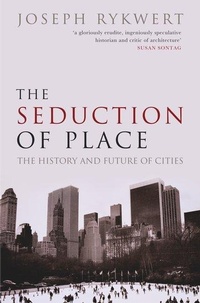
The Seduction of Place
The History and Future of the City
Published on 25. March 2004
Book
Paperback/Softback
320 pages
978-0-19-280554-6 (ISBN)
Description
What do our cities say about us? What have we made them, and how ought they to be? How has our vision of the city evolved over time, and can we really influence change and effect improvements?
In this vibrant cultural history of the city, Joseph Rykwert explores the great cities of the modern world, examining their fabric and assessing how successfully they have met the needs of their inhabitants. From the teeming city centres of the industrial revolution to the exclusive gated suburbs of the 21st century, from the Parisian boulevards of Haussmann to the 'green' architecture of Emilio Ambasz, Rykwert charts the complex story of the growth of the city, setting architectural development firmly within a political, economic, social, and cultural context.
Drawing on examples from Brasilia to Islamabad, Shanghai to Houston, Rykwert presents a fascinating analysis of urban growth, arguing forcefully that as voters and consumers we need to consider the economic, social, and cultural implications of developments and demonstrate our resistance to them if necessary. The arguments over the future of the Ground Zero site in Manhattan encapsulate the conflicting demands of civic pride and public utility set against private gain that vie for dominance in the 21st century, and exemplify the choices that, as citizens, we must all eventually make.
In this vibrant cultural history of the city, Joseph Rykwert explores the great cities of the modern world, examining their fabric and assessing how successfully they have met the needs of their inhabitants. From the teeming city centres of the industrial revolution to the exclusive gated suburbs of the 21st century, from the Parisian boulevards of Haussmann to the 'green' architecture of Emilio Ambasz, Rykwert charts the complex story of the growth of the city, setting architectural development firmly within a political, economic, social, and cultural context.
Drawing on examples from Brasilia to Islamabad, Shanghai to Houston, Rykwert presents a fascinating analysis of urban growth, arguing forcefully that as voters and consumers we need to consider the economic, social, and cultural implications of developments and demonstrate our resistance to them if necessary. The arguments over the future of the Ground Zero site in Manhattan encapsulate the conflicting demands of civic pride and public utility set against private gain that vie for dominance in the 21st century, and exemplify the choices that, as citizens, we must all eventually make.
Reviews / Votes
rich in detail, entertaining to read and provocative in its conclusions * Christopher Hirst, Independent * a superb meditation...and a fascinating narrative * Steven Poole, The Guardian *More details
Language
English
Place of publication
Oxford
United Kingdom
Target group
For those interested in history, architecture, cities, and their future
Product notice
Paperback (trade)
Unsewn / adhesive bound
Illustrations
16pp halftone plates
Dimensions
Height: 197 mm
Width: 129 mm
Thickness: 24 mm
Weight
291 gr
ISBN-13
978-0-19-280554-6 (9780192805546)
Copyright in bibliographic data and cover images is held by Nielsen Book Services Limited or by the publishers or by their respective licensors: all rights reserved.
Schweitzer Classification
Person
Joseph Rykwert is Paul Philippe Cret Professor of Architecture Emeritus at the University of Pennsylvania. He is the author of ten previous books, including The Idea of a Town, and is an eminent and widely-respected author in both Britain and America.
Content
Finding Some Place in All the Space ; 1. How We Got There ; 2. First Aid ; 3. House and Home ; 4. Style, Type, and Urban Fabric ; 5. Flight from the City: Lived Space and Virtual Space ; 6. The Suburbs and the New Capitals ; 7. The Heart of the City and the Capital of a Globe ; 8. For the New Millennium? ; Notes ; Bibliography ; Index