

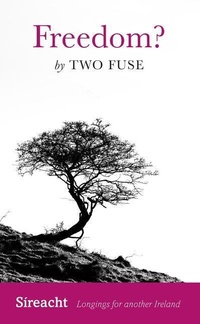
Freedom?
Published on 2. March 2018
Book
Paperback/Softback
140 pages
978-1-78205-239-5 (ISBN)
Description
As a figure of thought, the concept of freedom tends to shuttle between abstraction and ideal - the first exemplified by Isaiah Berlin's contrast between negative and positive liberty, and the second by Philip Pettit's neo-republican conception of freedom as non-domination. Located within the realm of lived experience however, freedom is invariably forged from context-specific constraints and takes the form of cultural practices. In this contribution to the Sireacht series, the collaborative platform Two Fuse examine the practice of freedom in the context of neo-liberal enterprise culture, focusing specifically on how this is shaped by power relations that sustain social suffering by generating an equality of inequality. Responding to this situation, Two Fuse look to socially-engaged art with a view to exploring possibilities to reimagine the practice of freedom, paying particular attention to the 2016 performance Natural History of Hope by Fiona Whelan, Rialto Youth Project and Brokentalkers.
More details
Series
Language
English
Place of publication
Cork
Ireland
Target group
College/higher education
Product notice
Paperback (trade)
Unsewn / adhesive bound
Dimensions
Height: 191 mm
Width: 196 mm
Thickness: 9 mm
Weight
132 gr
ISBN-13
978-1-78205-239-5 (9781782052395)
Copyright in bibliographic data and cover images is held by Nielsen Book Services Limited or by the publishers or by their respective licensors: all rights reserved.
Schweitzer Classification
Persons
Two Fuse is a collaborative platform that brings Kevin Ryan and Fiona Whelan together through a commitment to thinking across the boundaries of disciplinary enclosures (http://twofuse.com/). Kevin Ryan is lecturer at the School of Political Science & Sociology, National University of Ireland, Galway. Fiona Whelan is a Dublin based artist, writer and lecturer at the National College of Art and Design. Fiona's multifaceted practice explores power relations through durational, reciprocal engagements with people and place.