

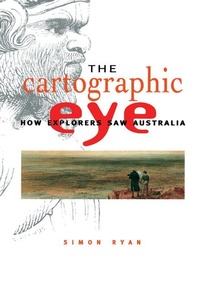
The Cartographic Eye
How Explorers Saw Australia
Published on 13. September 1996
Book
Hardback
248 pages
978-0-521-57112-8 (ISBN)
Description
This book is about the mythologies of land exploration, and about space and the colonial enterprise in particular. It is an innovative investigation of the presumptions, aesthetics, and politics of Australian explorers' texts that looks at the journals of John Oxley, Thomas Mitchell, Charles Sturt, and Ludwig Leichhardt and shows that they are not the simple, unadorned observations the authors would have us believe, but, rather, complex networks of tropes. The book argues that contacts with Aborigines and the 'virgin' land are occasions of discursive contest, and that, however much explorers construct themselves as monarchs of all they survey, this monarchy is not absolute. This book scrutinises and undermines the scientific and literary methodology of exploration.
Reviews / Votes
'If you thought that Australia did not need another book on cartography and the gaze of empire, Simon Ryan's The Cartographic Eye should change your mind. The purpose is both straightforward and timely.' Australian Historical Studies ' ... Simon Ryan's The Cartographic Eye is a very important book ... Ryan's scholarship is both detailed and focussed ... this is compelling reading.' Australian Geographical StudiesMore details
Language
English
Place of publication
Cambridge
United Kingdom
Target group
Professional and scholarly
Illustrations
24 Halftones, unspecified
Dimensions
Height: 235 mm
Width: 157 mm
Thickness: 18 mm
Weight
515 gr
ISBN-13
978-0-521-57112-8 (9780521571128)
Copyright in bibliographic data and cover images is held by Nielsen Book Services Limited or by the publishers or by their respective licensors: all rights reserved.
Schweitzer Classification
Person
Content
Introduction; 1. Exploring culture: the formation and fragmentation of the explorer; 2. Picturesque visions: controlling the seen; 3. Maps and their cultural constructedness; 4. Seeing the Aborigines put in their place; 5. The bosom of unknown lands; Conclusion.